Since its founding in 2021, the young startup has made it its mission to find a good compromise between energy production and plant growth. The solution is called "spectral filtering".
"Despite expectations, substantive discussions could not begin for lack of operational arrangements for the panel. Moreover, in the absence of a dedicated international body, the regulation of pollutants remains fragmented," worries Henri Klunge, chemical engineer and founder of Alcane Conseils.
While some regions of the planet are now no longer insurable, our country has a pool unique in the world dedicated to climate damage. Explanations from Martin Steinauer, responsible for claims things for La Mobilière in French-speaking Switzerland.
How Voltiris transforms greenhouses into solar power plants without penalizing crops
Since its founding in 2021, the young startup has made it its mission to find a good compromise between energy production and plant growth. The solution is called "spectral filtering".
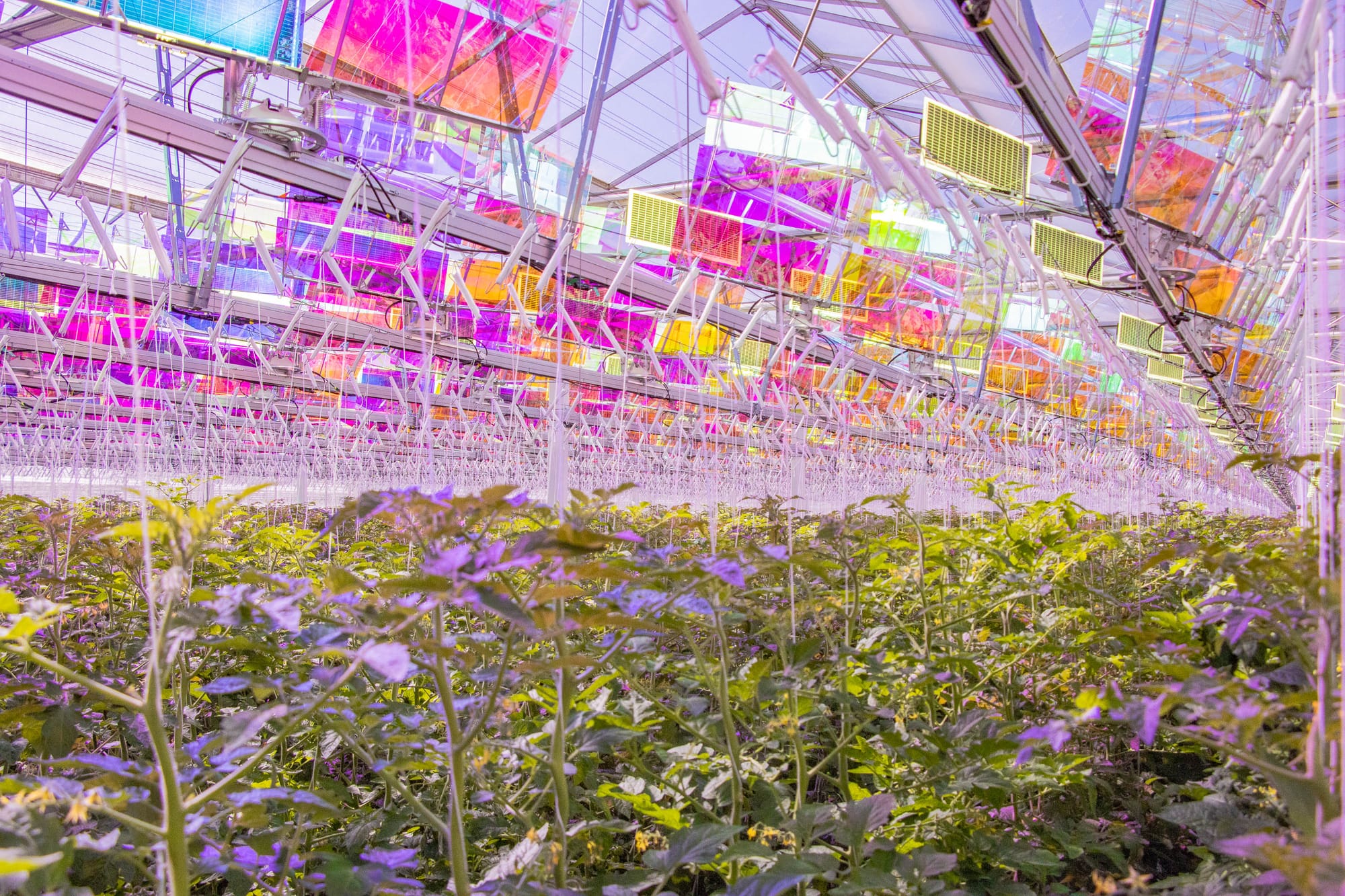
"Our system lets through to the plants the wavelengths that are mainly useful for photosynthesis — essentially red and blue — and redirects other parts of the spectrum, notably green and the near-infrared, to photovoltaic cells," says Dominik Blaser, third co-founder of the start-up Voltiris.
Filtering sunlight without impairing plant development, while generating solar electricity, represents a major challenge for market gardeners. Because while it is relatively easy to cover a barn with photovoltaic panels on a farm, the challenge is different when it comes to the roof of a greenhouse. The latter indeed needs light to allow tomatoes, cucumbers, peppers, eggplants, strawberries, etc., to grow and ripen in peace. The solution is called "spectral filtering".
At the origin of this idea is Jonas Roch, trained as a physicist. His initial intuition is fairly simple: plants do not use the entire light spectrum. While some wavelengths are essential to them, others are far less so. With the help of his long-time friend, Nicolas Weber, he is working on the development of new solar panels capable of capturing the part of the light that is of little use to crops in order to convert it into electricity, while letting through the light that plants need to grow.
"Our system lets through to the plants the wavelengths mainly useful for photosynthesis — essentially red and blue — and redirects other parts of the spectrum, notably green and near infrared, toward photovoltaic cells," explains Dominik Blaser, the third co-founder of the start-up Voltiris. "With my background in mechanical engineering, including a specialization in energy design and production, we have managed to turn the idea into promising prototypes," he adds.
"For high-value crops, such as tomatoes or peppers, market gardeners indeed consider that a 1% decrease in light leads to about a 1% reduction in yield."
A project in constant evolution
Since its founding in 2021, the young company has aimed to find a good compromise between energy production and plant growth. "For high-value crops, such as tomatoes or peppers, market gardeners indeed consider that a 1% decrease in light leads to about a 1% reduction in yield," specifies Dominik Blaser.
As is often the case for a start-up, Voltiris's technology has evolved over time. While the initial idea was to directly replace greenhouse roofs, early feedback from the field led the three entrepreneurs to reconsider their approach and favor installing panels directly inside greenhouses, beneath existing roofs.
"This architecture offers several advantages: it avoids modifying the building envelope, speeds up deployments and reduces regulatory constraints. It also allows preserving the thermal benefits of the greenhouse while filtering part of the radiation useful for electricity production," explains Dominik Blaser.
Reduction in water needs
With the support of external partners, notably Agroscope in Switzerland, Voltiris began documenting the agronomic effects of its system to ensure there would be no negative impact on crops. The first trials not only confirmed this, but also revealed significant benefits, starting with a reduction in water needs. Last year, as part of a project covering about one hectare of panels installed in a greenhouse in Aargau, the grower recorded a water saving of around 15%.
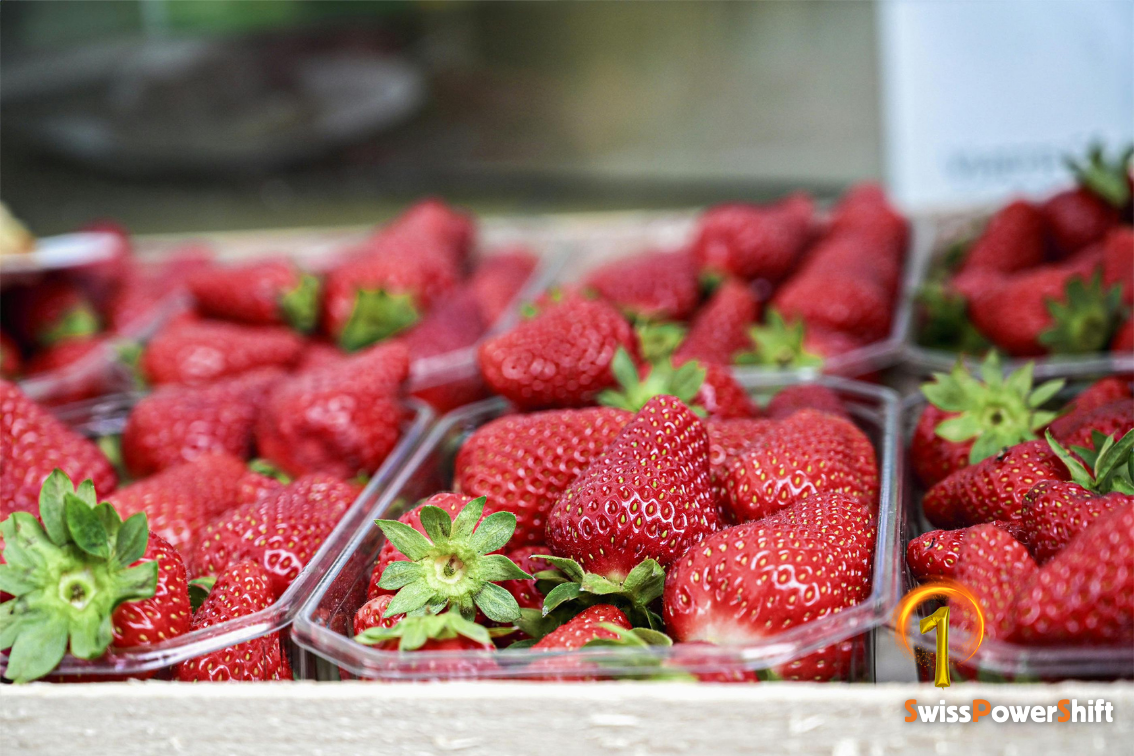
On some crops, including strawberries, Voltiris observed that its panels help reduce excess heat in the greenhouses. @pexels/canvapro
On some crops, Voltiris also observed that its panels help reduce excess heat in greenhouses. "For strawberries, for example, we measured an average drop of about 3 °C at leaf level. This slight temperature reduction slows ripening, gives the fruits more time to grow and thus improves their commercial value," emphasizes Dominik Blaser.
The Voltiris system also includes a solar tracking device. The modules can thus orient themselves to optimize light capture throughout the day. For the company, this feature is particularly interesting because it makes it possible to expand the production window to the whole day, including morning and evening, and therefore to produce electricity at times when its value can be higher, while improving local self-consumption.
Convincing the growers
After several years of R&D, Voltiris now has data from around twenty completed projects. The year 2026 should mark the transition from a demonstration phase to a commercial roll-out for the young company. "Our objective is to install between 8 and 10 additional hectares by the end of the year, with initial commissioning planned as early as June. While pilot projects often started on a small scale, they are now part of more structured initiatives, in Switzerland as well as abroad," it states.
"Our objective is to install between 8 and 10 additional hectares by the end of the year, with initial commissioning planned as early as June."
The Netherlands occupies a central place in its international strategy. Voltiris even created a local entity there three years ago and employs several staff based in the The Hague region. "Given their globally recognized expertise in greenhouse construction, having a presence in the Netherlands was absolutely essential for our company," says Dominik Blaser.
In the medium term, Voltiris's main target markets are Switzerland, France and the Netherlands. Some initial démarches are already underway in other regions, notably Japan, Saudi Arabia, Kuwait, Canada and China. Note that these are always based on the same scientific logic, namely: start with studies, demonstrators and local agronomic validations before launching larger commercial projects.
This method has, for example, allowed the company to realize how difficult it is to sustainably operate solar panels in the very demanding greenhouse environment. Humidity, corrosion, condensation: this environment is more aggressive than it appears. "Our first projects were difficult, marked by faster-than-expected degradation and the need to intervene on several pilot installations. However, this testing phase made it possible to identify weaknesses, standardize tests further and adapt the materials used to the greenhouse ecosystem," explains the mechanical engineer.
The eternal financial challenge
Aware of the financial difficulties specific to the agricultural world, Voltiris has developed several business models aimed at lowering the entry barrier for many growers. "Even if, in some cases, a single equipped hectare may be enough to cover the electricity consumption of a multi-hectare farm, equipping a greenhouse with solar panels can represent a considerable investment for an operation," the company acknowledges.
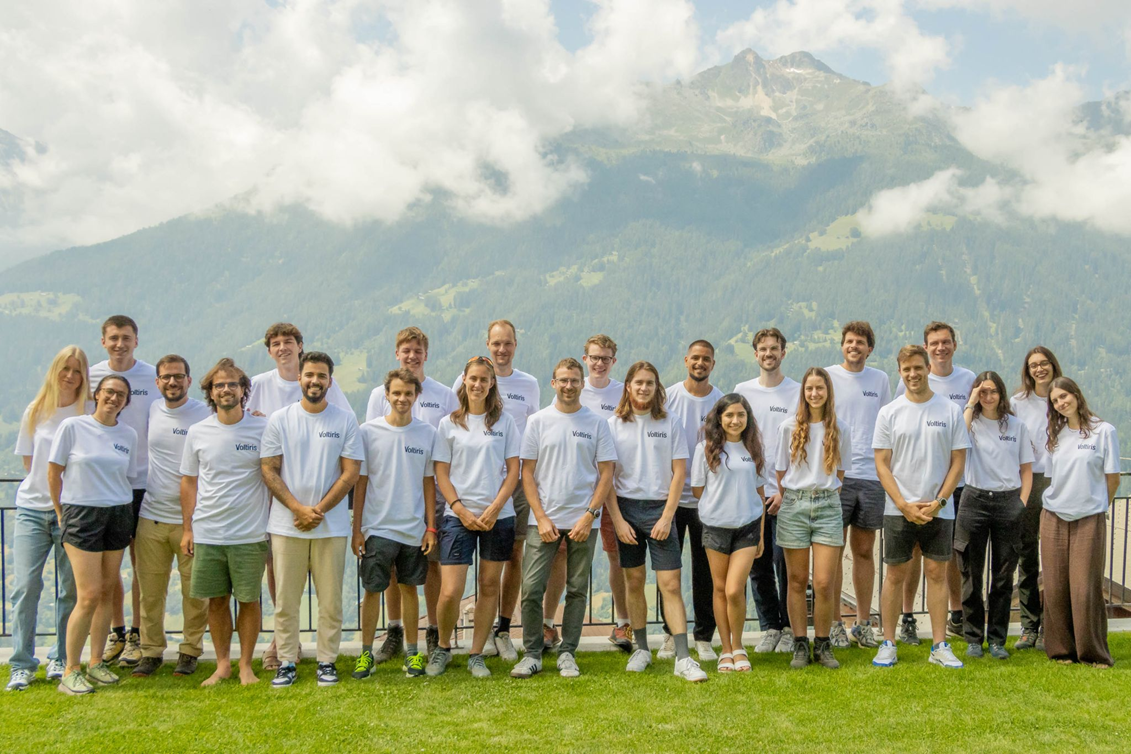
Voltiris already has around thirty employees, some based in the Netherlands, a country whose expertise in the field of greenhouses is world-renowned. @voltiris
While the first model is based on a direct sale of the installation to the grower, who then becomes the owner of the equipment and directly benefits from the produced value, other, less binding alternatives exist. The start-up, for example, collaborates with electricity producers and distributors within the framework of energy contracting models. In this case, the grower does not finance the installation: he simply pays for the electricity he consumes on site, at a tariff lower than that of the grid.
As is already the case for some projects, Voltiris also offers a model in which it remains the owner of the installation. By doing so, the start-up believes it "sends a signal of trust to growers by showing that it is willing to assume part of the financial risk."
Next steps
Voltiris is part of a broader trend: the rise of controlled-environment agriculture. According to the data the company relies on, greenhouse areas worldwide should still increase significantly by 2030.
For the start-up, this dynamic is driven both by the search for food security, protection against climate hazards and the need to better control water, temperature and agricultural yields. Countries like Poland, for example, are seen as particularly promising due to increasingly frequent drought episodes, which favor the use of more controlled systems.
On the financial side, Voltiris reports having already raised 5 million francs. The next step will be a Series A fundraising, currently in preparation, with the objective of accelerating its commercial and industrial expansion. The challenge will be to finance a real scaling up for this start-up of around thirty employees, notably through a ramp-up in commercial activity.
This article has been automatically translated using AI. If you notice any errors, please don't hesitate to contact us.
"Despite expectations, substantive discussions could not begin for lack of operational arrangements for the panel. Moreover, in the absence of a dedicated international body, the regulation of pollutants remains fragmented," worries Henri Klunge, chemical engineer and founder of Alcane Conseils.
While some regions of the planet are now no longer insurable, our country has a pool unique in the world dedicated to climate damage. Explanations from Martin Steinauer, responsible for claims things for La Mobilière in French-speaking Switzerland.
"A look at the numbers illustrates the scale of the transformation, and these are not passing fads but indicators of a structural investment cycle," says Christian Rom, manager of the DNB Renewable Energy fund.