"Despite expectations, substantive discussions could not begin for lack of operational arrangements for the panel. Moreover, in the absence of a dedicated international body, the regulation of pollutants remains fragmented," worries Henri Klunge, chemical engineer and founder of Alcane Conseils.
While some regions of the planet are now no longer insurable, our country has a pool unique in the world dedicated to climate damage. Explanations from Martin Steinauer, responsible for claims things for La Mobilière in French-speaking Switzerland.
"A look at the numbers illustrates the scale of the transformation, and these are not passing fads but indicators of a structural investment cycle," says Christian Rom, manager of the DNB Renewable Energy fund.
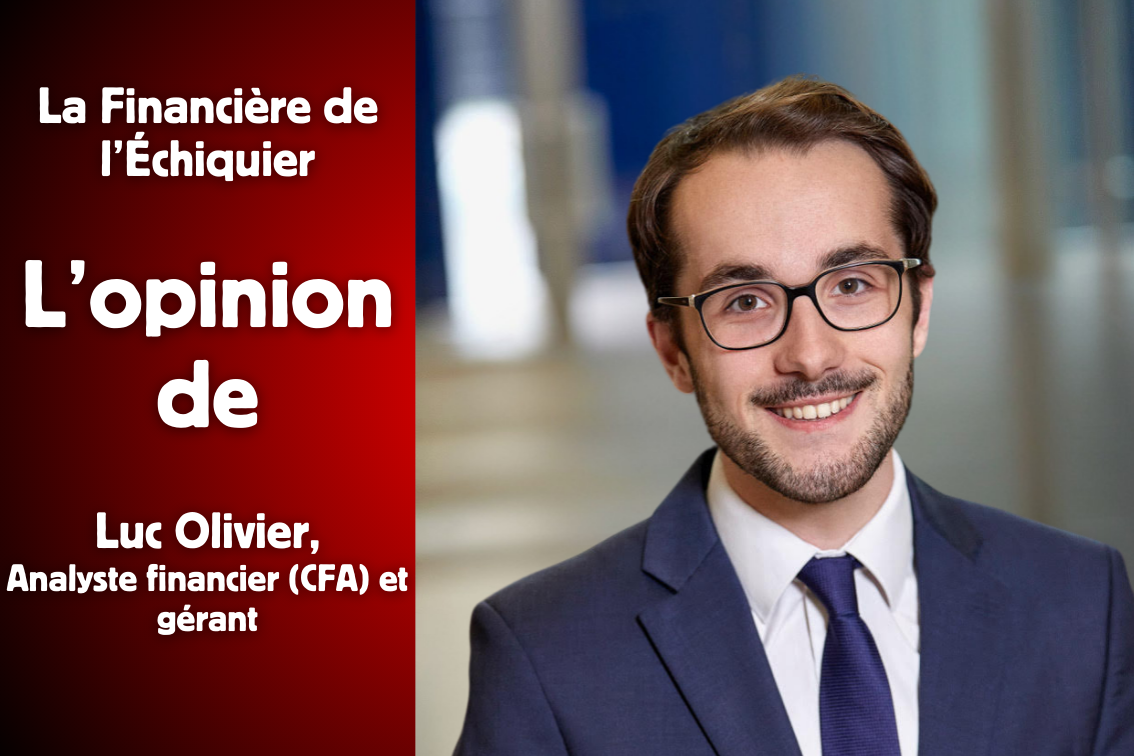
"Resource-hungry, these data centers have an environmental footprint that constitutes a crucial sustainability issue for both companies and actors in sustainable finance," recalls Luc Olivier, financial analyst (CFA) and portfolio manager at La Financière de l'Échiquier.
1 million square meters: that is the area of the largest data center in the world, located in the United States, the country with the largest number of data centers worldwide. A multitude of server aisles, connected to processors and hard drives operating continuously... such is the heart of these new spaces.
Black gold of the 21st century, data is omnipresent, and the AI revolution only increases the need for computing power. This explosion in demand requires ever more powerful and ever more numerous facilities. Demand for data centers is thus expected to grow by 20% per year until 2030, according to the firm McKinsey & Company, quoted by "Novethic" in 2025.
Resource-hungry, these data centers have an environmental footprint that constitutes a crucial sustainability issue, both for companies and for actors in sustainable finance.
Increasingly energy-intensive spaces
Essential to technological growth, data centers today consume, according to the International Energy Agency, more than 2% of the world's electricity, as much as air transport. We face a paradoxical equation: while AI — and more generally data production — is experiencing a rise as rapid as it is inevitable, ever more efficient data centers become indispensable.
While air cooling, the traditional solution, is no longer sufficiently effective, "liquid cooling" — liquid cooling — stands out.
This explosion in demand is extremely energy-intensive. Servers are powered by very large electrical networks, and their constant cooling — imperative to avoid any overheating — consumes resources. Nearly 40% of a data center's electricity consumption is dedicated to server cooling, according to Alfa Laval, a specialist in heat exchange. Attracting capital and supporting companies in taking these issues related to the energy transition into account becomes crucial.
Innovative solutions
Several techniques exist to improve the energy efficiency of these infrastructures. While air cooling, the traditional solution, is no longer sufficiently effective, "liquid cooling" — liquid cooling — stands out. Composed mostly of water, this solution nevertheless represents a major challenge in terms of the energy transition and access to the resource. The numbers speak for themselves: in 2023, Google used nearly 28 billion liters of water to cool its data centers.
Supported by investors aware of these issues, several companies have taken up the subject, such as Munters, a specialist in data center cooling. The Swedish group — whose division dedicated to data centers represented 28% of revenue in 2024 — has developed a large-scale liquid cooling unit.
This module precisely controls the flow rate and temperature of the liquid. It is sent to the structures surrounding the servers, then redirected to a central system to be cooled before re-entering the circuit. Munters' systems, using ambient air as a cooling source, thus enable a reduction in water and energy consumption of up to 70% compared to a traditional system.
Another example: Siemens, which has also developed a cutting-edge technology. Its "Demand Flow" system effectively optimizes cooling installations that operate with chilled water. Thanks to advanced automation and integrated analysis tools, this innovation aims to extend equipment lifespan while significantly reducing energy consumption.
In Denmark, the heat produced by Facebook's data center thus meets the needs of more than 6,000 households.
An essential adaptation
These innovative solutions, developed by pioneering companies, are indispensable to the energy transition. The adaptation of data centers is decisive. Limiting their environmental impact by using renewable energies and by valorizing the energy they produce constitutes a first step: other innovations are emerging.
One of them consists of using the heat generated by these infrastructures to inject it into urban networks. In Denmark, the heat produced by Facebook's data center thus covers the needs of more than 6,000 households. In London, an IBM data center is used to heat a university swimming pool, reducing its energy consumption by about 10%.
While challenges remain numerous, supporting these technological advances represents a unique opportunity to combine financial performance and environmental impact. For committed investors, it is crucial to act alongside companies, combining financing and shareholder engagement. Supporting all actors of the energy transition represents a key issue for the preservation of ecosystems.
This article has been automatically translated using AI. If you notice any errors, please don't hesitate to contact us.
"Despite expectations, substantive discussions could not begin for lack of operational arrangements for the panel. Moreover, in the absence of a dedicated international body, the regulation of pollutants remains fragmented," worries Henri Klunge, chemical engineer and founder of Alcane Conseils.
While some regions of the planet are now no longer insurable, our country has a pool unique in the world dedicated to climate damage. Explanations from Martin Steinauer, responsible for claims things for La Mobilière in French-speaking Switzerland.
"A look at the numbers illustrates the scale of the transformation, and these are not passing fads but indicators of a structural investment cycle," says Christian Rom, manager of the DNB Renewable Energy fund.