"It is neither fair nor constructive to pit technologies against each other in a supposed race for funding: it's a false debate," says Eric Plan, secretary-general of the CleantechAlps association.
As this Thursday marks the official creation of a Swiss entity of the World Sufficiency Lab, we revisit the question of sufficiency with its cofounder and director, Yamina Saheb.
In Zug, a breach opens in the impunity of the "carbon majors"
"The admissibility of the complaint filed by four Indonesian fishermen constitutes a first judicial response commensurate with the climate emergency," say François de Cambiaire and Lydia Méziani, lawyers at de Cambiaire & Méziani Associés.
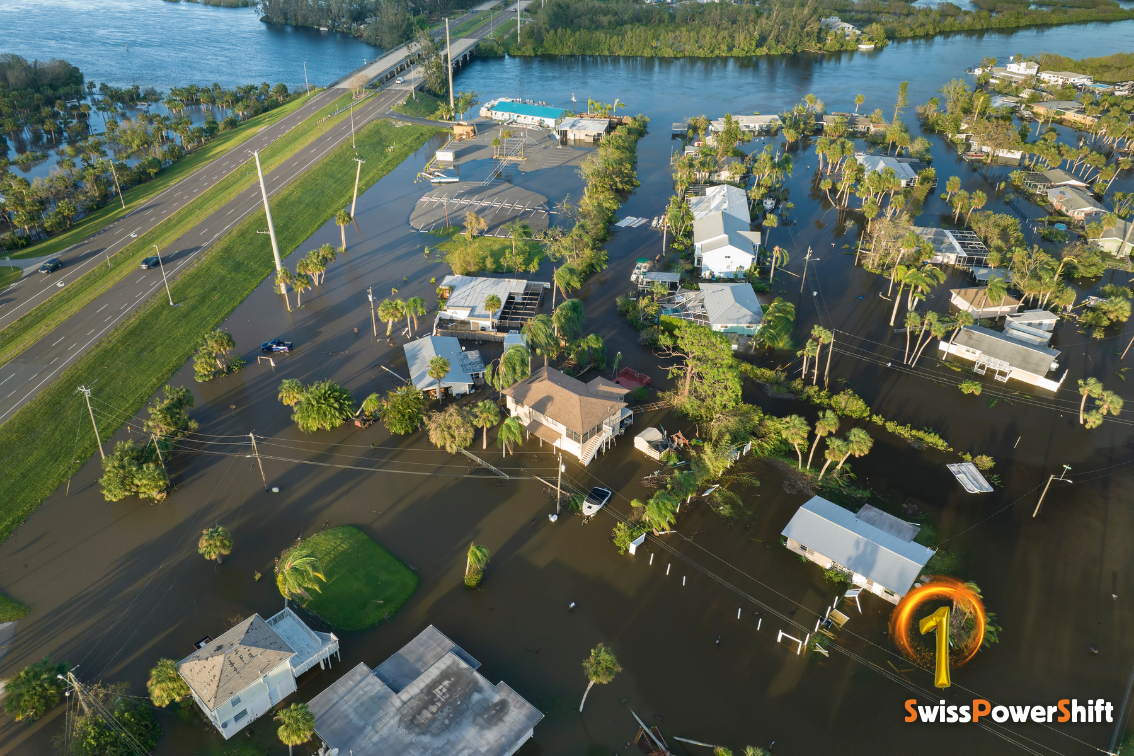
The contrast is striking. On one side, Ibu Asmania, Arif Pujianto, Pak Bobby and Edi Mulyono, residents of an island located north of Jakarta whose highest point does not exceed three meters, see their existence directly threatened by rising waters. On the other, Holcim, the world leader in cement, heads an industry responsible, on its own, for 8% of global CO₂ emissions.
Establishing a causal link
By suing the group at its Zug headquarters, the plaintiffs intend to establish a direct causal link between the multinational’s historical emissions — namely 0.42% of industrial greenhouse gases since 1751 — and the irreversible degradation of their living environment. Their demands are clear: compensation for the damages suffered, participation in flood protection measures and, above all, an injunction to reduce the group’s emissions by 43% by 2030.
To try to avoid a trial on the merits, Holcim’s defense deployed a classic legal arsenal, arguing that climate change fell within public policy and not the courts. The Cantonal Court firmly rejected this interpretation, recalling that judicial decisions do not replace climate policy, but serve to complement it.
By confirming its jurisdiction to hear this dispute, which falls under private law and the protection of personality rights, the Swiss judge set a first essential milestone: the inaction or inadequacy of a company’s actions can be challenged before a civil court.
Even more significant is the court’s refusal to subscribe to the so-called “drop in the ocean” (“a drop in the ocean”) theory. Holcim argued that its contribution to global warming was negligible and that the island of Pari was, in any case, doomed to disappear. The judge dismissed this cynical fatalism, asserting that “every individual contribution is indispensable to fight climate change.”
The expert reports filed in the case indeed demonstrate that a rapid reduction of emissions could grant the archipelago a reprieve of several centuries. The fishermen’s standing to act is therefore deemed current and practical: faced with a carbon transition plan considered late and insufficient, only an immediate judicial intervention appears to be an adequate response to prevent future harm.
Underlying shift
Finally, the decision handed down in Zug lifts the corporate veil behind which large structures frequently hide. While Holcim tried to dilute its responsibility among its multiple subsidiaries or to take shelter behind the technical complexity of its emissions — the famous “scopes” 1, 2 and 3 — the court recalled a simple reality: climate strategy is decided at the top, by the group’s board of directors. It is therefore the parent company that must answer for its actions.
This order is part of a fundamental jurisprudential movement that, from the Netherlands to Switzerland, tends to recognize the justiciability of climate damages. By refusing any impunity to the “carbon majors,” the judiciary reminds that no economic actor, however powerful, can escape its responsibility in the face of the climate crisis. For the inhabitants of the island of Pari as for the major carbon emitters, the message from Zug is clear: the time of responsibility has come.
This article has been automatically translated using AI. If you notice any errors, please don't hesitate to contact us.
"It is neither fair nor constructive to pit technologies against each other in a supposed race for funding: it's a false debate," says Eric Plan, secretary-general of the CleantechAlps association.
As this Thursday marks the official creation of a Swiss entity of the World Sufficiency Lab, we revisit the question of sufficiency with its cofounder and director, Yamina Saheb.
Let's be at least minimally honest with ourselves. Moving thousands of athletes and spectators to one or more regions of the world will never result in a 100% virtuous and eco-friendly outcome.