By naming their first edition "Wind farms are taking shape", the industry's players want to show a certain optimism despite a context that remains complicated for the sector. A look by Benoist Guillard, president of the Groupe romand pour l’énergie éolienne (GREE).
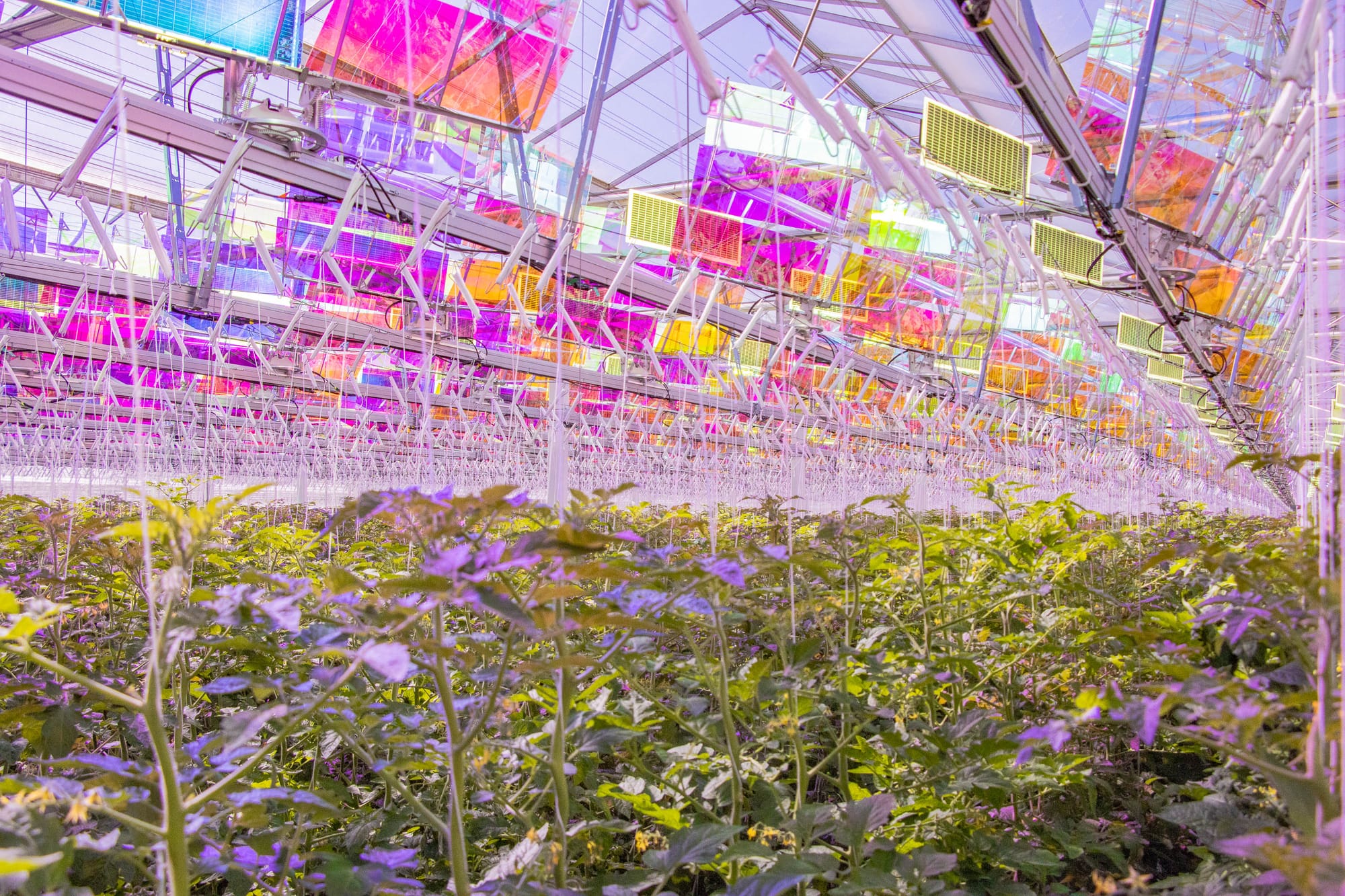
Since its founding in 2021, the young startup has made it its mission to find a good compromise between energy production and plant growth. The solution is called "spectral filtering".
"Despite expectations, substantive discussions could not begin for lack of operational arrangements for the panel. Moreover, in the absence of a dedicated international body, the regulation of pollutants remains fragmented," worries Henri Klunge, chemical engineer and founder of Alcane Conseils.
"Launched for reasons that are more electoral than ecological, the call for a climate fund that would absorb between 5 and 10 billion francs each year appears unnecessary, absurd, costly, centralizing and poorly conceived," says Pierre-Gabriel Bieri, policy manager at the Centre Patronal.
"For a fair energy and climate policy: invest for prosperity, work and the environment." That is the full title — which might almost seem appealing at first glance — of the popular initiative for a climate fund, submitted to the popular vote next March 8.
Launched by the Socialist Party and the Greens, it requests that the Confederation, the cantons and the municipalities combat global warming and its social, ecological and economic consequences by creating a federal investment fund. This would be used to finance measures to decarbonize buildings, transport and businesses, actions aimed at reducing energy consumption, training programs, as well as the creation of carbon sinks and the strengthening of biodiversity.
This fund would be financed by the Confederation, required to transfer each year, until 2050, an amount between 0.5 and 1% of Swiss gross domestic product. According to official calculations, this would correspond, from 2030, to payments between 4.8 and 9.5 billion francs per year. These amounts would be explicitly excluded from the debt brake mechanism, which means they could be financed through borrowing.
By allowing itself to be drawn into a spiral of debt, Switzerland would lose part of that solidity.
The Federal Council, followed by Parliament, calls for the rejection of this text, considering that the concerns it raises are already largely taken into account by public authorities. It nevertheless recognizes the need to make significant investments to achieve the objectives set in climate policy, but recalls that the Confederation alone already devotes nearly 2 billion francs per year to this, to which are added 600 million intended for the maintenance and promotion of biodiversity.
A burden for future generations
This initiative was launched one year before the 2023 federal elections and one can suppose that it aimed primarily to mobilize the Green and Socialist electorate. The number of signatures collected moreover only slightly exceeded the threshold of 100,000 required by law. The text nevertheless raises a concrete question on which the Swiss are being asked to rule today; it is therefore important to highlight its harmful aspects.
The most obvious and immediate perverse effect, given the considerable sums at stake, would be to encourage massive indebtedness of the Confederation. Recent years have amply shown how maintaining solid public finances makes it possible to face multiple crises more calmly and more effectively. By allowing itself to be drawn into a spiral of debt, Switzerland would lose part of that solidity.
But there is something even more serious: sustainable development, which the authors of the initiative claim, implies handing down to future generations an ecologically, economically and socially healthy society. Yet the initiative leads to doing exactly the opposite, by spending today without restraint and leaving the burden of payment to future generations.
The most obvious and immediate perverse effect, given the considerable sums at stake, would be to encourage massive indebtedness of the Confederation.
Funding already taken seriously
It should also be noted that a fund overflowing with several billion francs would hardly encourage efficiency, but would rather create a risk of waste, even abuse. Complex allocation and control mechanisms, centralized at the level of the Confederation, would then be necessary. It would also be necessary to define at least some coherent coordination between the subsidies distributed by this new federal fund and the many instruments already existing at other institutional levels or in the private sector. Besides, why would the latter persist, since a new federal cornucopia would freely distribute money that no one would yet have paid?
The Federal Council shows that the financing of climate policy measures is already being taken seriously. Federal legislation is regularly adapted according to Switzerland’s climate commitments. Whether it is the recent law on climate protection objectives, on innovation and on strengthening energy security (LCl), the revised CO₂ law or the Energy Act, financing and incentive instruments can be found there. The cantons, municipalities, companies and individuals add their own contributions.
In such a context, the demands of the initiative amount to an unnecessary, absurd and costly escalation, based on clumsy centralization and legally imprecise formulations. An escalation that would not benefit the climate, but would penalize taxpayers — today’s as well as tomorrow’s.
This article has been automatically translated using AI. If you notice any errors, please don't hesitate to contact us.
By naming their first edition "Wind farms are taking shape", the industry's players want to show a certain optimism despite a context that remains complicated for the sector. A look by Benoist Guillard, president of the Groupe romand pour l’énergie éolienne (GREE).
Since its founding in 2021, the young startup has made it its mission to find a good compromise between energy production and plant growth. The solution is called "spectral filtering".
"Despite expectations, substantive discussions could not begin for lack of operational arrangements for the panel. Moreover, in the absence of a dedicated international body, the regulation of pollutants remains fragmented," worries Henri Klunge, chemical engineer and founder of Alcane Conseils.
While some regions of the planet are now no longer insurable, our country has a pool unique in the world dedicated to climate damage. Explanations from Martin Steinauer, responsible for claims things for La Mobilière in French-speaking Switzerland.