Climate change: a risk soon unsustainable for insurers and policyholders?
A worrying phenomenon has been growing for several years: the gradual withdrawal of insurance companies from the most at-risk areas.
"We call for clear market signals, a coherent framework and better valuation of renewable electricity injected into the grid," explain Cécile Theumann and Martial Bujard, co-directors of the ADER.

During the summer, a call was made to electricity suppliers. By means of a letter, the Association for the Development of Renewable Energies (ADER) once again pleaded for better feed-in prices for the electricity injected into the grid by independent producers.
Two companies responded, as did the Federal Office of Energy (OFEN). In its official reply, the OFEN stresses that "it is desirable that distribution network operators offer a higher remuneration for this electricity, especially during the winter semester", thus recognizing the need for a strong economic signal to stimulate winter production, a crucial period for renewable energies and grid stability.
However, as the entry into force of the new legislative framework on January 1, 2026 approaches, the situation remains unclear regarding current and future feed-in prices. This uncertainty is reflected in the tariffs published on August 31, 2025, which — contrary to the legal obligation — often do not mention any feed-in price, except for a minimum threshold of 6.00 ct./kWh for productions under 150 kW.
The ADER deplores this lack of transparency, which penalizes local producers and undermines confidence in the energy transition. It intends to keep up the pressure and plans to send a new letter to the electric companies soon in order to obtain fairer feed-in conditions.
The association recalls that the current European context represents an important opportunity for improvement. The progress made on the bilateral Switzerland–EU agreement indeed provides for enhanced access to a common flexibility platform. This would allow Switzerland to be fully integrated into the European electricity network, improve the management of the 40 cross-border lines and greatly reduce congestion and flexibility costs, which can currently amount to up to 1 billion francs and are naturally passed on to consumers.
Finally, the latest white paper published by SwissGrid warns of the limits of the current regulatory framework. It notably states that "purchase and remuneration guarantees are already generating negative prices — clearly, the regulatory framework is inadequate. Without appropriate measures, the planned development of photovoltaics risks causing a system failure. This has been acknowledged, but the support models currently under discussion do not have the expected effect." This analysis reinforces ADER's position, which advocates for clear market signals, a coherent framework and better valuation of renewable electricity injected into the grid.
Such a development would contribute to greater stability of the domestic market, an essential condition for more accurately estimating long-term feed-in tariffs and securing the return on investment of renewable energy producers. ADER therefore calls for a rapid and transparent reform of the ongoing mechanisms so that independent producers can benefit from fair and stable prices, in line with national and European energy transition objectives.
This article has been automatically translated using AI. If you notice any errors, please don't hesitate to contact us.
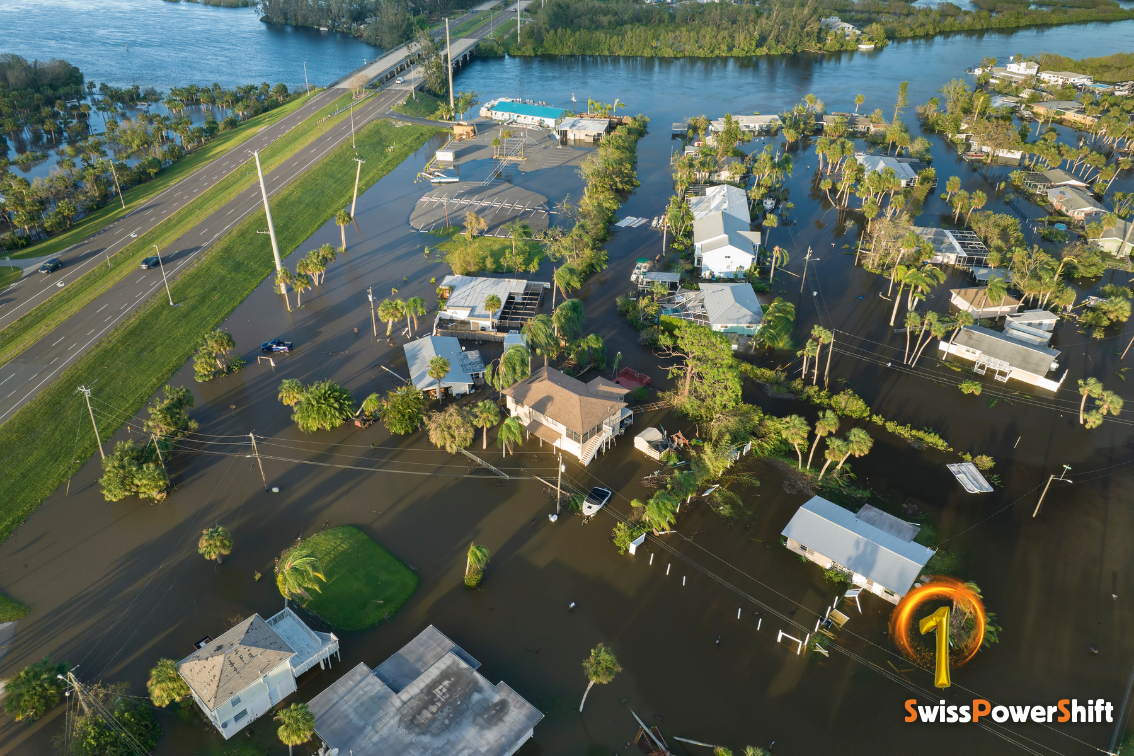
A worrying phenomenon has been growing for several years: the gradual withdrawal of insurance companies from the most at-risk areas.

As this Thursday marks the official creation of a Swiss entity of the World Sufficiency Lab, we revisit the question of sufficiency with its cofounder and director, Yamina Saheb.

Let's be at least minimally honest with ourselves. Moving thousands of athletes and spectators to one or more regions of the world will never result in a 100% virtuous and eco-friendly outcome.

"The abandonment of the green hydrogen plant project by Romande Energie above all illustrates the conjunctural difficulties facing the hydrogen sector, particularly in Switzerland, and, to a lesser extent, in Europe and the United States," explains Simon Siggen for the Nomads Foundation.