What happens when insurance companies decide to withdraw and no longer cover the most at-risk areas? That is the theme at the heart of the new report by the environmental NGO, but also of "Sigma", that of the Swiss Re Institute. Analysis
"Flexibility solutions are now essential. However, they face a structural difficulty: their costs are decreasing faster than market rules evolve," explains Xavier Blot, associate professor at emlyon business school.
By naming their first edition "Wind farms are taking shape", the industry's players want to show a certain optimism despite a context that remains complicated for the sector. A look by Benoist Guillard, president of the Groupe romand pour l’énergie éolienne (GREE).
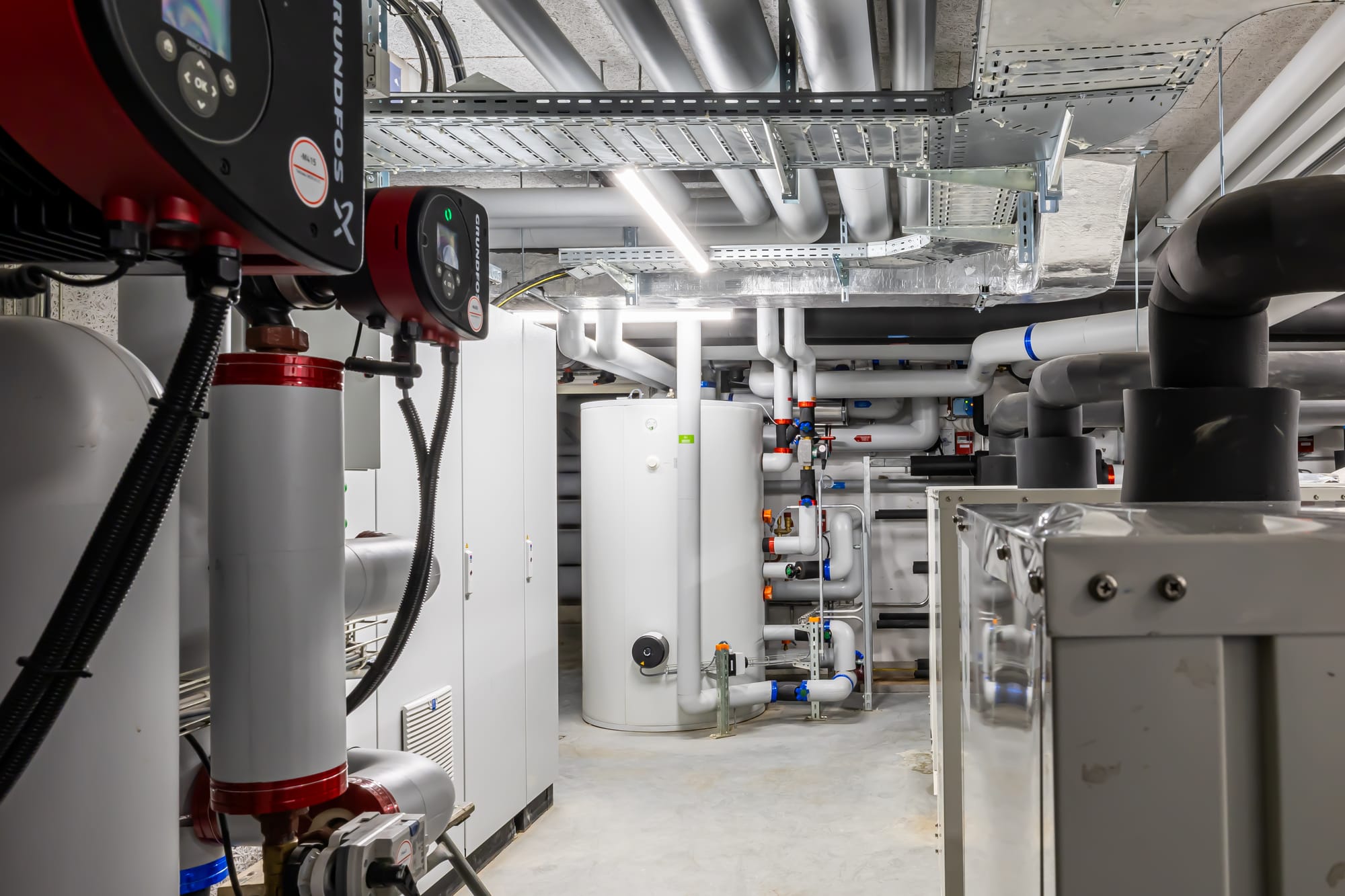
Combined with suitable heat pumps and an intelligent algorithm, Steen's system achieves an efficiency of 3.5 to 5 kWh thermal per 1 kWh electrical consumed. @Steen Sustainable Energy SA
At a time when the energy transition requires rethinking traditional models, a young Vaud start-up has set itself the mission of transforming the way buildings produce and consume energy. Founded in 2020, Steen Sustainable Energy SA aims to challenge the conventions of building heating and cooling using one concept: anergy.
"The principle of anergy can be summed up fairly simply: recover thermal rejects that have so far been unused and transform them into a new energy source," explains Boris Clivaz, shareholder of Steen and CEO of GEFISWISS. According to him, this approach constitutes a credible alternative to geothermal energy or district heating.
"By recovering heat from the ground, the exhaust air from apartments or from car parks, this loop stores energy when it is available and returns it during demand peaks," details Romain Chauvet, engineer and project manager.
A thermal storage loop
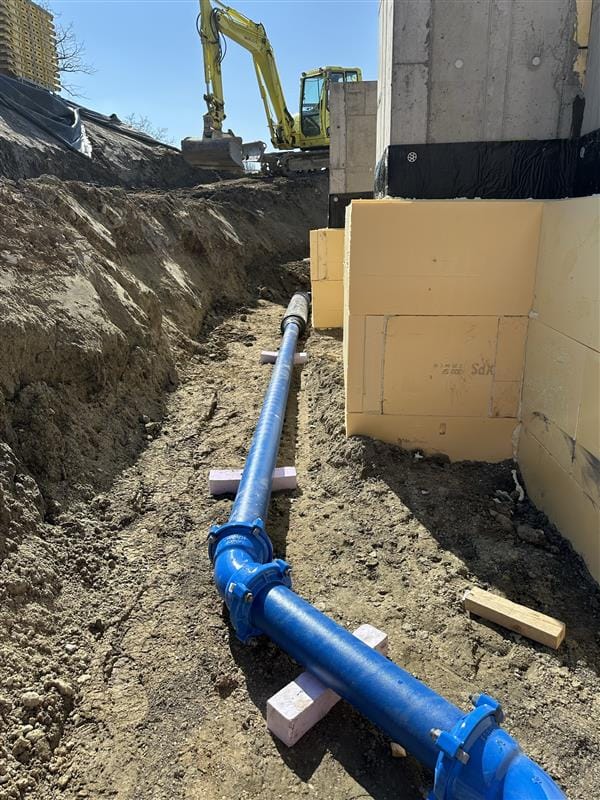
The flagship innovation of the young company: a multi-source energy system capable of providing heating, domestic hot water and cooling, while reducing electrical consumption and eliminating the use of fossil fuels. It is based on a dynamic thermal storage loop: a single-pipe buried under buildings, uninsulated and acting as a thermal battery.
"By recovering heat from the ground, the exhaust air from apartments or from car parks, this loop stores energy when it is available and returns it during demand peaks," details Romain Chauvet, engineer and project manager. Unlike conventional geothermal probes, this low-tech device requires neither deep drilling nor insulation of buried pipes, which makes it much more economical and simple to install.
Combined with suitably sized heat pumps and an intelligent algorithm, this system achieves an efficiency of 3.5 to 5 kWh thermal for 1 kWh electrical consumed. "One of the major strengths of this technology is its integration with photovoltaic solar. Thanks to its storage capacity, it smooths production and can double self-consumption, thereby addressing one of today's major challenges: avoiding saturation of electrical grids," assures Romain Chauvet.
"The next step will be to integrate artificial intelligence to anticipate demand based on the weather or consumption habits," specifies Boris Clivaz, shareholder of Steen and CEO of GEFISWISS.
The company already has several concrete projects to its credit, both in collective housing and in industry. For example, Steen has already equipped several industrial workshops where the heat generated by machines is captured rather than released into the air. The same logic applies in large-scale retail: in one Migros supermarket, the heat released by the refrigeration units is now used to produce the domestic hot water for neighboring apartments, rather than escaping uselessly onto the roofs. These are all examples that illustrate the potential of the technology: turning every building into an energy producer and valorizing flows that had previously been wasted.
The flagship innovation of the young company is based on a dynamic thermal storage loop: a single-pipe buried under buildings, uninsulated and acting as a thermal battery. @Steen Sustainable Energy SA
Steen Sustainable Energy SA has already invested 3 million francs to develop its technology, filed two patents and formed several academic partnerships, notably with EPFL and HES Lucerne. "The next step will be to integrate artificial intelligence to anticipate demand based on the weather or consumption habits, optimize hydraulic circuits and further improve performance by 20 to 30%," specifies Boris Clivaz.
Adapting its solution to existing buildings
One of the major challenges ahead for Steen will be the existing building stock. Deployed mainly in new construction projects, its solution still needs to be adapted in order to be applicable to renovation. Aware of the challenge, the company is already working on it, for example by considering converting old oil tanks into thermal reservoirs. At the same time, Steen is also already working on designing a heat pump better adapted to its technology.
With five employees — engineers, automation specialists and project managers — Steen aims to move from start-up to scale-up. Profitable as of 2024, it is therefore seeking new funding to accelerate its industrialization and broaden its scope. Because the ambition goes beyond buildings: in the long term, Steen envisions industrial zones heating surrounding neighborhoods with their waste heat, as well as urban systems capable of advantageously replacing gas-fired district heating systems.
This article has been automatically translated using AI. If you notice any errors, please don't hesitate to contact us.
What happens when insurance companies decide to withdraw and no longer cover the most at-risk areas? That is the theme at the heart of the new report by the environmental NGO, but also of "Sigma", that of the Swiss Re Institute. Analysis
"Flexibility solutions are now essential. However, they face a structural difficulty: their costs are decreasing faster than market rules evolve," explains Xavier Blot, associate professor at emlyon business school.
By naming their first edition "Wind farms are taking shape", the industry's players want to show a certain optimism despite a context that remains complicated for the sector. A look by Benoist Guillard, president of the Groupe romand pour l’énergie éolienne (GREE).
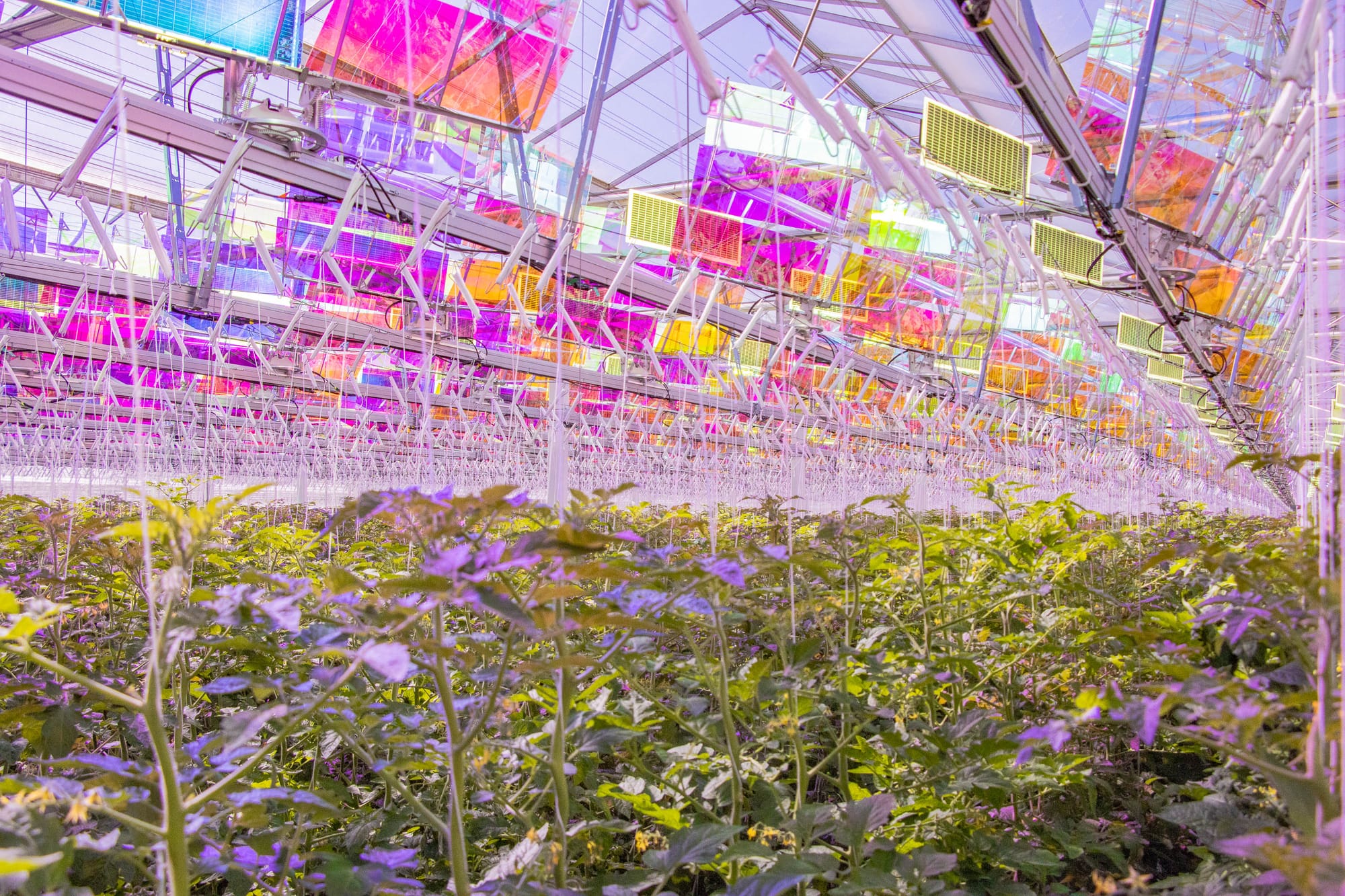
Since its founding in 2021, the young startup has made it its mission to find a good compromise between energy production and plant growth. The solution is called "spectral filtering".