What happens when insurance companies decide to withdraw and no longer cover the most at-risk areas? That is the theme at the heart of the new report by the environmental NGO, but also of "Sigma", that of the Swiss Re Institute. Analysis
"Flexibility solutions are now essential. However, they face a structural difficulty: their costs are decreasing faster than market rules evolve," explains Xavier Blot, associate professor at emlyon business school.
By naming their first edition "Wind farms are taking shape", the industry's players want to show a certain optimism despite a context that remains complicated for the sector. A look by Benoist Guillard, president of the Groupe romand pour l’énergie éolienne (GREE).
Climate tipping points: a very real systemic risk, but still avoidable
In a new report titled "Global Tipping Points", scientists estimate that the window for action to prevent certain harmful and irreversible tipping points is closing rapidly.
Led by Professor Tim Lenton of the University of Exeter's Global Systems Institute, a new report entitled "Global Tipping Points" paints an alarming picture of the planet. @Pexels/Canva
In a few hours, COP30 will close its doors in Belém, Brazil. While the conclusions of this new international summit remain uncertain at the time of writing, they may well fail to respond to the current climate emergency. Ten years after the Paris Agreement, the reality is that the trajectory set in the French capital is no longer really in tune with the international situation. Take the United States, the world’s leading power, whose president recently described global warming as "the greatest hoax ever perpetrated against the world."
Written by 160 scientists from 87 institutions across 23 countries, a new report titled "Global Tipping Points" provides an alarming assessment of the planet and the tipping points likely to make life on Earth much more difficult for its inhabitants — all species combined — in the decades to come. "Their crossing would reduce the Earth’s capacity to cope with human disturbances," says the study led by Professor Tim Lenton of the Global Systems Institute at the University of Exeter, in collaboration with WWF and other partners. "Every tenth of a degree of additional warming increases the risk of triggering catastrophic tipping points," Thomas Häusler, international projects manager for WWF Switzerland, recalls in a statement.
But if, according to scientists, the window of opportunity to prevent some damaging and irreversible tipping points is closing rapidly, all is not lost. The report also presents a series of "positive tipping points" that still make it possible to avoid the worst. We summarize the essentials for you in a few key points.
1️⃣
Serious tipping risks: Global warming, which now reaches nearly 1.5 °C above preindustrial levels, has already pushed some components of the Earth system beyond critical thresholds. The study illustrates this notably with the example of corals: "With global warming of 1.4 °C, warm-water coral reefs cross their thermal threshold and experience an unprecedented die-off, jeopardizing the livelihoods of hundreds of millions of people who depend on them," the researchers say.
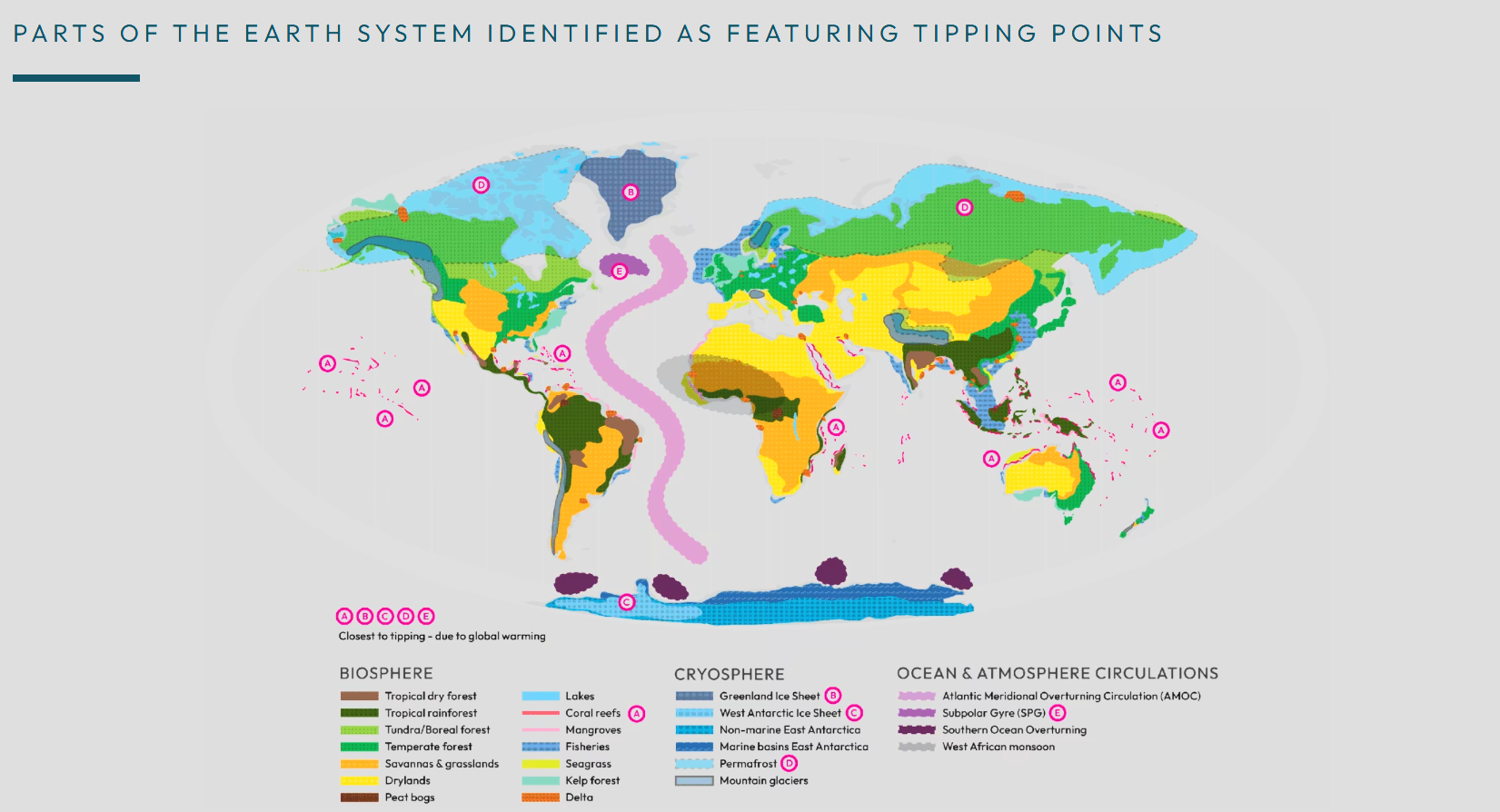
Similarly, parts of the polar ice sheets may have already passed tipping points that could lead to an irreversible sea-level rise of several meters, with major consequences for human populations and species living in coastal zones. This is one of the most worrying aspects of the report: the interconnection between most of the twenty tipping points assessed. When one element crosses a critical threshold, it can indeed trigger a domino effect — most often destabilizing — on other components of the climate system, pushing them to cross their own tipping points in turn.
2️⃣
Minimize any overshoot of 1.5 °C: "What really matters to prevent climate tipping points is how far and for how long global temperature increases," the scientists write. Every fraction of a degree above 1.5 °C indeed increases the probability of crossing several critical thresholds, notably the progressive desertification of the Amazon rainforest or the irreversible melting of mountain glaciers.
New concerns also focus on certain oceanic and atmospheric currents. "Recent modeling indicates that the Atlantic meridional overturning circulation (AMOC) as well as deep convection in the subpolar gyre (SPG) could present tipping points," the report’s authors note, while stressing that "the limited number of models and observations makes their probability assessment still uncertain."
If these scenarios were to be confirmed, they could further accelerate climate change and trigger cascading effects on food, water and health systems. And since many of these processes appear irreversible on a human timescale, waiting for total certainty before acting would be particularly risky.
Parts of the Earth system identified as having tipping points. @Global Tipping Points
3️⃣
Accelerate decarbonization: To avoid a succession of catastrophic tipping points, the priority remains unchanged: halve global greenhouse gas emissions by 2030, achieve carbon neutrality by 2050, and then remove excess carbon still emitted by human activities from the atmosphere. "This requires an unprecedented acceleration of decarbonization, a rapid reduction in methane and other short-lived climate pollutants, as well as a rapid and sustainable scaling up of methods to remove atmospheric carbon," the study specifies.
Any delay in implementing these mitigation measures reduces the likelihood of returning to safer temperatures during this century. "If we temporarily exceed the 1.5 °C limit — a phenomenon called overshoot — it is essential that this overshoot be as small and as short as possible, in order to reduce the risk of catastrophic tipping points," WWF reminds in a statement.
4️⃣
The importance of acting locally: "Only a combination of resolute political actions and commitments from civil society will allow us to steer the world away from the critical thresholds that threaten its existence," says Tim Lenton, professor at the Global Systems Institute at the University of Exeter, who insists on the need for local actions. He cites the case of the Amazon, where ending deforestation and protecting the land rights of indigenous peoples reduce the risk of large-scale forest die-off.
Regarding coral reefs, the implementation of policies aimed at limiting overfishing, pollution and coastal nutrient runoff could help these ecosystems survive short periods of extreme heat. The multiplication of such local measures would buy precious time, thereby strengthening the resilience of ecosystems to climate change.
5️⃣
Call for climate justice: Last year, in Baku, Azerbaijan, the 200 nations present agreed on a tripling of financial support to developing countries, to reach $300 billion per year by 2035. Because today, one fact is clear: these regions of the world are among the most affected by global warming. "The reality is alarming: all countries can be affected by climate change, but this challenge is most severe for the poorest countries in the world," declared Axel van Trotsenburg, Senior Managing Director of the World Bank.
The University of Exeter study reminds us that the communities least responsible for emissions — notably indigenous peoples, small island states and regions dependent on monsoon systems — are also the most exposed to the risks associated with climate tipping points. It calls for a global response including not only strengthened financial mechanisms, but also the development of renewable energy, the implementation of resilient food systems and better legal protection for the most vulnerable populations.
6️⃣
Positive tipping points: "Change can also tip in the right direction." This sentence, taken from the WWF press release, sums up the deliberately optimistic orientation of the report. It highlights that major transformations are already underway today in key sectors such as energy. The report notes, for example, that solar production capacity doubles every two to three years, that the adoption of electric vehicles is gradually becoming widespread worldwide, and that advances in battery storage are significant.
This momentum in the energy sector illustrates the possibility of rapid and positive change. "Policies targeting high-leverage interaction points can help trigger this positive cascade of change. Strengthening feedbacks between civil society and policymakers is therefore essential to amplify these dynamics," the scientists say.
This article has been automatically translated using AI. If you notice any errors, please don't hesitate to contact us.
What happens when insurance companies decide to withdraw and no longer cover the most at-risk areas? That is the theme at the heart of the new report by the environmental NGO, but also of "Sigma", that of the Swiss Re Institute. Analysis
"Flexibility solutions are now essential. However, they face a structural difficulty: their costs are decreasing faster than market rules evolve," explains Xavier Blot, associate professor at emlyon business school.
By naming their first edition "Wind farms are taking shape", the industry's players want to show a certain optimism despite a context that remains complicated for the sector. A look by Benoist Guillard, president of the Groupe romand pour l’énergie éolienne (GREE).
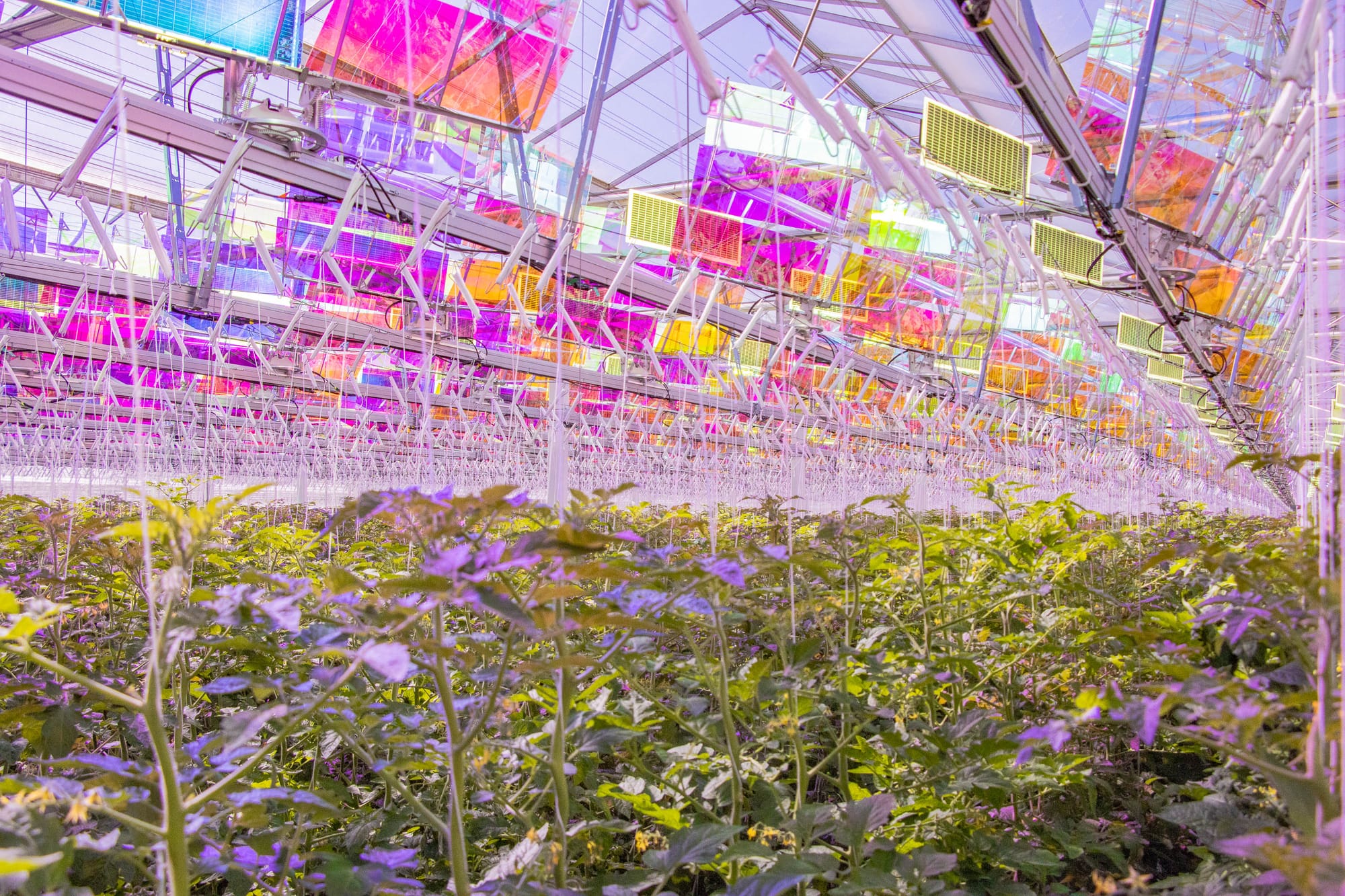
Since its founding in 2021, the young startup has made it its mission to find a good compromise between energy production and plant growth. The solution is called "spectral filtering".