"Members of the 'Swiss Electricity Agreement Alliance' will closely monitor parliamentary debates and provide factual information about the agreement," summarizes Annalisa Job, communications manager for the Association of Swiss Electricity Companies (AES).
"By constantly looking at the surfaces that could still accommodate solar installations, we may be overlooking one possibility: roofs that are already equipped," points out Alban Bitz, director of SI-REN.
The ambition to continue the development of green, reliable and cost-effective energy sources gave rise to new and numerous discussions at the seventh edition of Building Bridges in Geneva.
It is time for Switzerland to engage firmly in the fight against the climate crisis
"Refusing to act today is accepting much higher costs tomorrow — whether it be climate damage, energy dependence, or a loss of prosperity," warns Pierrette Rey, spokesperson for WWF Switzerland.
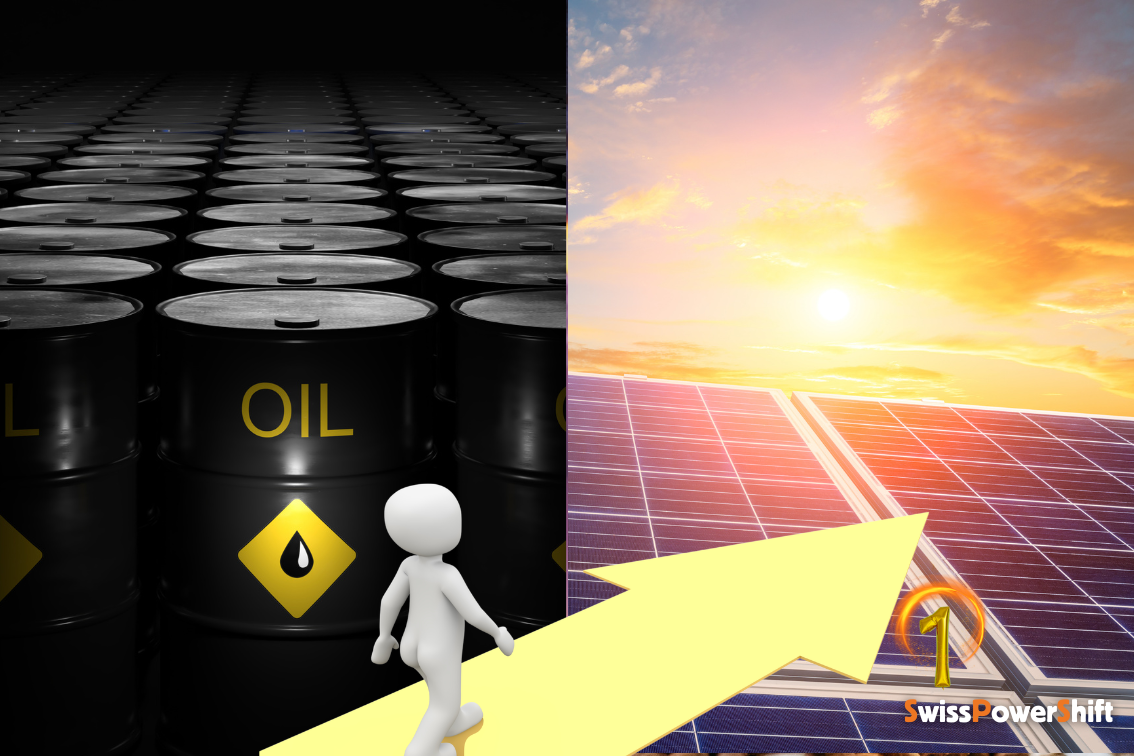
Next March, the Swiss people will vote on an initiative that could mark a turning point in the country's environmental policy: the Initiative for a Climate Fund. It provides for the creation of a fund financed by the Confederation in order to accelerate the transition to a sustainable economy. For Switzerland, this measure represents an opportunity to accelerate decarbonization and strengthen energy security while creating jobs.
The climate crisis is an emergency. Its effects are already being felt: heatwaves, floods and droughts are increasing. Switzerland's climate targets are still far from being met. The initiative proposes a concrete solution to make up for this shortfall.
The need for a climate fund
The initiative foresees investing each year between 0.5% and 1% of Swiss GDP, i.e. between 4 and 8 billion francs. This is certainly a significant investment, but necessary to meet the scale of the challenges. This amount would finance the development of renewable energies, climate-friendly mobility as well as the renovation of buildings, while supporting the population in a collective effort. This fund not only represents additional resources, but serves as a catalyst for projects essential to the country's future.
Some, including the Federal Council, say that Switzerland already has an active climate policy. Yet the two billion currently mobilized are clearly insufficient. All the more so since they come only marginally from the general budget: the majority is financed by taxes and levies charged to consumers and emitters, in accordance with the "polluter pays" principle. The actual collective effort borne by the state therefore remains limited.
True fiscal discipline does not mean cutting back on the climate, but investing where each franc committed prevents tens of francs of future costs.
This underinvestment is all the harder to understand because the economic benefits of decarbonization are considerable. Each year, the importation of fossil fuels costs Switzerland, depending on fluctuations in world market prices, about 8 billion francs. Reducing this dependence would sustainably lighten household bills, strengthen energy security and preserve value added within the national economy. By 2050, the annual savings related to reduced fossil fuel imports could be of the same order of magnitude as the investments required, with positive effects that would extend well beyond.
Added to this are the costs related to climate damages, often invisible in the political debate. According to official estimates, each ton of CO₂ equivalent emitted generates about 430 francs of external costs. Applied to current emissions, this amount represents nearly 20 billion francs per year for Switzerland — and more than 40 billion if consumption-related emissions are taken into account. These costs do not disappear: they are simply passed on to future generations and to other countries.
If certain climate investments are not made spontaneously, it is not because they would be globally unprofitable, but because the market is imperfect. Climate costs are not integrated into prices, benefits do not always return to investors — as in the case of energy renovations of buildings — and many actors lack liquidity or information. In this context, settling for the status quo amounts to sustaining an economic illusion.
A call to action
A credible climate policy does not rely solely on subsidies, but on a coherent combination of incentives, clear rules and targeted public investments. The objective must be clear: make up for the delay and immediately stimulate the necessary investments that are technically feasible and financially sustainable. These are profitable investments, both economically and socially. The Initiative for a Climate Fund would offer concrete levers to achieve this.
Refusing to act today is accepting much higher costs tomorrow — whether in terms of climate damages, energy dependence or loss of prosperity. True fiscal discipline does not mean cutting back on the climate, but investing where each franc committed prevents tens of francs of future costs.
Switzerland, however, has the means to act. What is lacking is not money, but the will to face economic reality. It is therefore high time that Switzerland commit firmly to the fight against the climate crisis. The initiative is a chance to show that the country can live up to its climate ambitions. It constitutes an investment in a sustainable, prosperous and resilient future.
This article has been automatically translated using AI. If you notice any errors, please don't hesitate to contact us.
"Members of the 'Swiss Electricity Agreement Alliance' will closely monitor parliamentary debates and provide factual information about the agreement," summarizes Annalisa Job, communications manager for the Association of Swiss Electricity Companies (AES).
"By constantly looking at the surfaces that could still accommodate solar installations, we may be overlooking one possibility: roofs that are already equipped," points out Alban Bitz, director of SI-REN.
The ambition to continue the development of green, reliable and cost-effective energy sources gave rise to new and numerous discussions at the seventh edition of Building Bridges in Geneva.