"We no longer have any choice but to adapt to climate change"
Interview with Vincent Kaufmann, director of the Ethos Foundation.
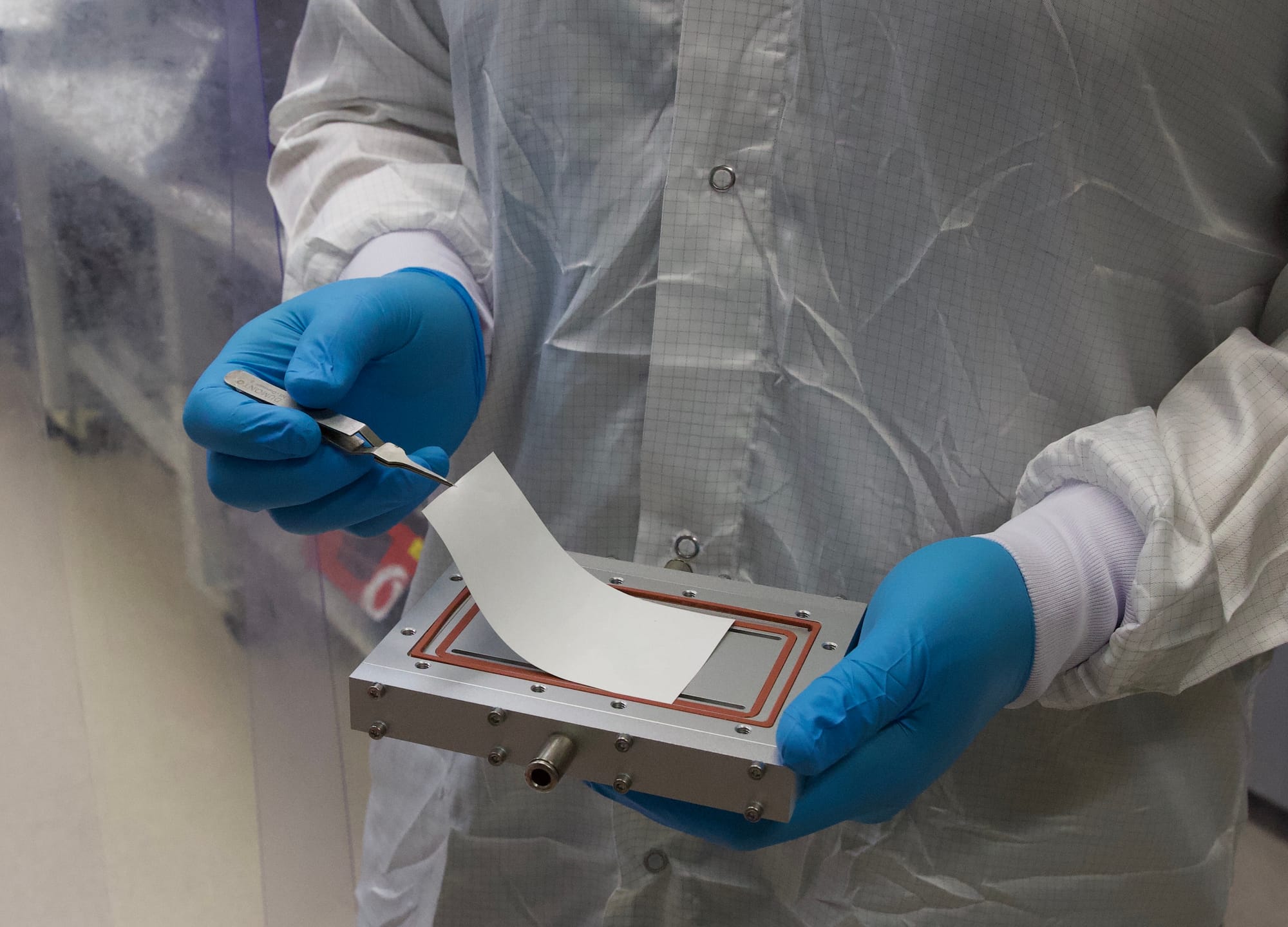
Based near the Energypolis campus in Sion, the start-up is developing there a particular kind of capture technology: a graphene membrane perforated with holes at the molecular scale.
CO₂ capture is one of the flagship topics at the moment. In this period of energy transition and the desire to achieve carbon neutrality within the next two decades, this technology provokes as much hope as controversy in the wake of the various episodes surrounding the company Climeworks.
In this debate around carbon capture, not all technologies are equal, however. They mainly address the problem in different ways. While some actors — including Climeworks — aim to capture CO₂ directly from the air, others prefer to intervene before the carbon escapes into the atmosphere, by capturing it directly at the outlet of industrial chimneys.
This nuance is not only technical, it is also economic. In the atmosphere, CO₂ represents only about 0.04% of the air, which makes its extraction extremely energy-intensive and costly. At the outlet of an industrial site, however, the gas is much more concentrated. Its separation then becomes more efficient, cheaper and above all immediately useful for industrial players subject to regulatory constraints — provided, however, that they have the appropriate technology.
This is where Divea comes in, a start-up located near the Energypolis campus in Sion, and the originator of a revolutionary solution. The young company has in fact developed a capture technology of a particular kind: a graphene membrane pierced with holes on a molecular scale. Composed of a single layer of carbon atoms arranged in a honeycomb, graphene is considered one of the thinnest materials in the world. In nature, the stacking of several layers of graphene forms graphite, a material found notably in pencil leads.
Technically, our technology therefore does not capture carbon in the classical sense; it rather filters gases so as to retain only those we want,
After perforating this membrane at a microscopic scale, Divea uses it as a sort of ultra-precise sieve. “The pores are large enough to let CO₂ molecules pass, but too small for other gases, like nitrogen. Technically, our technology therefore does not capture carbon in the classical sense; it rather filters gases so as to retain only those we want,” explains Karl Khalil, co-founder and CEO of this spin-off from EPFL. According to him, this solution will, in the long term, allow up to 90% of the CO₂ emitted by certain industrial infrastructures to be captured.
This innovation was born in Professor Kumar Agrawal’s laboratory, where the technology has been developed since 2016. Officially founded in May 2024, Divea has three co-founders: Kumar Agrawal, Mojtaba Chevalier, a former PhD student from the same laboratory, and Karl Khalil, a young engineer trained at EPFL. “I joined the adventure after working on a student project related to the XPRIZE Carbon Removal launched by Elon Musk,” he says.
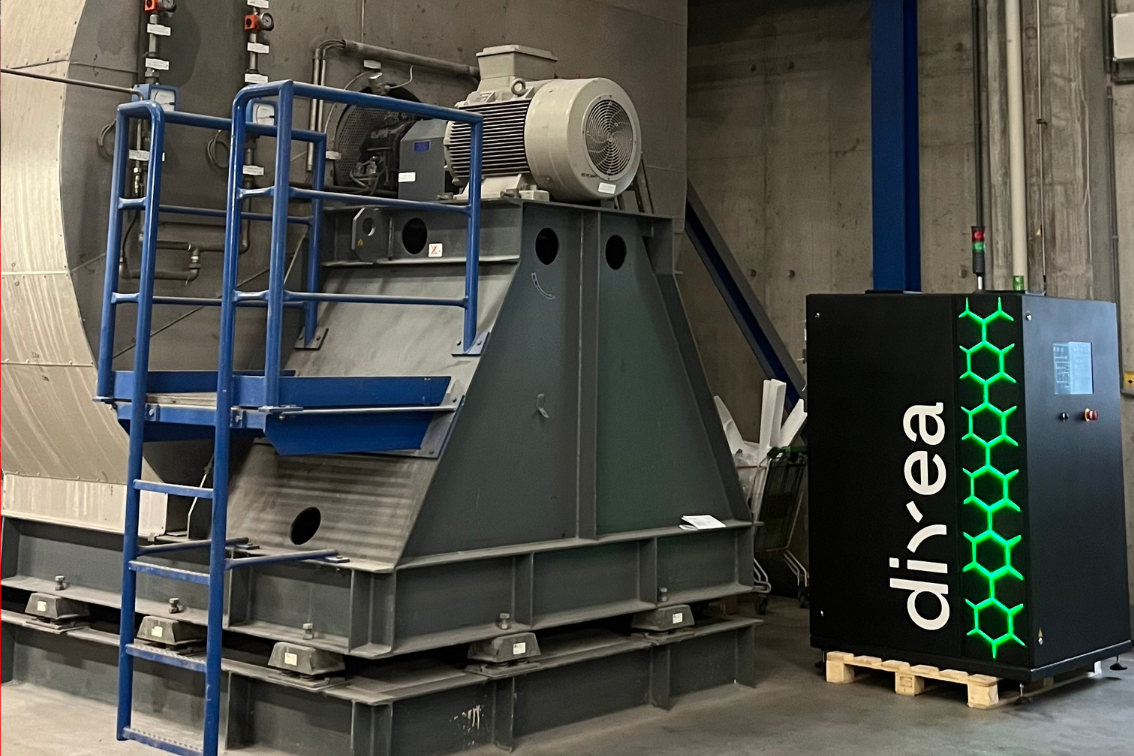
Today, Divea is still in the demonstration phase. After an initial installation put into service in Aigle at Gaznat, the start-up is currently testing its technology at Tridel, the Lausanne waste incinerator. “A particularly demanding environment, where the gases are complex and heavily loaded,” the company points out.
Active for more than 1,000 continuous hours, the membrane has met the challenge posed by the site. The objective now is to move to the next scale thanks to new pilot installations that will be tested over the next two to three years, and then to be able to move to a commercial phase.
The clients targeted by Divea are not companies buying carbon credits in order to offset their emissions, but major industrial emitters, such as cement plants, waste incinerators, aluminum producers or players in natural gas. “We target industries that actually emit CO₂ and that must, notably in Europe, pay for each ton released. For them, the challenge is twofold: reduce their carbon footprint while lowering the cost of taxes or mandatory emission quotas,” explains Karl Khalil.
“The next step is to automate this process through roll-to-roll continuous production, comparable to that used in the paper or textile industry,” explains Karl Khalil.
One of Divea’s main strengths lies in the fact that its membrane is not limited to filtering CO₂. In the long term, this technology could be used for other types of separation such as lithium for batteries, hydrogen, ammonia or certain petrochemical processes. The Valais-based start-up therefore does not see itself solely as a company specialized in carbon capture, but as an advanced materials company capable of controlling molecular pores in a single-atom-thick layer.
Like many industrial start-ups, Divea first benefited from competitions and innovation support schemes. The company notably benefited from programs like Venture Kick while winning several awards intended for start-ups. “But we have now exhausted these prizes, which allow us to raise a few hundred thousand francs,” its CEO explains. The start-up is now looking to raise enough funds to move up a gear.
A real challenge in the current context. “Investors follow cycles and trends of the moment a lot,” laments Karl Khalil. “Just two years ago, everything related to CO₂ easily attracted capital. Then attention shifted to artificial intelligence, temporarily cooling off some financial investors.” Recent controversies around carbon capture have also contributed to fueling some skepticism against the concept.
These funds will allow Divea to meet the industrial challenge posed by its membrane. Today, they are still produced in a quasi-artisanal manner, piece by piece, by highly skilled labor. “The next step is to automate this process through roll-to-roll continuous production, comparable to that used in the paper or textile industry,” the CEO details. An essential evolution to reduce costs and reach industrial volumes.
At the same time, the team must continue to grow. Currently made up of the three co-founders and one collaborator, the start-up hopes to have between eight and ten employees by the end of the year, with the ambition of quickly reaching the coveted status of a scale-up.
This article has been automatically translated using AI. If you notice any errors, please don't hesitate to contact us.

Interview with Vincent Kaufmann, director of the Ethos Foundation.

"The summer of 2026 showed what inaction costs; the courts, for their part, have begun to say who must be held responsible for it," emphasize François de Cambiaire and Lydia Méziani, lawyers at de Cambiaire & Méziani Associates.

Interview with Mélanie Beyeler, Global Head of Sustainable Investing at EFG.
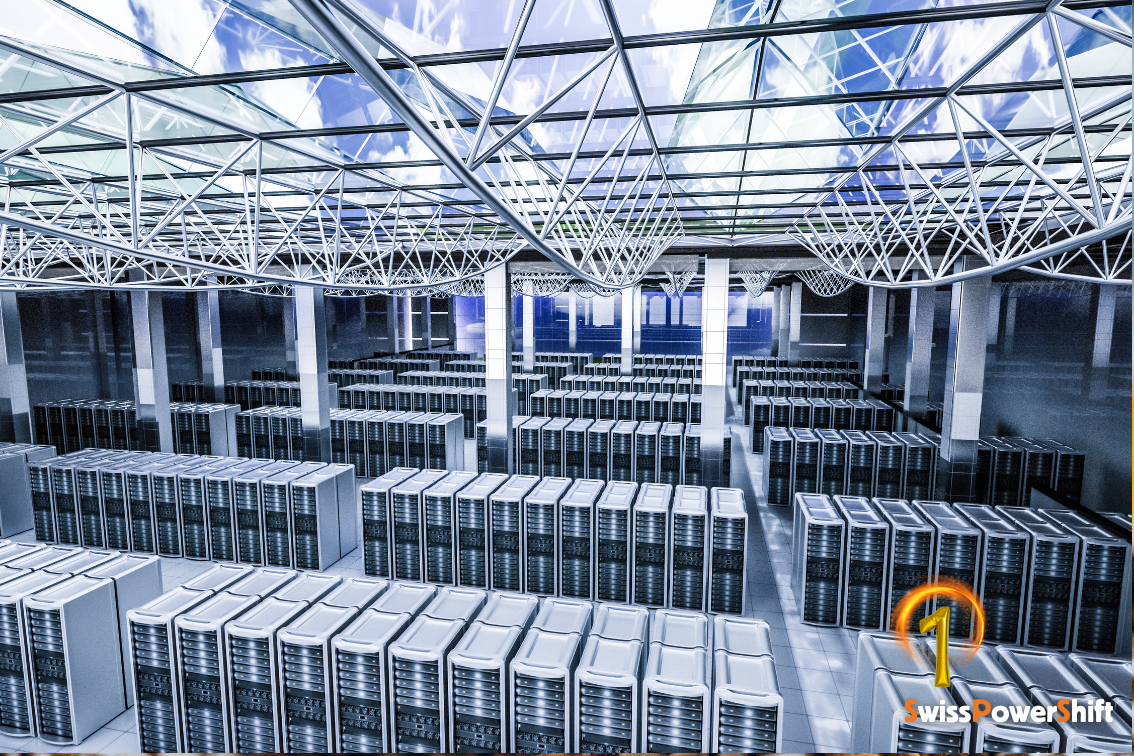
A recent Harvard study highlights close links between the rise of data centers and clean energy. Behind the algorithms lies a purely material reality: a demand for electricity that is skyrocketing and disrupting grids and the energy transition.
Already a member or subscriber? Simply enter your email address to receive instant access to the article. Enjoy!