"One should not expect the energy transition to progress in a linear way"
Interview with Mélanie Beyeler, Global Head of Sustainable Investing at EFG.
Already active in research on their aging with the CircuBAT project, our country could take a new step with the construction of the world's largest battery in Aargau and the opening of a new dry room within the 'Battery Innovation Hub' of Neuchâtel.
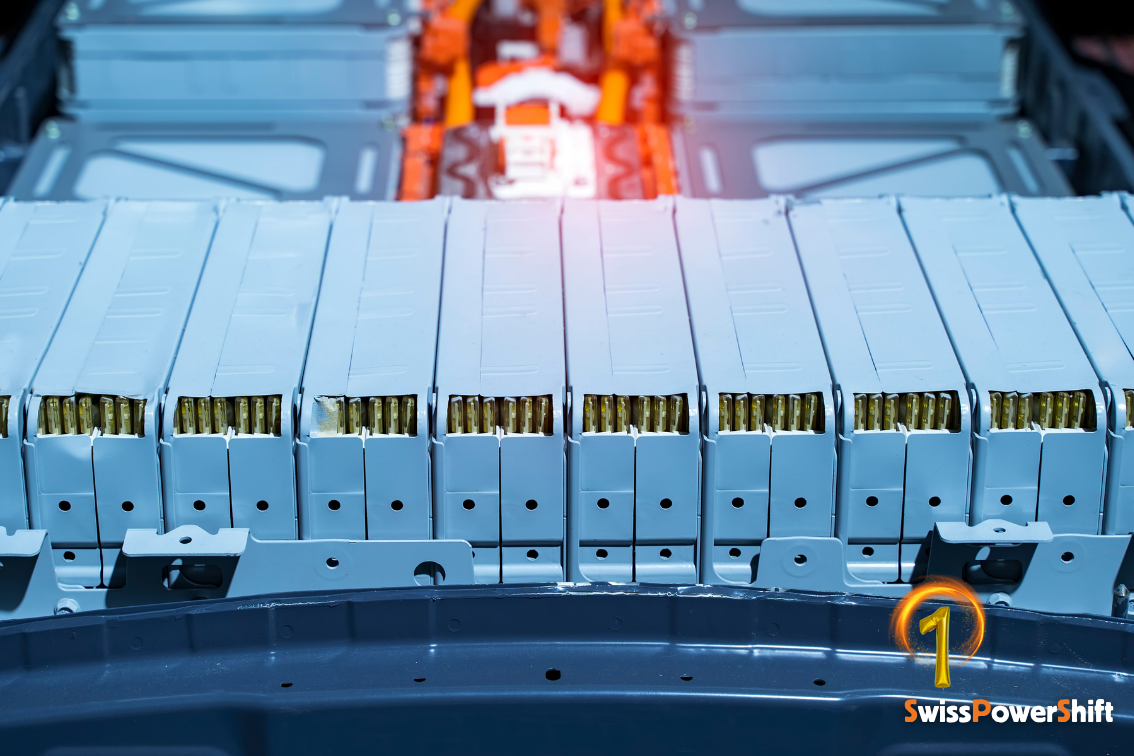
In a few years, they have become a major strategic issue. In a world that is electrifying at high speed, batteries are now at the heart of concerns, whether political or industrial. Despite their importance, a gap is widening between Western countries and those in Asia. Driven by groups such as CATL and BYD, China currently dominates the entire global market.
However, this race is only just beginning and, despite last year’s recent bankruptcy of the Swedish giant Northvolt, it is still too early to determine who will finish first. “We believe that Europe can still be competitive in certain segments, such as high-end cells, securing local supply, regulated markets and strategic customers,” says Stian Ueland on the Allnews.ch platform.
Manager of the DNB Renewable Energy fund at DNB Asset Management, he nevertheless acknowledges that in the short term it is unlikely that the Old Continent will be able to compete with the Chinese leaders in the consumer battery market.
In this race for innovation, Switzerland could end up standing out, given its scientific capabilities. In Laufenburg, in Aargau, the Flexbase group aims in particular to build the most powerful battery in the world. “Installed 27 metres underground, it will be able to inject or absorb, in a few milliseconds, up to 1.2 gigawatts of electricity, the equivalent of the power of the Leibstadt nuclear power plant,” Marcel Aumer, its co-founder, explained to RTS.
This project, estimated to cost between 1 and 5 billion francs and entirely financed by private funds, will rely on “redox” (reduction-oxidation) technology, i.e. processes based on the transfer of electrons between liquid electrolytes, rather than on solid electrodes as in lithium-ion batteries.
Also active in research on battery aging with the CircuBAT project, Switzerland should further increase its expertise thanks to the CSEM and the opening of a brand new dry room within its “Battery Innovation Hub”, in Neuchâtel.
“Those who master their production will control an essential component of the energy transition,” explains Andrea Ingenito, co-head of the CSEM’s Battery Innovation Hub.
By enabling companies, startups and SMEs to access conditions previously mainly available abroad, the Neuchâtel site intends to fill what it has identified as “a major gap” in the Swiss battery innovation ecosystem.
“Those who master their production will control an essential component of the energy transition. Thanks to this dry room, we can develop new materials and cell concepts and demonstrate that their industrial production is possible,” explains Andrea Ingenito, co-head of the CSEM’s Battery Innovation Hub.
Covering an area of approximately 37 m², the facility has a pilot production line for pouch cells of up to 5 Ah, a format widely used in smartphones as well as in electric vehicles. Operating at a dew point of around −50 °C, or even lower, this dry room will offer ideal conditions for working with moisture-sensitive materials such as lithium.
Three questions for Andrea Ingenito, Co-director of the CSEM Battery Innovation Hub.
Is Switzerland’s expertise in the field of batteries sufficient to become an international reference?
Switzerland has exceptional scientific and technological expertise in the field of batteries. Institutions such as EPFL, ETHZ, PSI, EMPA and CSEM cover the entire value chain, from materials to systems, from fundamental research to prototyping and scaling up.
However, the strength of this ecosystem does not lie in mass production, but in cutting-edge innovation, particularly in terms of sustainability (safer solutions and potentially free of problematic substances), high energy density (twice that of lithium-ion technologies), enabling new applications, enhanced safety thanks to non-flammable electrolytes, as well as better understanding and optimization through electrochemical modelling and embedded electronics.
Are batteries also a strategic issue for Switzerland?
They have become a global strategic issue, including for Switzerland. However, rather than aiming for mass production comparable to countries like China or some industrial regions in Europe, we must position ourselves in high value-added segments: breakthrough technologies, pilot production, high-precision tools and specialised applications.
From my point of view, the challenge is less to produce in volume than to master key technologies. In the medium term, localized production in Switzerland is therefore conceivable, but probably in a targeted form: small series, pilot production, high-precision tools or manufacturing of critical components. The aim is not to compete with gigafactories, but to master strategic technologies and secure certain value chains.
What further progress is possible in the field of batteries?
Over the last decade, the energy density of lithium-ion cells has increased by about 50 to 60%, rising from around 150–180 Wh/kg to 250–300 Wh/kg. At the same time, their cost has fallen by nearly 80 to 90%, from about 600 to 1,000 USD/kWh in the early 2010s to around 120–150 USD/kWh today. Very few industrial technologies combine both such performance improvements and such cost reductions over such a short period.
In my view, future progress will occur on several levels:
In summary, innovation in batteries relies on a continuous combination of incremental improvements and technological breakthroughs. O.W.
There are several types of batteries, notably in the field of electric mobility, but lithium-ion batteries (LIB) currently dominate the market. Their lifespan, high energy density and ability to deliver energy quickly are among the main arguments in their favor. Even though the share of lithium contained in a battery is small compared to the other raw materials required, the supply of this resource faces recent geopolitical challenges.
These international tensions have finally convinced the Old Continent to speed up the establishment of its own supply chains. A few days ago, Emmanuel Macron was present in Échassières to inaugurate the lithium mine of the company Imerys. This deposit should allow, from 2030, the extraction of 34,000 tonnes per year of lithium hydroxide and the equipping of around 700,000 electric cars each year.
Whether in France, Finland or Germany through operations to recycle raw materials, Europe now intends to free itself from any dependence on China. This strategy is reflected notably in the Critical Raw Materials Act adopted in 2023.
“Unlike LIBs, SIBs are based on sodium compounds derived from abundant raw materials, far more available than lithium,” say the experts at IRENA.
And what if, in the long run, the solution lies in other alternatives? Without questioning the current dominance of lithium-ion batteries (LIB), it is possible that other technologies will reduce our need for lithium, such as this giant battery in Aargau or those based on sodium-ion (SIB).
Unlike LIBs, SIBs are based on sodium compounds derived from abundant raw materials (such as sodium carbonate), available in much greater quantities than lithium. “This abundance suggests that SIBs could help reduce tensions on supply chains and diversify the battery landscape,” stated a report by the International Renewable Energy Agency (IRENA) published at the end of 2025.
At this stage, the technology is not yet fully mature. It will still have to prove itself, both in terms of costs and industrial capacity. “To fully exploit this potential, it will be crucial to improve key performance indicators — in particular energy density — in the years to come,” confirm the experts at IRENA.
One of the major assets of sodium-ion batteries lies in their significant potential for improvement, compared with the now more limited efficiency gains of lithium-ion batteries. In a few years, thanks to sites like the one in Neuchâtel, it will be possible to determine which material and technology will have the greatest potential. A story to follow.
This article has been automatically translated using AI. If you notice any errors, please don't hesitate to contact us.

Interview with Mélanie Beyeler, Global Head of Sustainable Investing at EFG.
A recent Harvard study highlights close links between the rise of data centers and clean energy. Behind the algorithms lies a purely material reality: a demand for electricity that is skyrocketing and disrupting grids and the energy transition.

"While nuclear power is necessarily part of the long term, photovoltaics and batteries fall into a different timescale: that of the needs we must meet today," says Richard Mesple, CEO of Local Energy.

Interview with Marie-Laure Chapatte, CSR Manager at the Neuchâtel Cantonal Bank (BCN).
Already a member or subscriber? Simply enter your email address to receive instant access to the article. Enjoy!