"One should not expect the energy transition to progress in a linear way"
Interview with Mélanie Beyeler, Global Head of Sustainable Investing at EFG.
"For Switzerland to be able to guarantee its digital independence, it must find a balance between computing power, energy and sustainability," explain Bastien Girod and Marc Beierschoder, both partners at Deloitte Switzerland.

The current dependence on large foreign cloud services is not without consequences. A recent example proves this: in mid-October, an outage of the cloud service of a leading internet service provider paralyzed numerous websites, applications and services. It affected Switzerland, given that the federal administration, banks and many companies are among its clients.
As another incident showed — this time at the International Criminal Court in The Hague at the beginning of the year — the influence of political actors also represents a growing danger to our digital independence.
These two examples illustrate the importance of a "sovereign cloud", that is to say a system based on local data centers, subject to domestic legislation, complying with national security standards and providing protection against foreign access. However, what appears positive at first glance also presents several challenges.
With more than 90 data centers, Switzerland is already one of the most densely populated cloud sites in Europe. Our electricity needs are also expected to continue to rise sharply in the coming years, notably due to the growth of artificial intelligence (AI) and the increased onshoring of digital services. Without close coordination between the Confederation, the cantons, energy providers and the business community, capacity shortages are to be feared.
In terms of AI, companies should also distinguish essential applications from those that are not.
In this context, political leaders and authorities are also being called upon: they must actively support the development of energy supply and the grid. Public authorities can, for example, strengthen planning security through strategic investments, joint procurement programmes and public-private partnerships, as has been done successfully in the energy and mobility sectors.
It is also essential to accelerate authorization procedures for data centers, make use of existing industrial zones and integrate these needs into spatial planning as well as into the 2050+ energy strategy. These measures are sensible from the point of view of sovereignty and, moreover, help to strengthen the resilience of our economy.
On the demand side, companies can help prevent any capacity shortfall. First, they must develop strategies to use AI effectively and in a targeted manner, while monitoring their electricity consumption and optimising it by selecting energy-efficient models.
Also with regard to AI, companies should distinguish essential applications from those that are not. Non-essential workloads could thus be deferred in a targeted way during periods of high hydroelectric or solar production.
It would also be appropriate to clearly distinguish the data that must remain in Switzerland for regulatory or security reasons from those for which hybrid models prove more effective.
Finally, levers exist within data centers themselves: by investing in highly efficient chips, operators can increase computing power without additional energy needs.
Switzerland has all the assets necessary to ensure its digital sovereignty: stable energy, reliable institutions and great credibility.
Moreover, modular micro data centers could, for example, provide a flexible complement to the existing infrastructure, particularly in rural areas. The use of liquid or immersion cooling, as well as the recovery of waste heat from data centers, are also relevant, provided these centers operate on renewable energy.
Vantage Data Centers, for example, plans to build a new data center campus in Volketswil, in the canton of Zurich. The company Energie 360° intends to use the waste heat from this site to provide CO₂-neutral thermal energy to more than 7,000 households in the surrounding municipalities. Such projects could also be deployed in the French-speaking cantons, where district heating networks and energy providers are available.
To create a "sovereign cloud", the state and the economy must jointly define a strategy for energy sovereignty and data management. This will ensure the adoption of best practices, preserve flexibility and, consequently, strengthen public trust.
Switzerland has all the assets necessary to ensure its digital sovereignty: stable energy, reliable institutions and great credibility. The task now is to combine these assets and put in place a sustainable cloud infrastructure capable of guaranteeing both economic independence and social acceptance.
This article has been automatically translated using AI. If you notice any errors, please don't hesitate to contact us.

Interview with Mélanie Beyeler, Global Head of Sustainable Investing at EFG.

By combining energy management systems, decentralized generation and storage solutions, facility managers have a strategic opportunity: to transform their buildings according to the "building as a grid" model, says Kamal Mehta, Product & Offer Manager EMEA at Eaton.
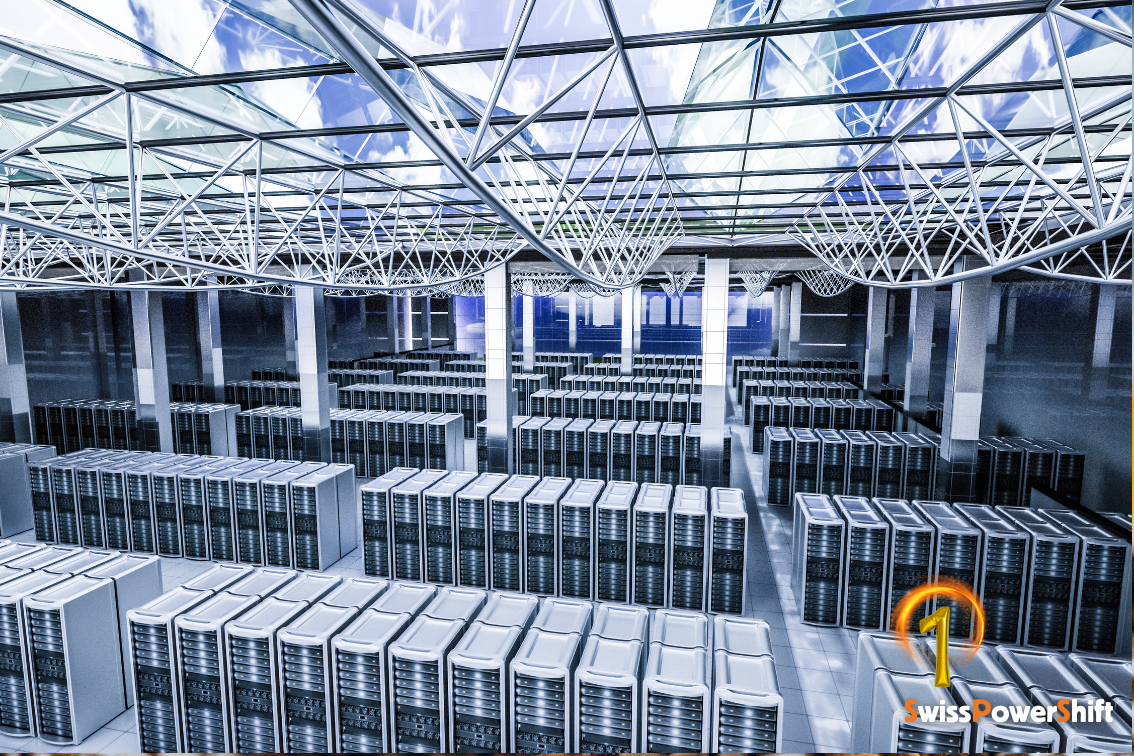
A recent Harvard study highlights close links between the rise of data centers and clean energy. Behind the algorithms lies a purely material reality: a demand for electricity that is skyrocketing and disrupting grids and the energy transition.

"While nuclear power is necessarily part of the long term, photovoltaics and batteries fall into a different timescale: that of the needs we must meet today," says Richard Mesple, CEO of Local Energy.
Already a member or subscriber? Simply enter your email address to receive instant access to the article. Enjoy!