Fifty years of commitment to a sustainable energy policy: the Swiss Energy Foundation (SES) celebrated this symbolic anniversary on June 26, 2026 at the ewz Selnau substation in Zurich, in the presence of more than a hundred guests. It was an opportunity to look back on half a century of struggles, debates and innovations in service of the energy transition with Thierry Monnin, spokesperson for the Foundation. Interview
After so many decades of engagement, notably in politics, what major changes do you see today in the evolution of the political and social climate?
The most striking change is undoubtedly that many ideas considered marginal in the 1970s have today become much more consensual. Energy efficiency, the development of renewable energies and the need to move away from fossil fuels and nuclear power are now an integral part of the political debate.
The energy issue has also become more complex. The energy transition today lies at the heart of much broader challenges than fifty years ago. It no longer concerns only energy supply, but also the climate, geopolitics, infrastructure security, innovation and energy independence. Energy has thus imposed itself on the public debate, where it plays an essential role in the societal choices available to us.
What were the reasons for creating the Swiss Energy Foundation (SES)? Did you think at the time that it would carry out so many years of engagement?
The Energy Foundation was born in 1976 from an observation: major energy decisions were being made almost exclusively by industry actors, in a climate of near-absolute confidence in nuclear power and faith in continuous consumption growth. Its founders wanted to challenge these decisions with an independent, scientific and critical voice.
Over the years, the Energy Foundation has thus established itself as a reference in Swiss energy policy.
Did you think then that it would lead to so many years of engagement?
I do not know whether they imagined that the Foundation would still be active fifty years later. In any case, it quickly met with a certain success, because it responded, in my view, to a double need: to enable a better understanding of energy issues, which are often complex but affect the entire population, and to nourish democratic debate. Over the years, the Energy Foundation has thus established itself as a reference in Swiss energy policy, by participating in federal consultations, national campaigns and parliamentary debates.
The fact is that energy is a field where transformations take place over the long term. Major political battles are rarely won in a single generation. Changes in mentality take time, as does the construction of infrastructure, which spans several decades.
Switzerland has set climate targets for 2050. The progress made is real, but their achievement is not guaranteed. The Energy Foundation will continue its commitment until these targets are met and a secure, renewable and sustainable energy supply is guaranteed in our country.
What is your assessment of this half-century of engagement?
Our history is marked by numerous defeats at the ballot box, but also by many victories on the field of ideas. We notably lost several anti-nuclear initiatives in the 1980s, 1990s and 2000s. Yet these setbacks helped to advance the debate. Today, questioning nuclear power goes hand in hand with the development of renewables and improvements in energy efficiency. These issues are now at the heart of the public debate and constitute pillars of Swiss energy policy.
Among the major successes, mention should be made of the nuclear moratorium adopted in 1990, for which the Foundation was heavily involved. This suspended, for ten years, the issuance of new general authorizations for the construction of nuclear power plants. This political decision opened the way to the gradual phase-out of nuclear power, enshrined by the adoption of the Energy Strategy 2050 in the 2017 popular vote.
One can also cite the Climate Act, accepted in 2023, and the Electricity Act, adopted in 2024, two essential milestones of the energy transition. We are also proud to have contributed to sustainable projects such as the Energy City label or the creation of the Swiss Agency for Energy Efficiency.
How do you explain the current situation, marked notably by a slowdown in the energy transition and a renewed interest in nuclear power?
The return of nuclear power is largely explained by an alarmist discourse about security of supply, suggesting that Switzerland is threatened by an electricity shortage or a risk of blackout. Yet the facts speak for themselves. In 2005, final electricity consumption in Switzerland amounted to about 57.3 TWh. Twenty years later, it is around 57.9 TWh. Thanks to energy efficiency, consumption has not exploded despite population growth and the electrification of uses.
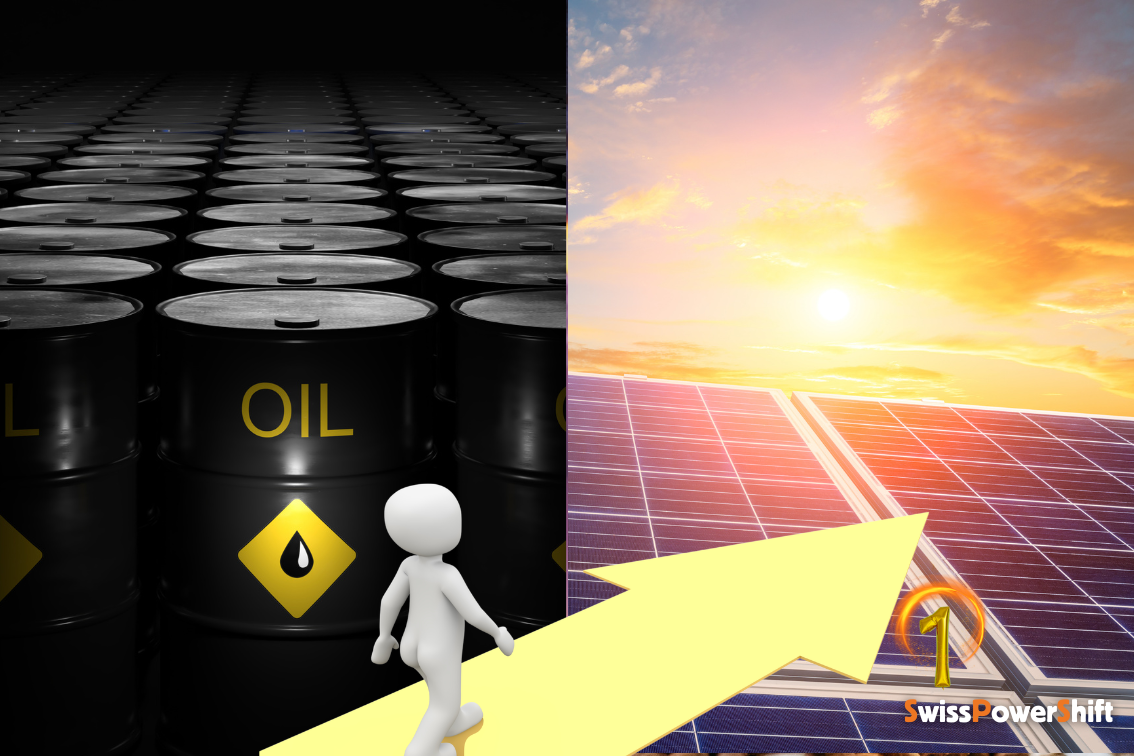
Today, the energy transition is well underway and already bearing fruit. Solar power is experiencing strong growth and is now competitive. Over the past three years, solar energy alone has compensated for the winter production of the Mühleberg nuclear plant. Storage technologies are also progressing rapidly and the most effective measures provided for by the Electricity Act only came into effect this year. We therefore do not lack solutions but political will to implement them quickly enough.
The energy future must be conceived on the basis of solid scientific knowledge and independent expertise.
There is sometimes the impression that the public debate is becoming tense, that positions are hardening and that actors reach agreements without really listening to each other, especially in politics. How can the population be remobilized in favor of the energy transition?
The energy transition cannot succeed if it is perceived only as a succession of constraints. It must above all be presented as an opportunity: to offer Switzerland greater energy independence, to reduce geopolitical risks, to strengthen the resilience of its economy by creating local jobs and to help preserve the climate and our environment. It also brings a better quality of life and should be defended as such. These are the benefits that, in my view, it is essential to use to remobilize public opinion.
The debate should also go beyond the simple left-right divide. Today, growing opposition to the energy transition is being orchestrated by the right and some proponents of nuclear power. Parliament has also become aware of the need to accelerate procedures and has adopted, through certain legislative reforms, measures intended to shorten decision times. However, it will still take time before these measures fully produce their effects.
The energy future must be conceived on the basis of solid scientific knowledge and independent expertise. It is on this condition that the democratic debate can fully play its role, in an open dialogue among all actors, and enable the population to make informed choices.
What are your main battles at the moment and what hopes do you have for the years ahead?
We are committed to preserving the ban on building new nuclear power plants. Not out of ideological attachment, but because we believe that nuclear power does not provide an appropriate response to current challenges. Moreover, every franc invested in a new nuclear power plant is a franc that is not invested in the development of local renewable energies, which are less expensive and available much more quickly.
Our priority remains to accelerate the development of renewable energies and to strengthen energy efficiency in order to guarantee Switzerland’s security of supply, to reduce its dependence on fossil fuels and nuclear power, and to meet its climate targets.
We also want to bring energy sobriety back to the heart of the public debate. Because the cheapest energy is the energy we do not consume. Even today, we waste a significant share of our energy. A more sober and efficient use of our resources will help improve our quality of life.
Our hopes are rooted in our history. Many ideas we defended in 1976 then seemed unrealistic. They have today become self-evident. This experience reminds us that it is possible to profoundly transform a country’s energy policy, provided one adopts a long-term vision, shows consistency and does not call into question the progress already made. Switzerland has the means to become a model in energy policy.
This article has been automatically translated using AI. If you notice any errors, please don't hesitate to contact us.