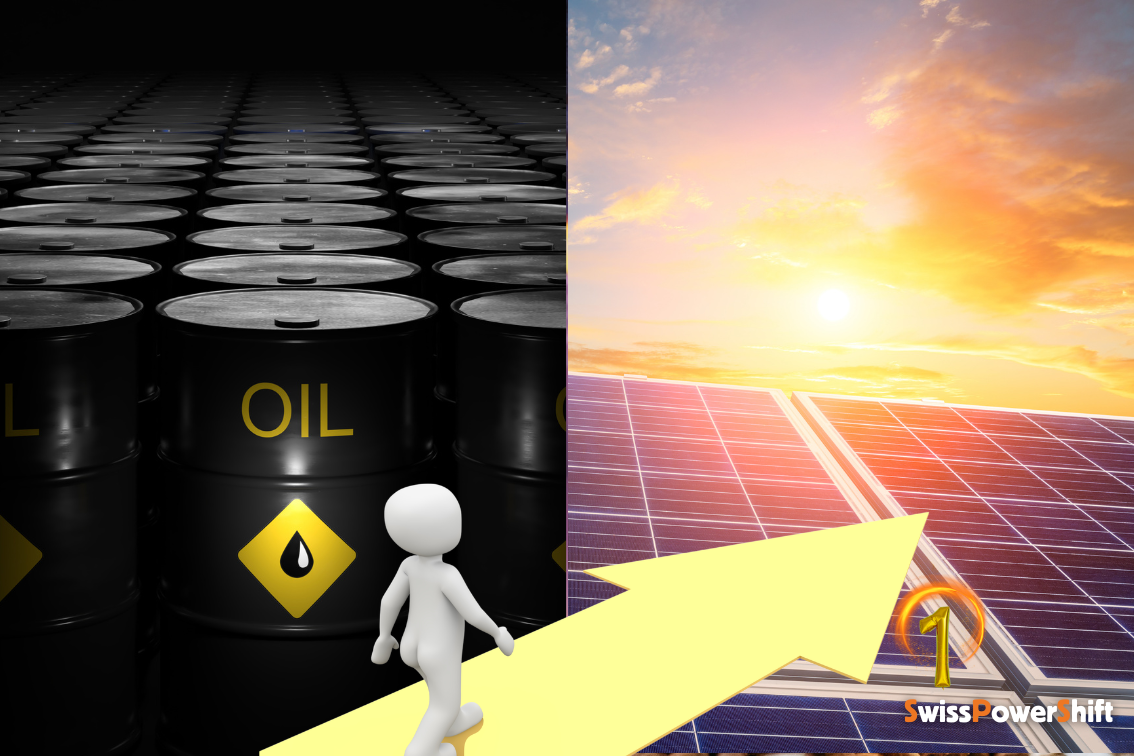
The core of our energy future lies in electrification. Recent events remind us of this, not without stirring a certain feeling of bitterness. Electrification is not a response to an emergency: it is a policy to be pursued over the long term, precisely to avoid crises like the one we are experiencing.
Our dependence on fossil fuels, largely imported, constitutes a vulnerability repeatedly revealed by geopolitical events beyond our control. This was the case with the nuclear program launched in France at the time of the oil shocks of the 1970s. It represented a structural response to the crisis, but in concrete terms it covered only part of our energy consumption: electricity.
The rhetoric about electrical autonomy has led people to think the same applied to all energies, the confusion between electricity and energy being common in the media as well as in political speeches. But this is not the case: in France, 60% of the energy consumed is still imported, mainly in the form of gas and oil.
Today, the awakening is painful. Crises follow one another and, each time, an emergency plan is put in place to deal with the most pressing needs. Plans that cost a lot, mobilizing money that would be far more useful to initiate the structural transformations necessary to reduce our energy vulnerability.
And yet, we have long known that electrification is a solid basic solution, to be complemented by other local energy sources, such as geothermal energy, biomethane and, in the longer term, marine energies. In France, we could become energy-autonomous and, moreover, make savings.
The fact is that the total cost of a kilometer traveled by electric truck or car is one third less than that of the same kilometer covered with a combustion vehicle — and this calculation was made before the current crisis. All this with an exemplary carbon footprint. Heat pumps also heat us for much less than oil or gas. And in industry, electric furnaces are also more efficient than thermal ones in most cases.
No longer act only in times of crisis
What is worrying is that these elements have long been known and that we only take them into account in times of crisis. As if the tens of billions devoted each year to the purchase of hydrocarbons were not a major problem, as if the announced reindustrialization did not require abundant decarbonized energy.
While we are prepared to spend considerable sums each year on our defense, notably to deter potential adversaries from any aggression, why are we incapable of investing to ensure our economic security, at least as threatened as our military security? Are we really incapable of anticipating?
Electrification is highly cost-effective, and a concern for equity would mean that the most disadvantaged should have priority access to it.
This incapacity may be due to the widely held idea that electrification is expensive. An idea, however, that is totally false, as we have seen, but one that hurts. It is explained by the fact that we no longer pay for the service rendered — the kilometer traveled, the apartment heated or the industrial use — in the same way as before. Most of the expense is concentrated on the initial investment, whereas older techniques spread it over the equipment's lifetime.
The entry price into electrification is therefore high, but once this obstacle is passed, substantial savings are possible. One therefore has to be wealthy to have access to the most economical system in the long term, which illustrates well the popular adage: "It is expensive to be poor."
This first step is high, sometimes too high. And it represents a major handicap, especially when loan interest rates are high. This difficulty should not obscure the reality: electrification is highly cost-effective, and a concern for equity would mean that the most deprived should have priority access to it.
New economic models
The solution could lie in a new financial organization. Social leasing for cars is an eloquent illustration. Financial engineering would therefore become the key to electrification, beyond the cost of services and equipment, which could of course decrease as the market develops.
This change in the mode of payment is not new. It is already at work in many fields, such as telephony, where the subscription system allows the expense to be spread over the entire period of use of the equipment. So why are such mechanisms not being developed for electrification, despite all the rhetoric endlessly broadcast?
The imagination of financiers is not to blame. There is another limiting factor. The hypothesis of an insufficient supply can indeed be advanced. Take the example of electric vehicles and the equipment that accompanies them, such as charging stations. The fear of seeing the French market invaded, notably by foreign manufacturers, leads the public authorities to control the growth of the electric vehicle fleet in order to give French and European manufacturers time to respond to demand. The same logic applies to other electrical equipment, insofar as we failed, in Europe, to anticipate this evolution.
And then there is electricity. We currently benefit from excess production, but a rapid increase in the electrification of traditional uses, combined with the development of new uses, notably that of artificial intelligence, would quickly lead to saturation, even to a deficit in electricity production.
This forced electrification of our societies could be all the more complex because it could not rely on new nuclear power, the effects of which we do not expect until the end of the next decade. The increase in supply could then only come from a massive development of renewable energies, accompanied by an ambitious program of savings in sectors already electrified, in order to regain room for manoeuvre.
What we are currently observing is a form of inertia, barely shaken by crises.
Investing over the long term
The urgent priority would already be to stop spreading the idea that electrification is expensive: it is a manifest falsehood. Let us rather accompany it with an industrial policy aimed at manufacturing the necessary equipment in Europe. Admittedly, these are considerable investments, but they are also highly profitable investments, both for the community and for each of us and for each of the companies concerned.
Of course there are interests at stake. The necessary transformations will upset balances established in other times. We must accompany the change and carry it out over the long term so that it is acceptable to the greatest number. But what we are observing today is a form of inertia, barely shaken by crises.
Is this due to the fact that "we do not believe what we know," as Jean-Pierre Dupuy suggests? To the heaviness of institutions, incapable of adapting to realities and, even more, of anticipating? Or to the clumsiness of the agents of change, in their impatience to advance it? Whether it is for energy, and probably for many other vital areas, such as health and food, are policies that only make sense over time doomed to advance only at the pace of crises, in haste and sometimes in pain?
The answer is probably to be found in our institutions, where the weight of the immediate has become excessive. The time factor is now a victim of the acceleration described by Hartmut Rosa and other philosophers. Yet to go far, one must know how to take one's time.
This article has been automatically translated using AI. If you notice any errors, please don't hesitate to contact us.