"We no longer have any choice but to adapt to climate change"
Interview with Vincent Kaufmann, director of the Ethos Foundation.
President of the Valais Association of Electricity Producers (AVPEE) and general manager of FMV, Stéphane Maret vigorously defends this initiative. interview.

After the apricots and the asparagus, Valais now intends to affix its famous "Marque Valais" label to electricity produced by its dams, its wind turbines and all the solar panels installed in the canton. According to Franziska Biner, head of the Department of Finance and Energy, "renewable-origin energy, in particular hydroelectricity, is part of Valais's identity and future."
This desire to make the French-speaking canton a pioneering place for 100% renewable, local and sustainable energy is already shared by several regional suppliers, such as Sinergy in Martigny (130 million kilowatt-hours of electricity distributed each year) or EnBAG in Brig (175 million kilowatt-hours). "Our customers attach increasing importance to the origin of energy. With this product, we will be able to offer Valais electricity supported by committed and responsible actors," explains John Sieber, director of the Brig-based supplier.
President of the Valais Association of Electricity Producers (AVPEE) and CEO of FMV, Stéphane Maret vigorously defends this initiative, admittedly somewhat odd in view of the laws of physics, which determine the path of electrons in the grid and make their origin impossible to identify. Interview.
People often talk about a real jungle given the number of labels that exist today. Was it therefore really relevant to label the electricity produced in Valais?
Today, the "Marque Valais", promoted by Valais Promotion, enjoys strong recognition. It is even the best-known label in Romandy, with 53% of people surveyed saying they know it. Many Valais products are sold under this name, notably apricots, asparagus, wine and many other regional specialties.
According to an observation made by Damien Constantin, director of Valais Promotion and responsible for the Marque Valais, when you go to Zurich, people know Valais wines and products well, but often ignore that Valais is the main producer of renewable energy in Switzerland.
Our aim was to make available to those who wish a simple, reliable means that can easily be associated with hydroelectric production in order to clearly guarantee Valais origin. Above all, it is about indicating that this energy is renewable, local and comes from Valais.
Electricity is, by nature, moving. It mixes with different sources through the grid. Result: it is impossible to determine the exact origin of the electricity we consume and therefore to know whether it is labeled or not…
You are right: electrons follow Gustav Kirchhoff's laws. As an electrical engineer, I can confirm this: it is indeed these physical laws that determine the path of electrons in the grid. That belongs to the exact sciences.
On the other hand, it is labels that steer investment flows. In other words, when, tomorrow, consumers in Geneva, Zurich or Sion decide to buy electricity labeled "Marque Valais", they will actually direct financial flows in favor of kilowatt-hours (kWh) produced locally and sustainably.
In the event of a major crisis, customers who have reserved this labeled energy will have the kWh purchased from a Valais producer.
Added to this is an issue of supply security. If distributors — as is already the case today — buy Valais energy for the next four or five years, they secure their supply in the long term. Thus, in the event of a major energy crisis, shortage or consumption restrictions, customers who have reserved this energy will have the kWh purchased from a Valais producer.
A simple analogy can be drawn: if you buy Valais asparagus today for next year, you will be delivered. In the same way, if you buy kWh of Valais energy for the following year, you will benefit from that energy, whether it physically comes from the Mauvoisin dam, the Grande Dixence or elsewhere.
Does this label constitute a means of finding the necessary financing to invest in the grid as well as in renewable energy production?
The grid is not directly concerned since, as a monopolistic system, operators have revenue guarantees specifically intended to ensure the investments necessary for its proper functioning.
However, a label can indeed direct financial flows towards energy production in Switzerland and, in our case, in Valais. Today, many distributors procure freely and on a short-term basis where they wish, which could create supply risks in the future.
We had an illustration of this in 2022. At that time, a combination of events led to a major energy crisis. In France, nearly a third of the nuclear plants were offline due to corrosion problems. At the same time, the war in Ukraine triggered by Russia severely disrupted energy markets. It was the succession of these factors that caused the energy crisis we experienced.
The current situation related to the war in the Middle East is somewhat different. There is not, at this stage, an immediate major threat to the security of Switzerland's electricity supply, except in the case of a sustained deterioration affecting European imports during the winter. However, there is upward pressure and increased volatility in electricity prices, particularly on wholesale markets and contracts exposed to market fluctuations.
Your initiative therefore represents a kind of guarantee in favor of basic supply?
It can be seen that way. It is above all a process driven by the producers themselves, and an opportunity offered to members of the Valais Association of Electricity Producers (AVPEE) to affix a Valais origin label to the electricity they produce.
Distributors then come into play. They will have to explain to their customers that they source from producers such as Axpo, Alpiq, FMV or other Swiss players in "Marque Valais" labeled electricity.
They will thus be able to tell their customers — for example the residents of Martigny in the case of Sinergy —: "You benefit from 100% 'Marque Valais' energy. We guarantee you electricity from Valais production." Local consumers will thus have the option to choose electricity carrying the Valais label.
Doesn't this label risk raising the price of energy for distributors and, indirectly, for consumers?
Today, that is not the case, because our industry is essentially based on supply and demand logic. We sell our energy at the market reference price, at the European level. Although there are some differences related to borders or transport costs, it is broadly a common market with a shared reference price, which may include — or not — a guarantee of origin.
Currently, some consumers take a strictly economic approach and consider that the origin of energy hardly matters: whether it comes from German gas, French nuclear or a Valais dam, they simply choose the cheapest option. They therefore pay only the price of energy, without valuing its origin.
The situation is, however, changing. With the ongoing energy transition, electricity consumption should increase, notably due to the electrification of uses: electric vehicles, heating, etc. In this context, the origin of energy represents supply security and therefore a central strategic element.
It is precisely with this perspective that our approach fits. Nevertheless, at this stage, it is not possible to set a specific price for this offer, that price remaining determined by market mechanisms.
If other cantons wish to put in place similar initiatives, it would be a good thing in a country where 70% of energy comes from imports.
Yet, in terms of price, aren't you ultimately the one holding the knife by the handle?
It depends on the periods. In a energy crisis, producers do indeed find themselves in a position of strength. They are therefore the ones who "hold the knife by the handle" as you say. However, when market prices are low — as is the case today — the balance of power reverses and distributors have more of an advantage.
In 2022, energy prices were extremely high. Today, they are much lower. Added to this are seasonal variations: in summer, production is often in surplus relative to consumption, which strengthens the position of distributors. In winter, by contrast, demand increases sharply, which can give producers an advantage again. It should be remembered that this is a free market, where prices fluctuate constantly, sometimes even from one day to the next.
Would you be open to other regions of Romandy adopting their own label?
We are launching this initiative in Valais because we master the mechanisms. But, in my view, if other cantons with local renewable energies wish to put in place similar initiatives, it would be a very good thing in a country where 70% of the energy consumed comes from imports (including fossil energies).
From the point of view of supply security and the success of the energy transition, such Swiss labels would be positive, because they would direct financial flows towards energy production in Switzerland.
In this context, if cantons like Graubünden or Ticino also label their renewable energy production, that would pose no problem. On the contrary: such a development would be beneficial, because Switzerland will in any case lack renewable energy in the future, notably due to the increasing electrification of uses and the decarbonization of energy.
This article has been automatically translated using AI. If you notice any errors, please don't hesitate to contact us.

Interview with Vincent Kaufmann, director of the Ethos Foundation.

"The summer of 2026 showed what inaction costs; the courts, for their part, have begun to say who must be held responsible for it," emphasize François de Cambiaire and Lydia Méziani, lawyers at de Cambiaire & Méziani Associates.

Interview with Mélanie Beyeler, Global Head of Sustainable Investing at EFG.
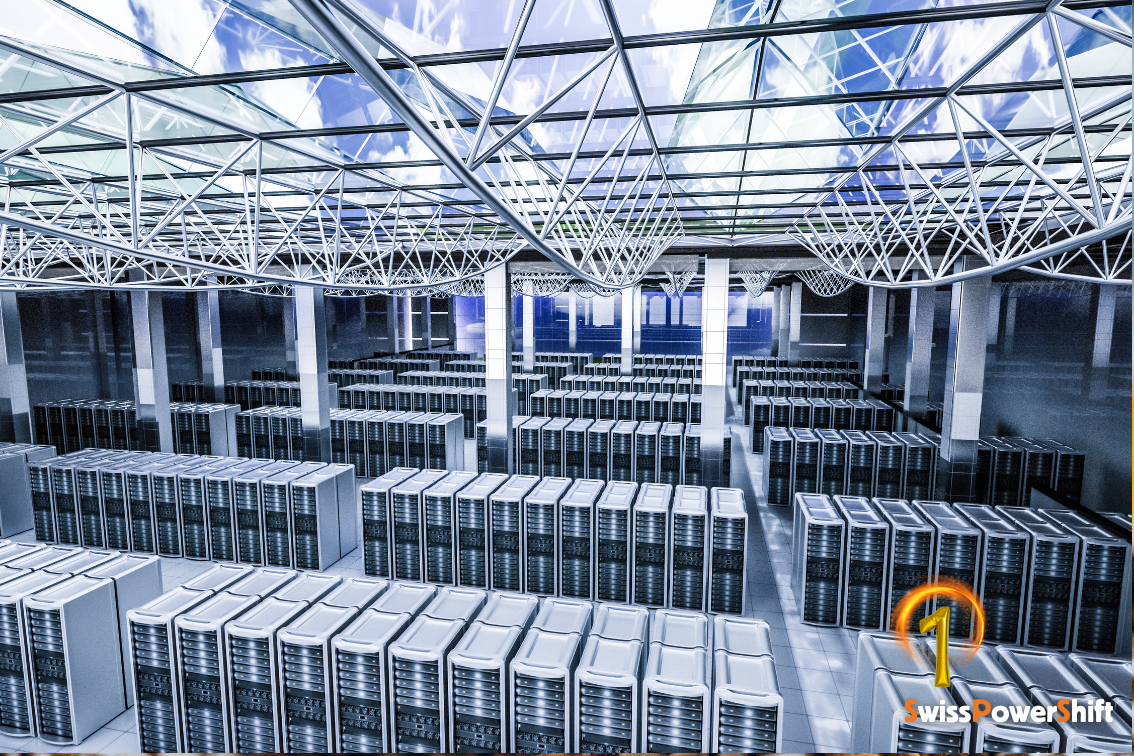
A recent Harvard study highlights close links between the rise of data centers and clean energy. Behind the algorithms lies a purely material reality: a demand for electricity that is skyrocketing and disrupting grids and the energy transition.
Already a member or subscriber? Simply enter your email address to receive instant access to the article. Enjoy!