By naming their first edition "Wind farms are taking shape", the industry's players want to show a certain optimism despite a context that remains complicated for the sector. A look by Benoist Guillard, president of the Groupe romand pour l’énergie éolienne (GREE).
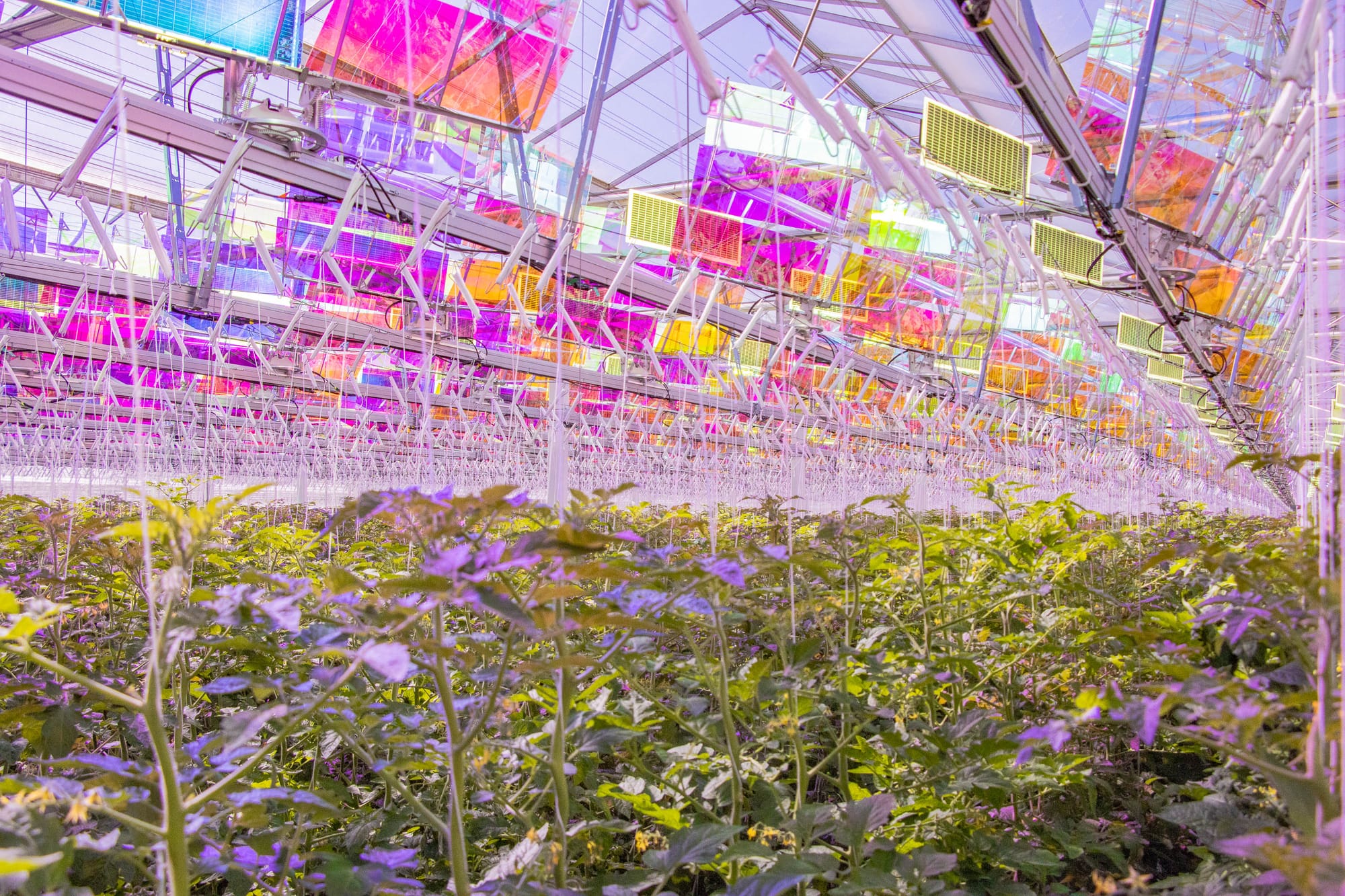
Since its founding in 2021, the young startup has made it its mission to find a good compromise between energy production and plant growth. The solution is called "spectral filtering".
"Despite expectations, substantive discussions could not begin for lack of operational arrangements for the panel. Moreover, in the absence of a dedicated international body, the regulation of pollutants remains fragmented," worries Henri Klunge, chemical engineer and founder of Alcane Conseils.
"Switzerland must guarantee a certain level of energy autonomy, especially in winter"
By naming their first edition "Wind farms are taking shape", the industry's players want to show a certain optimism despite a context that remains complicated for the sector. A look by Benoist Guillard, president of the Groupe romand pour l’énergie éolienne (GREE).
The Groupe romand pour l’énergie éolienne (GREE) is organizing at the start of this spring the Wind Meetings, the first edition of an event destined to become an annual gathering. This initiative aims to bring together industry stakeholders, municipal and cantonal authorities, as well as anyone interested in the development of wind energy in French-speaking Switzerland.
This event takes place in a complicated context for the sector, notably marked by the filing last year of two initiatives in Switzerland widely perceived as anti-wind. Filed on 25 July 2025 and validated at the end of September, the two federal popular initiatives “Against the destruction of our forests by wind turbines (initiative for the protection of forests)” and “For the protection of direct democracy regarding wind farms (initiative for the protection of municipalities)” have once again brought the wind issue back into discussion in Switzerland. We talk about it with its president, Benoist Guillard.
Wind power has been struggling in Switzerland for several years. What assessment do you make of 2025?
Last year, work began on the Sur Grati park. A building permit was also issued for the EolJorat Sud project and, in early January 2026, the Federal Court issued a favorable decision for the Montagnes-de-Buttes project. At Mollendruz, an educational trail has been set up on the site of the future park and is seeing good attendance. These are therefore late, but overall positive, developments that set the tone for our first Romandy Wind Meetings: “Wind farms are coming out of the ground.”
A mixed year, notably marked by the filing of initiatives seen as anti-wind… How do you explain this ongoing distrust of wind power in Switzerland?
In 2024, the population expressed strong support for the Electricity Act, as well as for its targets for developing renewable energies in Switzerland, particularly for winter production. The filing of the anti-wind initiatives can be seen as a backlash effect.
In reality, they remind us that a minority remains strongly opposed to wind power, sometimes for reasons related to landscape protection, but often in a NIMBY (“not in my backyard”) logic, that is to say “not next to my home.” This minority manages to cross the threshold of 100,000 signatures. We are mobilizing, however, with Suisse Éole at the national level so that the majority remains favorable to wind power.
Wouldn't it ultimately be better to finance wind projects abroad, in countries less opposed to this energy source?
Several wind and solar projects in Europe are already financed by Swiss actors. However, our neighbors must also successfully carry out their energy transition, while Switzerland must guarantee a certain level of energy autonomy, especially in winter.
Most projects under study therefore continue on their path to realization, and their developers continue to advance them despite the difficulties.
Last year, the Federal Chambers adopted the law aimed at accelerating procedures for renewable energies — is that move sufficient in your view?
Our sector has regularly benefited from federal support for simplifying and accelerating procedures, and we know we can count on this support in the future. The cantons of Vaud and Neuchâtel have also put in place effective measures. These are very welcome incentives that help energize the sector.
Conversely, what could be the consequences of the budget cuts being considered in Bern? Could they weigh on the development of future parks?
At this stage, we have not identified any direct consequences. Wind farms achieve economic profitability thanks to stable schemes for remunerating production, which do not depend on the Confederation's annual budgetary choices.
In what frame of mind are your members starting 2026?
Many of our members are awaiting important decisions in 2026, whether administrative or judicial, after years of waiting. Our motivation remains strong.
Can we finally envisage an increase in the wind park in the years to come, and catch up on some of the accumulated delay?
Very few projects have been abandoned along the way in recent years. Most projects under study therefore continue toward realization, and their promoters continue to advance them despite the difficulties. We will thus realize, albeit with several years of delay, what was originally planned.
It will, however, be essential that the people reject the anti-wind initiatives, whose retroactive effect would not only cause a sudden halt to projects underway but would also result in further harmful setbacks.
This article has been automatically translated using AI. If you notice any errors, please don't hesitate to contact us.
Since its founding in 2021, the young startup has made it its mission to find a good compromise between energy production and plant growth. The solution is called "spectral filtering".
"Despite expectations, substantive discussions could not begin for lack of operational arrangements for the panel. Moreover, in the absence of a dedicated international body, the regulation of pollutants remains fragmented," worries Henri Klunge, chemical engineer and founder of Alcane Conseils.
While some regions of the planet are now no longer insurable, our country has a pool unique in the world dedicated to climate damage. Explanations from Martin Steinauer, responsible for claims things for La Mobilière in French-speaking Switzerland.
"A look at the numbers illustrates the scale of the transformation, and these are not passing fads but indicators of a structural investment cycle," says Christian Rom, manager of the DNB Renewable Energy fund.