"Flexibility solutions are now essential. However, they face a structural difficulty: their costs are decreasing faster than market rules evolve," explains Xavier Blot, associate professor at emlyon business school.
By naming their first edition "Wind farms are taking shape", the industry's players want to show a certain optimism despite a context that remains complicated for the sector. A look by Benoist Guillard, president of the Groupe romand pour l’énergie éolienne (GREE).
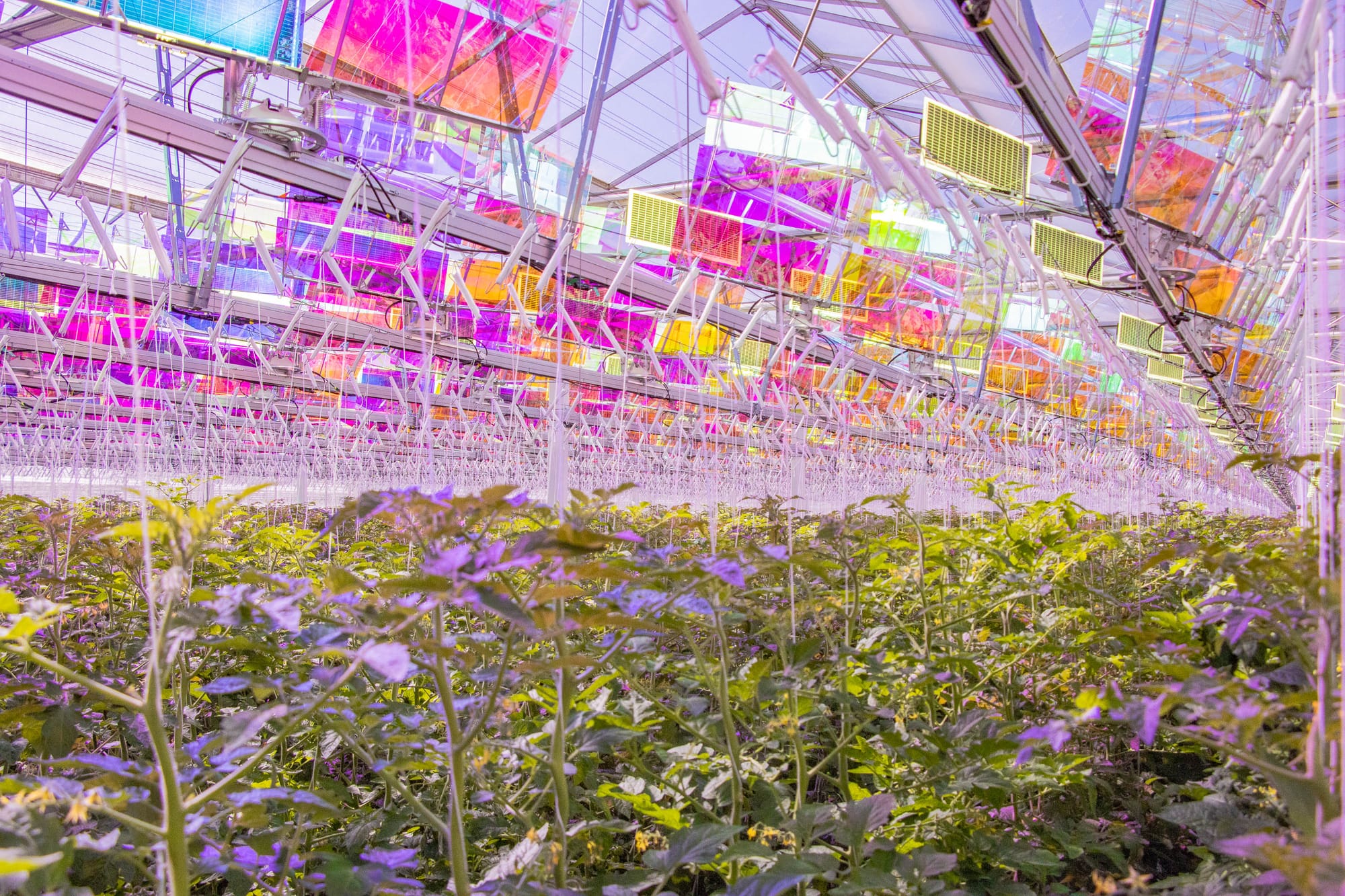
Since its founding in 2021, the young startup has made it its mission to find a good compromise between energy production and plant growth. The solution is called "spectral filtering".
The new oil shock revives the urgency of deeply decarbonizing our economies
"Flexibility solutions are now essential. However, they face a structural difficulty: their costs are decreasing faster than market rules evolve," explains Xavier Blot, associate professor at emlyon business school.
In a few days, the conflict that broke out in the Strait of Hormuz was enough to remind us of two realities: our energy systems remain fragile because of their dependence on fossil fuels, and they deeply structure our economies. Emergency measures are being taken, but it is above all necessary to continue, in depth, the decarbonization. In its latest report "State of Energy Innovation", the International Energy Agency (IEA) has precisely provided useful lessons to guide this trajectory.
To meet it, the deployment of renewable energies appears to be an obvious option. However, improving the operation of existing installations remains largely underexploited. This includes optimizing maintenance, forecasting and settings in order to reduce unplanned outages. In wind power, for example, reducing these outages in already operational farms makes it possible to increase production without resorting to new infrastructure, with faster effects than developing new projects.
Companies hesitate to invest for lack of visibility on future rules (carbon price, public support, grid access, contract duration, etc.).
It is then necessary to learn to create more value by combining technologies within integrated systems, rather than considering each component in isolation. Key technologies, such as solar panels or heat pumps, are now available at competitive costs. But their potential now rests on their coordination. An industrial site combining solar, batteries and demand-side management can thus double its self-consumption rate compared with a site simply equipped with photovoltaic panels.
In this logic, flexibility solutions become essential. They nevertheless face a structural difficulty: their costs are falling faster than market rules are evolving. Take batteries as an example: their cost has fallen by more than 80% in about ten years and they are increasingly used for stationary applications.
Mostly regulatory barriers
Yet they remain insufficiently valued on European electricity markets. Production is remunerated in €/MWh, but the services provided to the system (time-shifting, stability, security) are still poorly integrated. Thus, a solution can be inexpensive while remaining difficult to deploy if its services are not properly recognized.
This serves as a reminder that the main obstacle is no longer technical, but regulatory and financial. In many industrial sectors, decarbonization technologies already exist. The blockage mainly comes from the additional cost and the uncertainty about who will bear it. Companies hesitate to invest for lack of visibility on future rules (carbon price, public support, grid access, contract duration, etc.). This is particularly true in sectors such as steel or chemicals, both highly competitive and very capital-intensive.
The IEA's latest report therefore clearly illustrates that approaches focused solely on technological sectors are reaching their limits.
Finally, some constraints of the transition relate to equipment that is not very visible but essential. These include transformers, cables and substations, which determine the connection of power plants and industrial sites. Their role is often underestimated, even though delivery times for some high-voltage transformers have gone from about one year to two to three years, delaying or blocking many projects.
The IEA's latest report therefore clearly illustrates that approaches focused solely on technological sectors are reaching their limits. Currently, it would be more appropriate to think in terms of uses (industry, mobility, heat), considering the grid as a central infrastructure. Because performance is no longer determined solely by the price of energy, but by coherent systems that guarantee its availability.
Decarbonization and economic security go hand in hand. In this respect, this text should be read as an essential reminder of our responsibility. We now have the necessary tools to act. The oil shock we are facing is therefore not an accident, but the product of our choices. It is up to us to act and to rise to the challenge.
This article has been automatically translated using AI. If you notice any errors, please don't hesitate to contact us.
By naming their first edition "Wind farms are taking shape", the industry's players want to show a certain optimism despite a context that remains complicated for the sector. A look by Benoist Guillard, president of the Groupe romand pour l’énergie éolienne (GREE).
Since its founding in 2021, the young startup has made it its mission to find a good compromise between energy production and plant growth. The solution is called "spectral filtering".
"Despite expectations, substantive discussions could not begin for lack of operational arrangements for the panel. Moreover, in the absence of a dedicated international body, the regulation of pollutants remains fragmented," worries Henri Klunge, chemical engineer and founder of Alcane Conseils.
While some regions of the planet are now no longer insurable, our country has a pool unique in the world dedicated to climate damage. Explanations from Martin Steinauer, responsible for claims things for La Mobilière in French-speaking Switzerland.