Climate change: a risk soon unsustainable for insurers and policyholders?
A worrying phenomenon has been growing for several years: the gradual withdrawal of insurance companies from the most at-risk areas.
"Shouldn't we, as societies, accept engaging in more honest discussions, less laden with emotions and idealism, on this question of nuclear power?" asks Daniella Gorbunova, a journalist at the Fédération des Entreprises Romandes Genève.

Yes, nuclear power is frightening. Chernobyl in 1986, Fukushima in 2011… One can also mention the Kychtym disaster, which occurred in 1957. This explosion at the Maïak nuclear complex — a nuclear fuel reprocessing plant located in the Soviet Union — is classified as the third most serious nuclear accident our planet has ever known. It is therefore hard not to associate this energy with an apocalyptic imagination.
Problem: we currently cannot do without it. Especially as part of our global effort to decarbonize the Earth. While this state of affairs still makes some circles wince, especially political ones — from the left to the right, via the center depending on the country — it is nonetheless accepted by most governments. This year again, on the occasion of COP30, it was recalled that nuclear energy plays an indispensable role in the transition to clean energy sources.
But how to decarbonize without nuclear in a world that, far from tending toward greater sobriety, is becoming ever more energy-hungry? Global reliance on electricity, for example, is constantly increasing. The cause, mainly, is new technologies: electric vehicles, data centers, the explosive expansion of artificial intelligence… As a study from the École polytechnique fédérale de Lausanne recalls, "a ChatGPT query consumes ten times more electricity than a traditional Google search." That does not, however, prevent us from making massive use of these new tools.
How to come to terms with this resource that, rightly, makes our hair stand on end — a little or a lot?
Faced with this reality, international organizations, echoed by the media, stated at the beginning of the year that "nuclear electricity production will reach a record level worldwide in 2025," representing a little less than 10% of global electricity production according to initial estimates.
This is why Japan, which has by no means forgotten the 2011 disaster, is preparing to restart the world's largest nuclear power plant, Kashiwazaki-Kariwa. The plant has seven reactors and covers 400 hectares.
So, how to come to terms with this resource that, rightly, makes our hair stand on end — a little or a lot? Especially at a time when the safety of storing its waste remains constantly debated. Their storage in deep geological layers, the option favored in Switzerland, was recently singled out by a Greenpeace report, which raises the risk of cracks and long-term radioactive leaks. And this, despite the assurances of La Nagra (the national cooperative for the disposal of radioactive waste), which claims to have the situation under control.
We are not entirely in control of all the risks linked to this energy. It is precisely here that the thinking of Jean-Marc Jancovici comes in, an engineer, teacher and speaker specializing in energy and climate issues, whose analyses are known for their pragmatism and nuance. He wrote in 2024: "Nuclear is a margin of maneuver that we must absolutely not do without in a world that will seek to decarbonize. But it is a margin of maneuver among others. And we must above all not obscure the fact that we will have to become much more sober, even if we do a lot of nuclear. Reactors will not be enough for the world to continue as it does today."
So, rather than waving the specters of past horrors or, conversely, idealizing an energy that carries its share of risks and legitimate fears, shouldn't we, as societies, agree to engage in more honest discussions, less burdened with emotion and idealism, on this question?
This article has been automatically translated using AI. If you notice any errors, please don't hesitate to contact us.
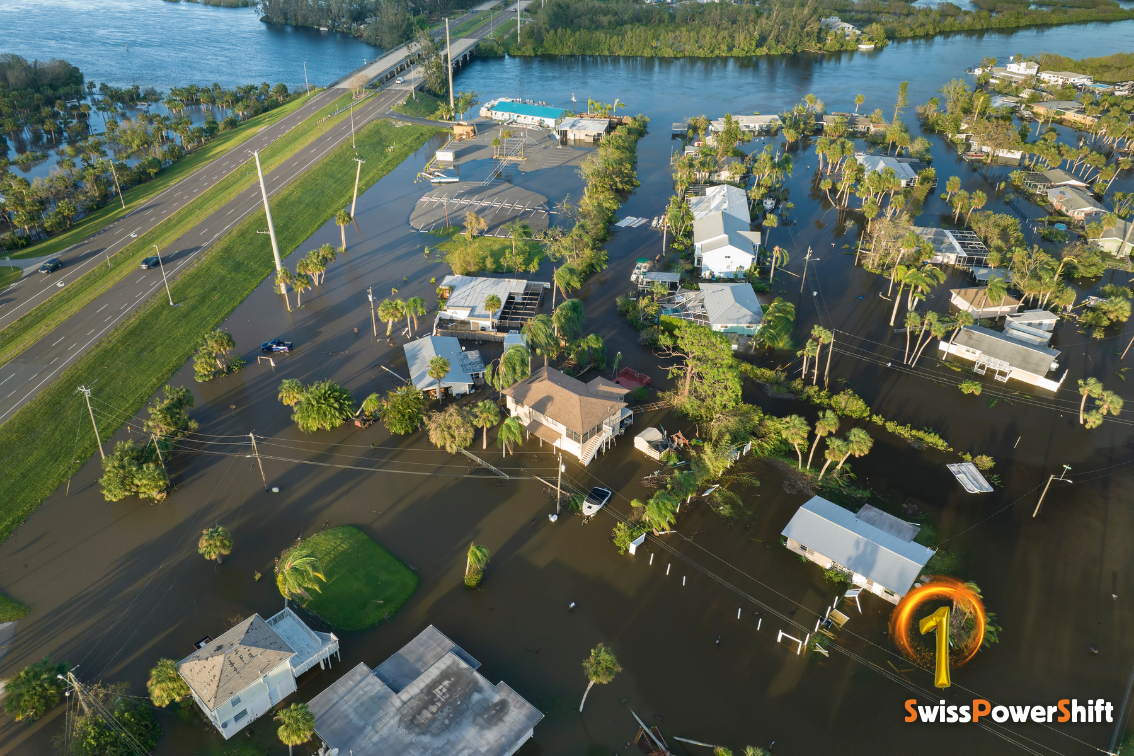
A worrying phenomenon has been growing for several years: the gradual withdrawal of insurance companies from the most at-risk areas.

As this Thursday marks the official creation of a Swiss entity of the World Sufficiency Lab, we revisit the question of sufficiency with its cofounder and director, Yamina Saheb.

Let's be at least minimally honest with ourselves. Moving thousands of athletes and spectators to one or more regions of the world will never result in a 100% virtuous and eco-friendly outcome.

"The abandonment of the green hydrogen plant project by Romande Energie above all illustrates the conjunctural difficulties facing the hydrogen sector, particularly in Switzerland, and, to a lesser extent, in Europe and the United States," explains Simon Siggen for the Nomads Foundation.