What happens when insurance companies decide to withdraw and no longer cover the most at-risk areas? That is the theme at the heart of the new report by the environmental NGO, but also of "Sigma", that of the Swiss Re Institute. Analysis
"Flexibility solutions are now essential. However, they face a structural difficulty: their costs are decreasing faster than market rules evolve," explains Xavier Blot, associate professor at emlyon business school.
By naming their first edition "Wind farms are taking shape", the industry's players want to show a certain optimism despite a context that remains complicated for the sector. A look by Benoist Guillard, president of the Groupe romand pour l’énergie éolienne (GREE).
Without investments, security of supply is in danger
"If we want to succeed in the energy transition, we must also accept financing it. That requires clear and reliable rules capable of guaranteeing sufficient incentives for investment," explains Michael Frank, director of AES.
We want to move away from fossil fuels, develop renewable energies and reduce our dependence on foreign countries. We also want to guarantee a reliable power supply, including in the face of rising demand. Switzerland is engaged in a profound transformation of its energy system. But for it to work over the long term, one condition remains decisive: the capacity to invest.
The figures show the scale of the challenge. To achieve the energy and climate goals, nearly 1,500 billion francs will have to be invested by 2050. Without these investments, the energy transition and security of supply will remain stated objectives, without concrete implementation on the ground.
What rate for the WACC?
The electrical system relies on heavy infrastructure, built and financed over several decades. Companies in the sector, like private investors, commit for the long term. That requires stable and predictable framework conditions. In this context, the WACC (Weighted Average Cost of Capital) plays a central role.
Set by the state, this rate determines the remuneration of investments in electrical grids and renewable energies. It aims to cover the capital costs necessary for the construction, renewal and maintenance of infrastructure. It is not about profits, but a remuneration that makes it possible to ensure the sustainability of investments.
The consequences are already visible. Between the 2025 tariff year and that of 2026, the capital available for investments in the grids decreased by about 120 million francs.
Since March 2025, a new method of calculating the WACC has been applied. It has led to significantly lower rates. In the short term, this may seem positive for consumers, notably through a decrease in grid tariffs. But this approach obscures an essential effect: the weakening of investment security.
The consequences are already visible. Between the 2025 tariff year and that of 2026, the capital available for investments in the grids decreased by about 120 million francs. A further decrease is expected for 2027. That is that many fewer resources to develop the grids and accelerate the deployment of renewable energies, even as needs are increasing.
The new method had, however, been introduced with the ambition of stabilizing the WACC. It was supposed to dampen fluctuations in financial markets, despite the removal of floors and ceilings, and to strengthen planning security for investors. In practice, it has introduced more uncertainty.
Finance the energy transition
The debate is not about excessive returns. It is about a matter of predictability. Electrical infrastructure is not built over a few years, but over several decades. When the remuneration of capital becomes too volatile, investment becomes riskier, more uncertain and therefore harder to mobilize.
If we want to succeed in the energy transition, we must also accept to finance it. That requires clear and reliable rules, capable of guaranteeing sufficient incentives to invest, including in a context of low interest rates. Concretely, the reintroduction of floors and ceilings for the risk-free rate applied to equity and foreign capital is necessary in order to ensure a stable and predictable market remuneration.
Security of supply is not decreed. It is built over time, on the basis of coherent decisions and conditions that allow sustainable investment. Whoever wants security of supply must guarantee security of investment. Otherwise, capital will be lacking where it is indispensable, to the detriment of the development of renewable energies and the reliability of the electrical system.
This article has been automatically translated using AI. If you notice any errors, please don't hesitate to contact us.
What happens when insurance companies decide to withdraw and no longer cover the most at-risk areas? That is the theme at the heart of the new report by the environmental NGO, but also of "Sigma", that of the Swiss Re Institute. Analysis
"Flexibility solutions are now essential. However, they face a structural difficulty: their costs are decreasing faster than market rules evolve," explains Xavier Blot, associate professor at emlyon business school.
By naming their first edition "Wind farms are taking shape", the industry's players want to show a certain optimism despite a context that remains complicated for the sector. A look by Benoist Guillard, president of the Groupe romand pour l’énergie éolienne (GREE).
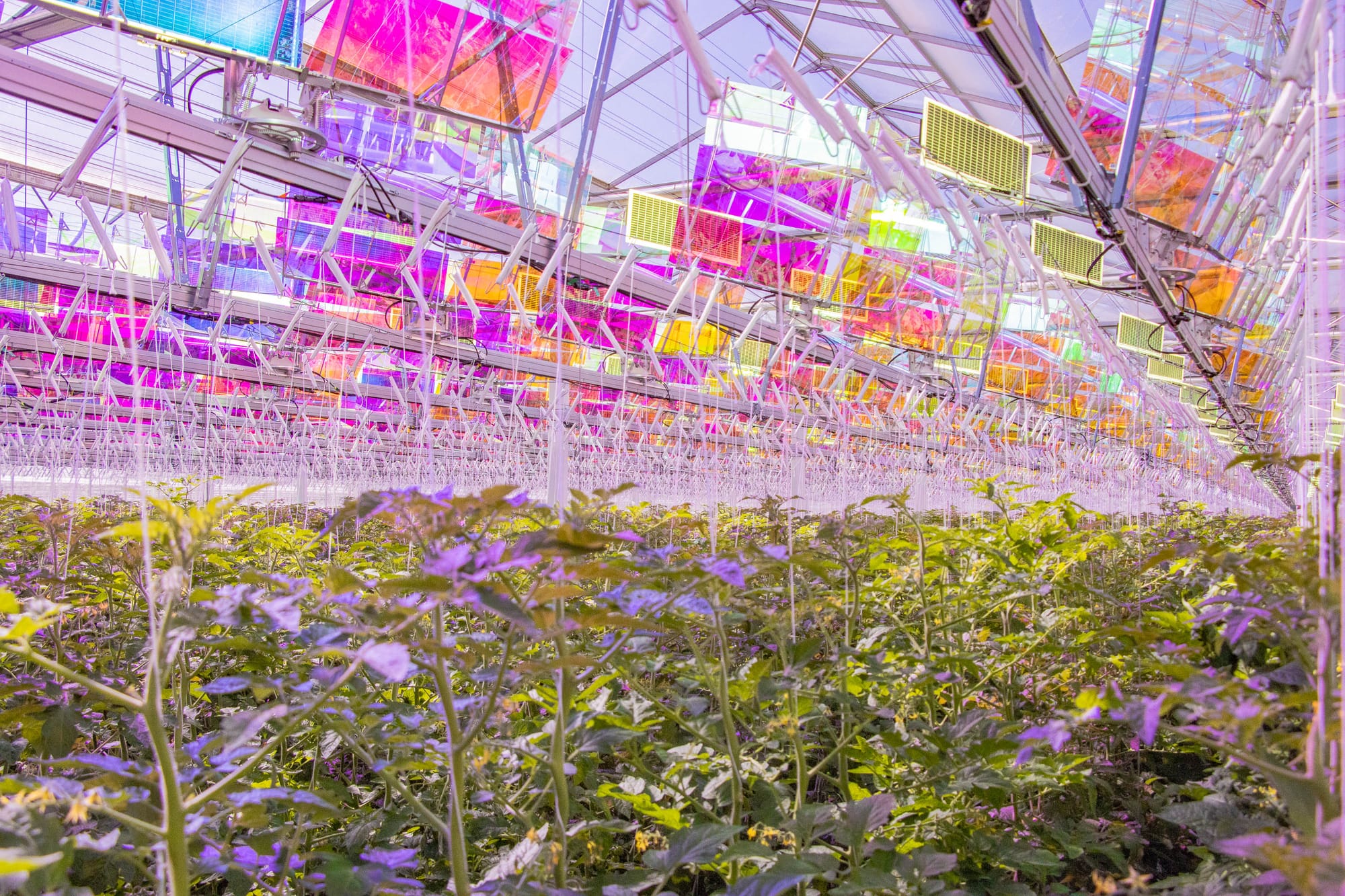
Since its founding in 2021, the young startup has made it its mission to find a good compromise between energy production and plant growth. The solution is called "spectral filtering".