"It is neither fair nor constructive to pit technologies against each other in a supposed race for funding: it's a false debate," says Eric Plan, secretary-general of the CleantechAlps association.
As this Thursday marks the official creation of a Swiss entity of the World Sufficiency Lab, we revisit the question of sufficiency with its cofounder and director, Yamina Saheb.
Specialist in energy modelling, Evelina Trutnevyte seeks to shed light on our future
At the crossroads of science, society and public policy, the professor at the University of Geneva develops energy scenarios aimed at supporting the transition to carbon neutrality.
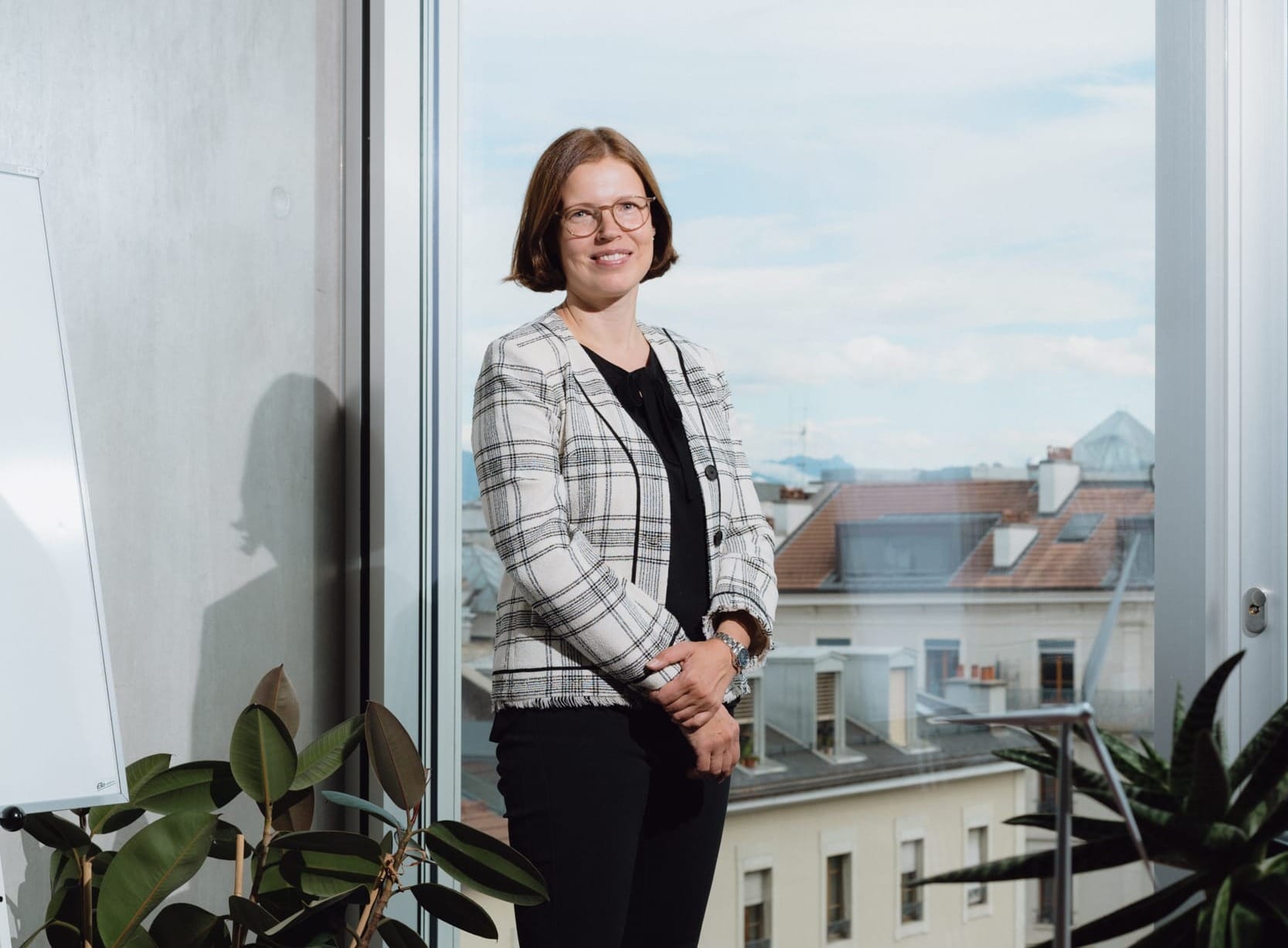
Since the dawn of time, human beings have looked up at the sky, observing the movement of the stars in search of answers about their future. The evolution of computing has changed the game, offering new instruments, far more effective and sophisticated, to fulfill that same mission. And in this field, Switzerland can count on a renowned ambassador: Evelina Trutnevyte.
Born in Lithuania, this researcher became passionate about environmental issues at an early age. Trained in electrical engineering and environmental engineering at the Vilnius Gediminas Technical University, she quickly broadened her horizons through several exchange programs in Denmark, Oslo and Zurich. "These international experiences not only shaped my academic path, but also anchored it in a European scientific space where energy, environment and society intertwine," she says.
A course taken during her bachelor's degree marked a turning point in her career and energy then became her preferred field of study. She chose ETH Zurich for her doctorate. Thanks to the award of an "Ambizione" fellowship from the Swiss National Science Foundation — intended to support promising early-career researchers — she had the opportunity to create her own research group and eventually settled permanently in Switzerland.
Drawing on a solid network and an in-depth knowledge of Swiss energy issues, she joined the University of Geneva in 2018, where she was appointed professor and took the direction of the Renewable Energy Systems group. Today, Evelina Trutnevyte is one of the leading specialists in energy modelling and coordinates, within the IPCC, the chapter devoted to future projections of the seventh assessment report (AR7), currently in preparation.
Better managing uncertainty
One of the scientist's current missions is to understand how to operate the transition to carbon neutrality while integrating an increasing share of non-dispatchable renewables, notably in electricity production. "We use and develop models in order to simulate different energy scenarios, taking into account a multitude of parameters, such as generation, storage, networks and the evolution of energy demand on the one hand, and price levels, investment costs, impacts on employment, environmental and societal factors, and technological progress on the other," she explains.
"We are witnessing a profound transformation of our societies, renewable energies already being competitive thanks to technological progress and falling production costs," explains Evelina Trutnevyte.
Social factors include psychology and citizen acceptance, the effects of new regulations, local constraints or risks linked to energy dependencies. These dimensions make it possible to identify scenarios that are not only technically and economically viable, but also realistic and acceptable to society.
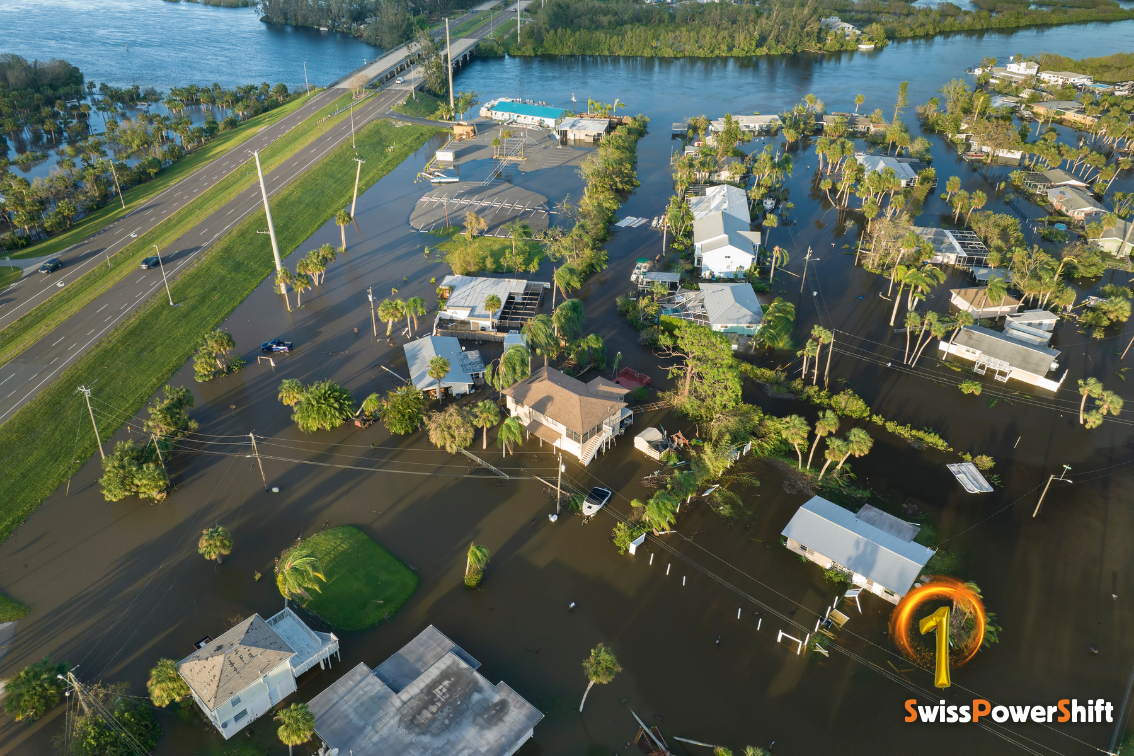
The multitude of assumptions to consider, however, generates strong variability in forecasts. To address this, the team uses so-called "cost-optimal" models as well as probabilistic methods to analyze the robustness of different trajectories and better identify areas of uncertainty and their sources. Unforeseen events such as the COVID-19 pandemic or the war in Ukraine are not, however, integrated into the baseline models, which instead analyze trend scenarios.
The multitude of assumptions to consider, however, generates strong variability in forecasts. To address this, the team uses so-called "cost-optimal" models. @Getty Images/Canva
According to Evelina Trutnevyte, "these events could be simulated, but rather once the event is known and as a complement to the main analyses. Some have a long-term impact, like Fukushima, which precipitated the nuclear phase-out in some European countries, notably Germany, while others are only pauses in the general trend, leading to a return to 'business as usual'."
Still according to the researcher, "we are witnessing a profound transformation of our societies," renewable energies already being competitive thanks to technological progress and falling production costs. "New types of risks are nevertheless emerging due to the intermittent nature of their production within the grid, introducing increased variability. It is nevertheless technically possible to secure the grid through good interconnections, the use of storage, and flexible consumption and production," she adds.
Digitization and social sciences
The development of digital tools and artificial intelligence can, in this respect, play a decisive role in managing these complex systems: "Thanks to current computing power, it is possible to process massive volumes of data in order to optimize the grid and integrate more renewable energies," she points out.
"The goal of carbon neutrality is ambitious and will require a lot more work," stresses the UNIGE professor.
Although we are not (yet) at the stage of the "smart cities" envisaged in some scenarios — which sometimes belong more to marketing than reality — solutions such as optimizing electric vehicle charging or automating many daily uses when prices are at their lowest can help improve the fluidity and security of the grid.
However, in Switzerland, the share of household budgets devoted to energy in general, and to electricity in particular, remains modest. This situation limits the use of voluntary initiatives as well as the large-scale adoption of certain renewable solutions, such as electric mobility, for example.
Psychosocial factors therefore play a key role in the adoption of new lifestyles and the evolution of habits. A major problem: these factors are particularly difficult to assess. "The social acceptance of new solar or wind installations near one's place of residence, risk aversion by companies, or certain systemic dynamics such as technological lock-in and the effect of public policies are all elements to integrate into the equation when it comes to defining realistic scenarios for society," explains Evelina Trutnevyte.
Integrating Switzerland into Europe
Switzerland can count on several assets, including a massive reliance on hydropower and a strategic position at the heart of Europe, facilitating interconnections with its neighbors. "That said, the goal of carbon neutrality is ambitious and will require a lot more work," emphasizes the UNIGE professor.
As part of the SWEET-EDGE consortium, funded by the Federal Office of Energy (OFEN) and jointly led by professors Evelina Trutnevyte and Michael Lehning (EPFL), the researcher is actively involved in developing national scenarios on the massive integration of decentralized renewable energies. In this context, she advocates close integration with the European electricity market, combined with strong development of solar and wind, in order to guarantee a system that is both efficient and resilient.
Conversely, isolating Switzerland from the rest of the market would lead to a significant increase in the costs of the Swiss energy system and electricity prices for consumers, while reducing the optimal use of hydropower and storage capacities, and causing an increase in net imports, particularly in summer. At the recent ElCom Forum 2025, the academic confirmed that "the literature indicates that isolated national systems in Europe can see their costs rise by up to 40% compared to full integration."
The second Renewable Energy Outlook, published by SWEET-EDGE in May 2025, follows the same logic. Evelina Trutnevyte and her colleagues present technical and social analyses intended to inform political decisions, such as those detailed in the Federal Council's new prescriptions on renewable energy and electricity. These define, in particular, a target of 45 TWh of renewable production as well as a limitation of net imports to 5 TWh during the winter period.
Faced with the delay accumulated in achieving climate targets and the growing complexity of energy choices, Switzerland now more than ever needs decisions based on scientifically robust and socially acceptable scenarios. In this context, the work carried out by the UNIGE researcher and her group constitutes an essential reference to guide the country toward credible and sustainable trajectories.
This article has been automatically translated using AI. If you notice any errors, please don't hesitate to contact us.
"It is neither fair nor constructive to pit technologies against each other in a supposed race for funding: it's a false debate," says Eric Plan, secretary-general of the CleantechAlps association.
As this Thursday marks the official creation of a Swiss entity of the World Sufficiency Lab, we revisit the question of sufficiency with its cofounder and director, Yamina Saheb.
Let's be at least minimally honest with ourselves. Moving thousands of athletes and spectators to one or more regions of the world will never result in a 100% virtuous and eco-friendly outcome.