"We no longer have any choice but to adapt to climate change"
Interview with Vincent Kaufmann, director of the Ethos Foundation.
Focus on Swiss energy and environmental initiatives and policies.

"For hydrogen to reach competitive cost levels, support policies similar to those that have benefited solar energy are needed," says Jean-Luc Favre, president of the Nomads Foundation.

As Switzerland's energy challenges mount, many projects are met with opposition. "This situation should prompt us to rethink the balance between energy development and the preservation of the territory," says Michael Frank, director of the AES.
At its meeting on 12 February 2025, the Federal Council finally approved its proposed amendment to the method of calculating the WACC (Weighted Average Cost of Capital, or "coût moyen pondéré du capital" in French).

"Since the early 1970s, the human species, very unevenly, has begun to consume each year more resources than it replaces (or recycles)," recalls René Longet, author of "Planète Etat d’urgence: les réponses de la durabilité".

With the proliferation of digital services, such as cloud computing and artificial intelligence, digital infrastructures and platforms generate very significant energy consumption. An analysis in "True or False" format.

"To reach carbon neutrality by 2050, it would be necessary to add each year the equivalent of the Grande-Dixence's production, namely 2.3 billion kilowatt-hours," calculates Dominique Rochat, Energy & Infrastructure Project Manager at Economiesuisse.

In its report published in mid-December 2024, the Confederation attempted to anticipate the future of this energy vector. A difficult exercise, given the glaring lack of a market in Switzerland.

"Reaching the carbon neutrality target set by Switzerland will require tripling the renovation rate that has been practiced for many years (between 0.8 and 1%)," says Philippe Thalmann, professor of environmental economics at EPFL.
To understand it, one must look at the two fundamental components of an electricity bill: energy, the part that covers energy production and purchases, and the stamp, which covers the maintenance and development costs of the electricity distribution network.

“An electricity agreement is essential to ensure that Switzerland's climate and energy targets are met. It would strengthen the security and resilience of our supply while reducing costs,” explains Michael Frank, Director of the AES.
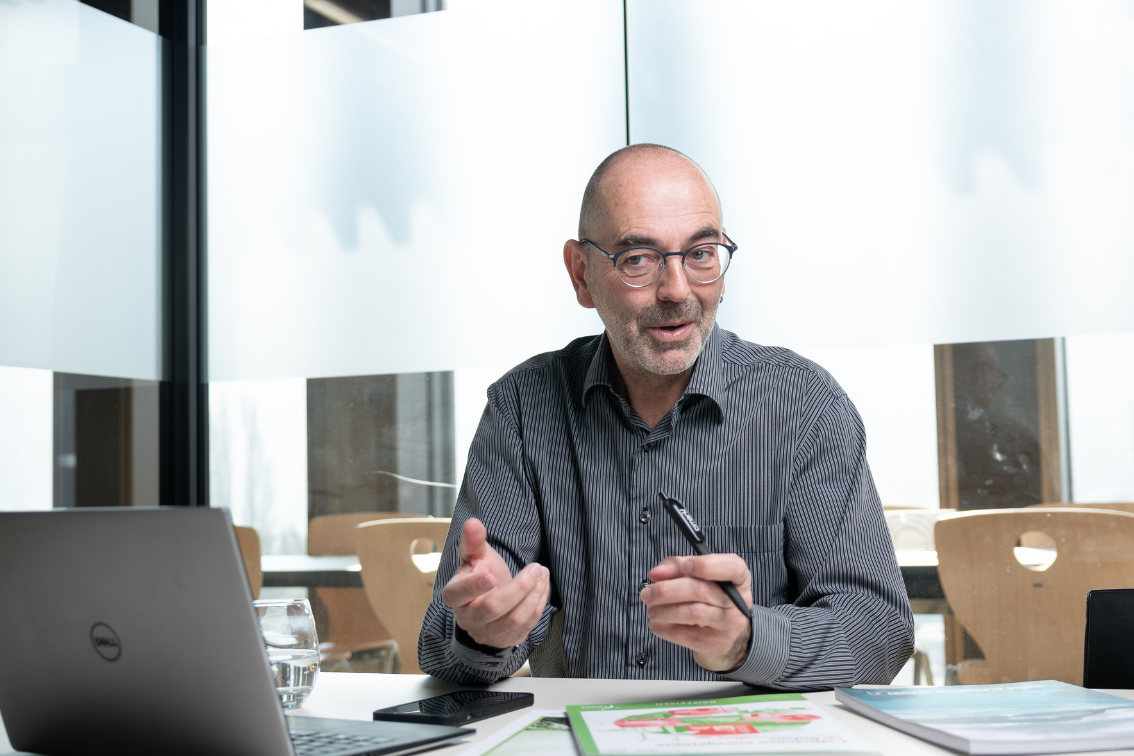
Two months ago, CleantechAlps published the second edition of its report dedicated to start-ups active in the field of cleantech. Interview with Eric Plan, Secretary General.

Commissioned by the Association of Swiss Electric Companies, a study recalls the challenges as well as the solutions available to Switzerland to ensure the long-term viability of its energy system.
Already a member or subscriber? Simply enter your email address to receive instant access to the article. Enjoy!