"One should not expect the energy transition to progress in a linear way"
Interview with Mélanie Beyeler, Global Head of Sustainable Investing at EFG.
Interview with Mélanie Beyeler, Global Head of Sustainable Investing at EFG.

A marked comeback of coal driven by tensions around the Strait of Hormuz, oil giants refocusing on straightforward drilling, a Trump administration that praises fossil fuels and directly attacks certain renewable sources such as wind power… The news of recent quarters clearly does not seem to be playing in favor of the energy transition.
Recent statistics nevertheless show that, despite these headwinds, the transformation of the energy sector is not losing momentum. For this second part of our series on sustainable finance, we take stock of the transition of our energy systems with Mélanie Beyeler, Global Head of Sustainable Investment at EFG.
Should we be worried about the future of the energy transition that has been underway for several years?
These developments should be taken seriously because they influence the pace and shape of the transition in certain markets and sectors. But that does not mean the long-term trajectory has changed.
The simplest way to misinterpret a transition is probably to expect it to progress linearly. Yet its fundamental drivers remain powerful. Electricity demand is rising as new parts of the economy electrify. Solar and wind are now among the most competitive sources of generation for developing new capacity, while energy security and resilience have become strategic priorities.
Recent geopolitical tensions also make the issue of energy security particularly tangible. Wind and sun are domestic resources: no country can impose an embargo on your wind or your sun. This gives renewables a strategic value that goes beyond mere decarbonization, especially when they are combined with grids, storage and flexibility solutions needed to strengthen the resilience of the power system.
Today, the energy transition is therefore no longer driven solely by climate policies. Economic considerations and energy security play an increasing role in the equation.
What examples lead you to think we are still on the right track with respect to the energy transition?
Although significant challenges remain, several signs show that the momentum continues. New renewable capacity installed worldwide reached a record level in 2025. Battery storage is also expanding rapidly: additional capacity installed in 2025 was about 40% higher than the previous year. This development is particularly important because storage helps address one of the main challenges related to integrating a growing share of solar and wind into the power system.
The key is to understand what these developments signify. Progress is increasingly visible in the infrastructure being deployed, and not only in targets set or commitments announced. Ultimately, what is actually financed and built is a far more relevant indicator of the progress of the transition than the number of announcements made.
It is no longer enough for a project to contribute to the energy transition: it must also be based on a credible economic model.
Do you share the view of some of your peers who believe this transition has entered a new phase, more driven by private capital than by political commitments and public subsidies?
We are indeed seeing a shift toward a greater role for private capital, but that does not mean public policy has become less important. On the contrary, public policy retains an essential role because it helps create the conditions necessary to mobilize that capital, notably through regulation, permitting procedures, infrastructure development and, where justified, public support.
The main change lies in the relevance of an investment since it increasingly has to stand on its own merits. It is no longer enough for a project to contribute to the energy transition: it must also rely on a credible economic model and be able to attract capital on reasonable terms.
The real change may therefore not so much be the shift from public to private capital as the shift from ambitions to implementation, with much greater attention paid to what can actually be financed and built.
While there is much talk about new generation capacity, aren’t the challenges of the energy transition much broader?
In some regions, solar and wind projects can be developed faster than the grids needed to connect them. The main bottleneck is therefore gradually moving from power generation to the whole set of supporting infrastructure.
To put it simply, storage allows electricity to be moved through time, while grids allow it to be moved through space. Both elements become increasingly important as the power mix evolves. Repowering can also contribute by replacing aging installations with newer, more efficient technologies and by increasing production at existing sites when economically and technically justified.
The challenge is therefore not simply to produce more electricity, but to make the entire power system more efficient and capable of absorbing and using all that additional production.
Despite the many criticisms they face, are ESG criteria a useful tool to assess a company’s efforts in this energy transition?
ESG criteria are useful because they improve transparency and comparability. But they are not a verdict in themselves. A rating can indicate the areas on which to focus attention. By itself, it does not determine whether a company is truly transforming. The transition is fundamentally about change over time.
An ESG score can sometimes resemble a mere snapshot, whereas what we really need is a film. A company may still have relatively high emissions today while investing heavily in transforming its business model. That is why one must also consider its strategy, capital allocation, governance and ability to demonstrate measurable progress.
Renewable energies now occupy an important and competitive place in the power system.
Is it really sensible — and profitable — to invest in renewable energies in 2026?
Renewable energies now occupy an important and competitive place in the power system. This evolution can create investment opportunities, but returns can vary significantly from project to project, company to company and market to market. They also depend on the regulatory environment, financing costs, competition, execution quality and valuation levels.
The pertinent question is therefore not simply whether renewables will continue to develop, but whether a particular project or company is based on a solid economic model and is reasonably valued.
An attractive investment theme does not automatically make an attractive investment. Investment discipline is just as important here as in any other sector.
The 7th edition of Building Bridges will take place in early October. In your view, does this event help support the energy transition?
One of the great strengths of this event lies in the community it manages to bring together around challenges that no single component of society can solve alone.
The value of bringing these different players together is not that they all agree. Finance, companies, policymakers, international organizations and civil society can have very different perspectives on the same challenge, such as the energy transition. And that is precisely what enriches these exchanges: the diversity of perspectives helps highlight each party’s blind spots.
This article has been automatically translated using AI. If you notice any errors, please don't hesitate to contact us.

By combining energy management systems, decentralized generation and storage solutions, facility managers have a strategic opportunity: to transform their buildings according to the "building as a grid" model, says Kamal Mehta, Product & Offer Manager EMEA at Eaton.
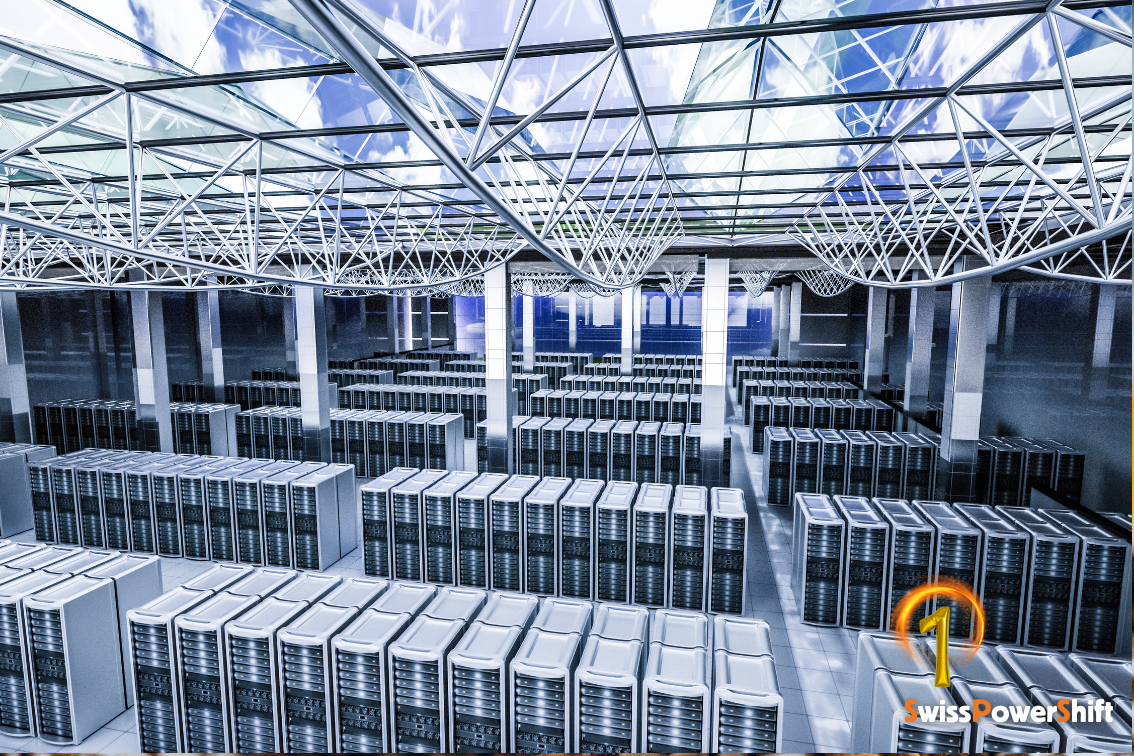
A recent Harvard study highlights close links between the rise of data centers and clean energy. Behind the algorithms lies a purely material reality: a demand for electricity that is skyrocketing and disrupting grids and the energy transition.

"While nuclear power is necessarily part of the long term, photovoltaics and batteries fall into a different timescale: that of the needs we must meet today," says Richard Mesple, CEO of Local Energy.

Interview with Marie-Laure Chapatte, CSR Manager at the Neuchâtel Cantonal Bank (BCN).
Already a member or subscriber? Simply enter your email address to receive instant access to the article. Enjoy!