What happens when insurance companies decide to withdraw and no longer cover the most at-risk areas? That is the theme at the heart of the new report by the environmental NGO, but also of "Sigma", that of the Swiss Re Institute. Analysis
"Flexibility solutions are now essential. However, they face a structural difficulty: their costs are decreasing faster than market rules evolve," explains Xavier Blot, associate professor at emlyon business school.
By naming their first edition "Wind farms are taking shape", the industry's players want to show a certain optimism despite a context that remains complicated for the sector. A look by Benoist Guillard, president of the Groupe romand pour l’énergie éolienne (GREE).
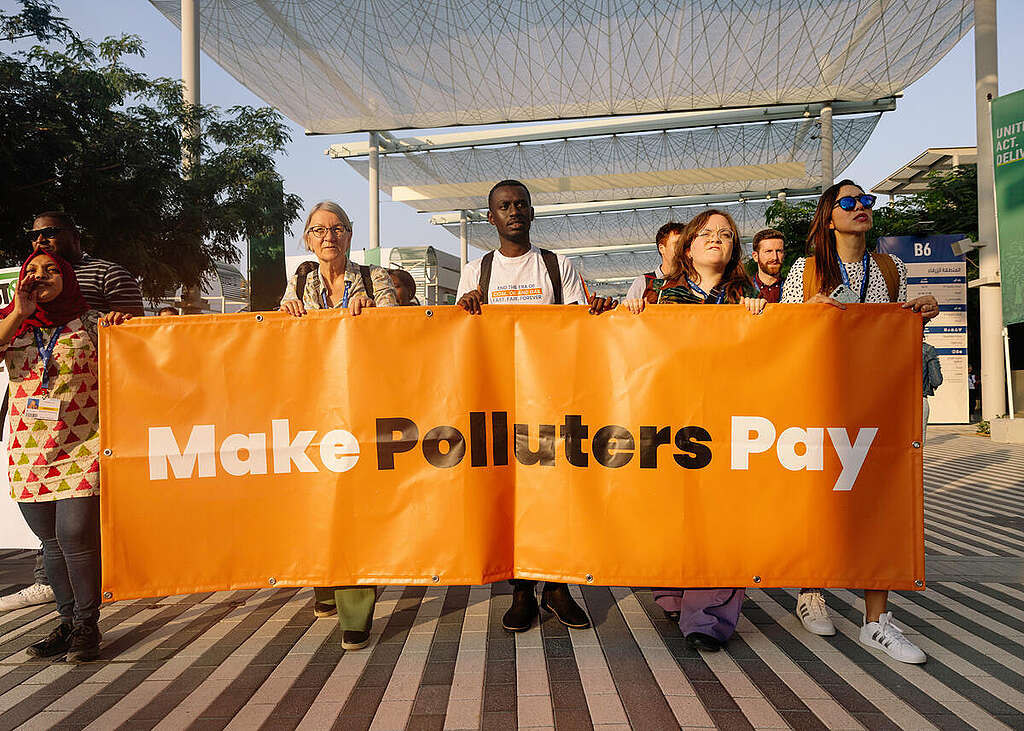
Apply the polluter-pays principle to advance climate finance
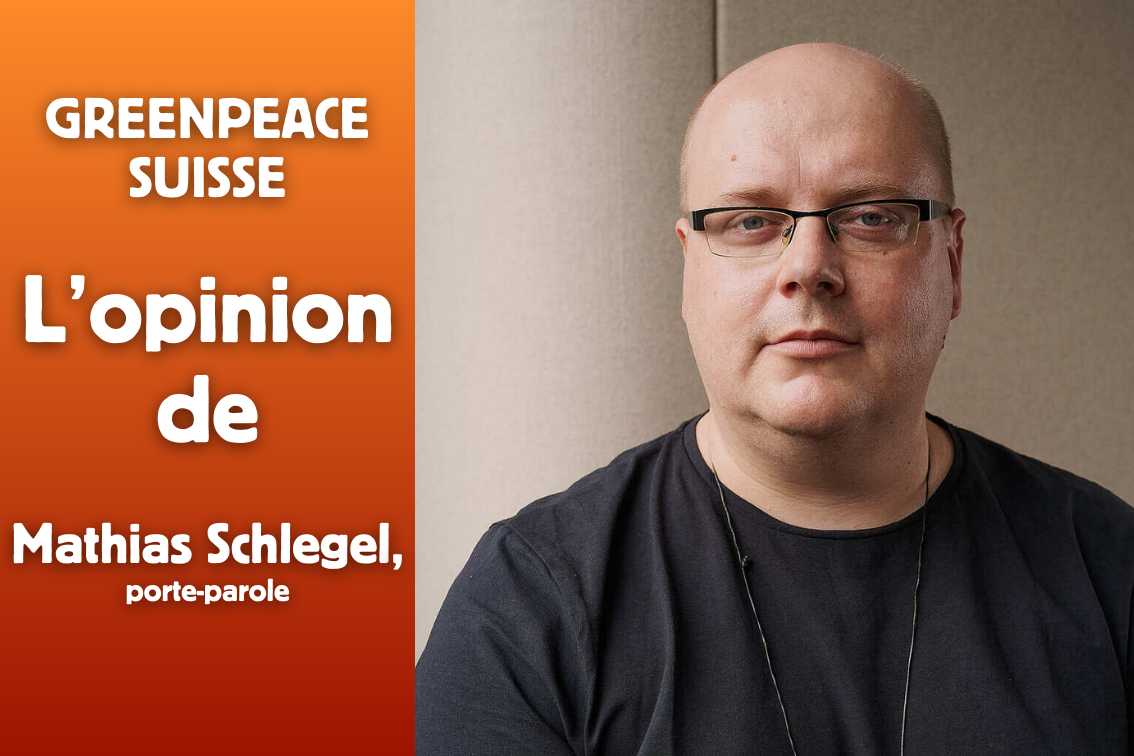
As part of COP29, "More than a hundred organizations are calling for the implementation of a tax on the extraction of fossil fuels," explains Mathias Schlegel, spokesperson for Greenpeace Switzerland.
"When it comes to financing the fight against climate change, the world must pay, otherwise humanity will pay the price." These are the words addressed by the UN Secretary-General, António Guterres, to the leaders gathered in Baku for COP29. He thus recalls one of the main objectives to be achieved for this climate conference.
To describe this conference, many experts use the term "the Finance COP." The discussions taking place in Baku until 22 November must in particular make it possible to put in place a new model to bear the costs of the fight against global warming. The new "collective quantified goal on climate finance," the NCQG, must not only set the conditions determining who will pay the rising costs of climate action over the next decade and beyond, but also the urgent support to be provided (or not) to the countries and communities least responsible for the climate crisis.
"This is the story of an avoidable injustice. The rich are the cause of the problem and the poor pay the highest price," stresses António Guterres. Developed countries must take the lead on financing the new goal, without conditioning their contributions on those of others, and without worsening the debt of developing countries. Trillions of dollars are needed because the costs of inaction increase every day and climate justice requires redress for historical harms.
The NCQG must recognize the need for actors in the various fossil fuel–related industries and other high-emitting sectors to pay for the damage and destruction caused by their activities.
Make the biggest polluters pay
The costs of global warming must be borne by those who bear the greatest responsibility in the field – the most polluting countries, companies and individuals – and by those who are most able to pay. The NCQG must recognize the need for actors in the various fossil fuel–related industries and other high-emitting sectors to pay for the damage and destruction caused by their activities.
A significant share of global emissions can be attributed to a relatively small number of fossil fuel producers. Since 1988, more than half of global industrial greenhouse gas emissions are attributable to just 25 companies and state producers. However, the negative externalities of their activities, namely the losses and damages resulting from global warming, including the increase in the frequency and intensity of extreme weather events, are not taken into account in their costs. It is states and citizens who have to pick up the pieces.
Applying the polluter-pays principle is a fair approach to collect the revenues needed to cover the costs related to mitigation, adaptation and loss and damage. Currently, it is not money that is lacking, but the absence of government action to make the fossil fuel industry and other major polluters pay. This lack of ambition costs lives and threatens fundamental freedoms.
The climate crisis has a disproportionate impact on communities already vulnerable in the Global South. It is essential to secure additional funding to help these frontline communities. @Greenpeace
A good example: a tax on climate damages
More than a hundred civil society organizations, including Greenpeace, Stamp Out Poverty, Power Shift Africa and Christian Aid, support the implementation of a tax on fossil fuel extraction. It is a concrete example of applying the polluter-pays principle to climate finance.
The objective is to finance the loss and damage fund. This fund was made operational by world leaders at COP28 in Dubai, but the $700 million pledged so far represents less than 0.2% of the irreversible losses faced by developing countries each year due to planetary warming.
If introduced in OECD countries in 2024 at an initially low rate of $5 per tonne of CO2 equivalent and with an increase of $5 per tonne each year, the tax would raise a total of $900 billion by 2030.
This article has been automatically translated using AI. If you notice any errors, please don't hesitate to contact us.
What happens when insurance companies decide to withdraw and no longer cover the most at-risk areas? That is the theme at the heart of the new report by the environmental NGO, but also of "Sigma", that of the Swiss Re Institute. Analysis
"Flexibility solutions are now essential. However, they face a structural difficulty: their costs are decreasing faster than market rules evolve," explains Xavier Blot, associate professor at emlyon business school.
By naming their first edition "Wind farms are taking shape", the industry's players want to show a certain optimism despite a context that remains complicated for the sector. A look by Benoist Guillard, president of the Groupe romand pour l’énergie éolienne (GREE).
Since its founding in 2021, the young startup has made it its mission to find a good compromise between energy production and plant growth. The solution is called "spectral filtering".