"On 28 February 2027, the people will therefore have to vote on an amendment to the Nuclear Energy Act," says Jean-Yves Pidoux, the former director of the SILs and author of "Nucléaire: un improbable retour. Le débat suisse en perspective", a book available in December 2026.
"Several indicators show that the construction and energy sectors continue to be confronted with difficulties in terms of succession and recruitment," regrets Kornelia Hässig Vinzens, head of the Training and Professional Development Service in the energy field at the OFEN.
"A wind farm can be perceived with pride, as a contribution to our security of supply, a milestone toward greater autonomy," says René Longet, a member of the committee of the association ProEole Geneva and author of « Planète Etat d'urgence : Les réponses de la durabilité ».
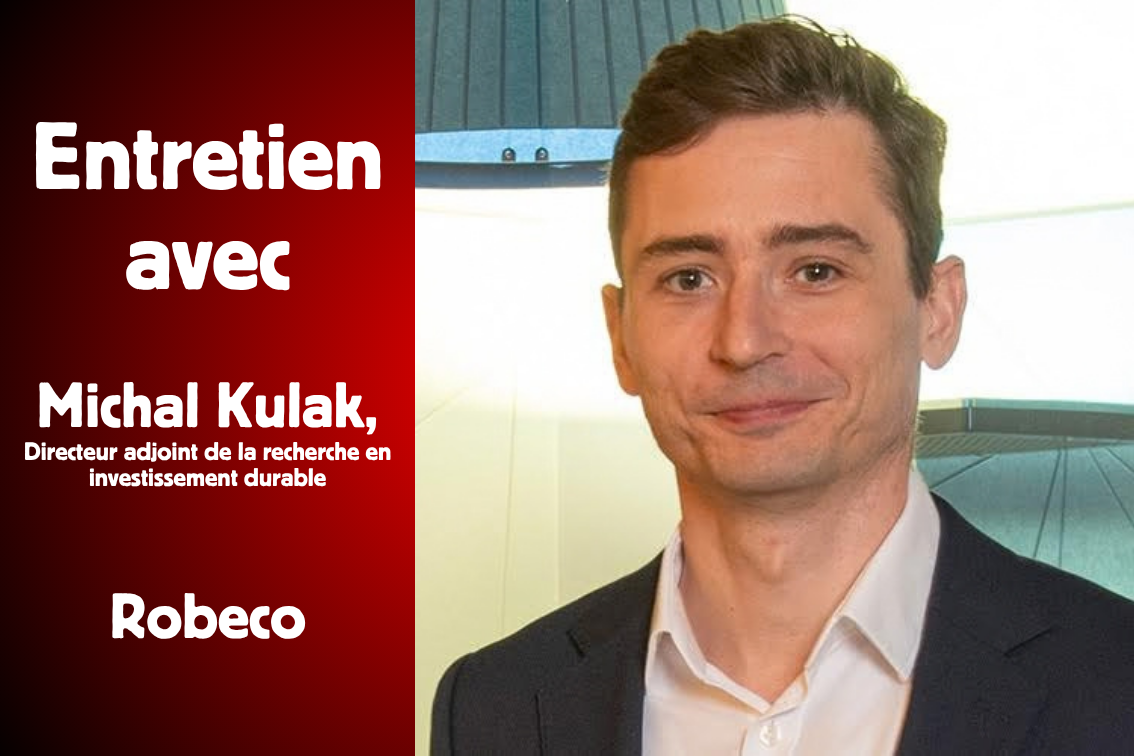
On the opening day of the seventh edition of Building Bridges, we complete our series of interviews on sustainable finance by addressing this theme at the heart of the Geneva event. At this early autumn, after a scorching and extremely dry summer, sustainability should be among the priorities of banks and, more broadly, of the financial world. Is that really the case? We try to answer this question with the help of Michel Kulak, deputy director of sustainable investment research at Robeco. Interview.
How is sustainable finance doing at a time when the president of the world’s leading power presents climate change as the greatest scam in history?
Fortunately, this dimension of sustainability in finance does not depend on the opinion of a head of state, whoever they may be. We are therefore seeing positive net flows, supported by good performance. The market is maturing: it is not disappearing. Clients are asking managers more in-depth questions about the securities held in their portfolios, a development that I find rather positive.
Could the exceptional summer of 2026 (heatwave, drought, etc.) help redirect investments towards more sustainable finance?
While defense and security issues are currently front and center in Europe, the heatwaves and droughts do indeed remind us that climate change and other environmental challenges have not gone away.
Some of your colleagues believe that sustainable finance has reached a form of maturity and that it has, in a way, become democratized. Do you share this feeling?
Yes, that is indeed the case. But the degree of depth of this approach varies. Clients ask more pointed questions, which makes it possible to distinguish investors experienced in sustainable investing from other market players.
Investment decisions must be based on research, particularly in the field of sustainable finance. It is necessary to define clearly what constitutes a "sustainable investment" and what does not.
Understanding companies’ real exposure to sustainability issues makes it possible to uncover value that would otherwise go unnoticed.
How do you convince people to invest more sustainably in the current context?
By providing expertise as well as the assurance that integrating sustainability issues leads to better risk-adjusted returns. Yet it must be done the right way: it is less about relying on exclusions and labels than about deeply understanding the risks and opportunities to which companies are exposed and which do not immediately appear in their financial statements.
Which sectors show real potential for the years to come?
Climate change, biodiversity loss and violations of human rights persist and are worsening. Understanding companies’ real exposure to these issues allows one to detect value that might otherwise go unnoticed.
At present, it would, for example, be sensible to invest across the value chain in solutions such as electrification, sustainable mobility or water and waste treatment. However, not all technologies are viable economically and technically. It is therefore important to call on experts with in-depth knowledge of sectors and technologies to distinguish companies that benefit from a genuine competitive advantage from those clinging to false solutions.
However, the market sometimes misprices the risks related to sustainability controversies. The perceived risk can differ from the real risk, particularly when the information published is insufficient. In-depth sector knowledge therefore allows one to identify opportunities in such situations.
Will artificial intelligence be an asset or a nuisance for sustainable finance?
An asset. With appropriate governance, it improves the efficiency of investment processes, which allows for deeper research, broadening its scope and spotting interesting opportunities. It also accelerates advances in sectors that will help tackle sustainability challenges. The challenge lies in the rise in energy needs in the short term, with the possible risk of delaying the electrification and decarbonization of our ways of life.
This article has been automatically translated using AI. If you notice any errors, please don't hesitate to contact us.
"Several indicators show that the construction and energy sectors continue to be confronted with difficulties in terms of succession and recruitment," regrets Kornelia Hässig Vinzens, head of the Training and Professional Development Service in the energy field at the OFEN.
"A wind farm can be perceived with pride, as a contribution to our security of supply, a milestone toward greater autonomy," says René Longet, a member of the committee of the association ProEole Geneva and author of « Planète Etat d'urgence : Les réponses de la durabilité ».
"We hope this conference will put the collective implementation of more ambitious measures to protect the climate back at the forefront," explains Isolda Agazzi, head of development policy at Alliance Sud.
"The average female driver thus spent 14.90 francs on gasoline to travel 100 kilometers in 1981, compared with 16.10 francs today. In the meantime, household disposable income has, however, been multiplied by 2.85," recalls Philippe Thalmann, professor of environmental economics at EPFL.