"Members of the 'Swiss Electricity Agreement Alliance' will closely monitor parliamentary debates and provide factual information about the agreement," summarizes Annalisa Job, communications manager for the Association of Swiss Electricity Companies (AES).
"By constantly looking at the surfaces that could still accommodate solar installations, we may be overlooking one possibility: roofs that are already equipped," points out Alban Bitz, director of SI-REN.
The ambition to continue the development of green, reliable and cost-effective energy sources gave rise to new and numerous discussions at the seventh edition of Building Bridges in Geneva.
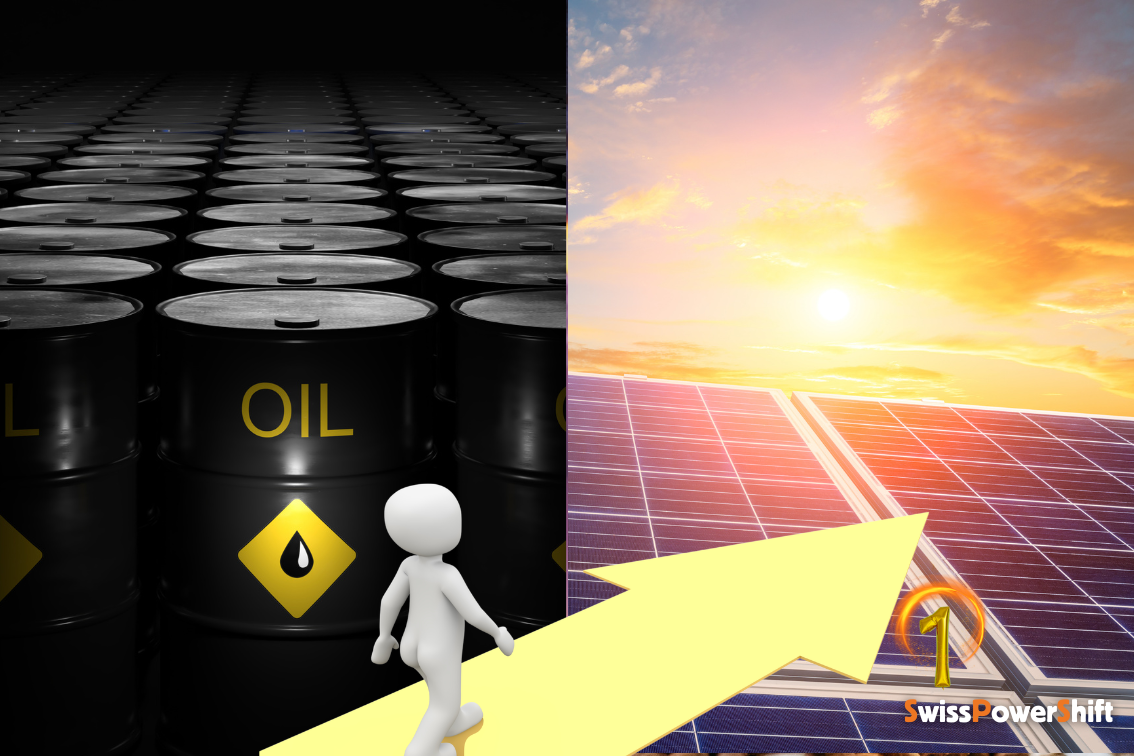
The surge in fossil fuels does not call into question the dynamics of renewables
"Conflicts have placed energy markets back at the center of attention, with a renewed interest in fossil fuels. In the long term, however, the winners may well be elsewhere," warns Benedict Fatio, head of the francophone market at DNB Asset Management.
Paradoxically, geopolitical energy crises no longer slow the electrification of society today; they tend, on the contrary, to accelerate it. By highlighting the vulnerability of systems relying on fossil fuels, they reinforce the need for a more resilient energy model.
In the short term, the mechanism is clear: rising energy prices support the margins of traditional oil and gas producers. In an environment marked by supply constraints and relatively stable production levels, fossil sector groups benefit from this increase in market prices. Equity markets react, logically, in the same way. However, this dynamic remains misleading.
Historically, expensive oil generally ends up dampening demand and increasing market volatility, which complicates long-term investment decisions. Added to this is a deeper fragility: fossil fuels remain closely tied to the geopolitical context and are therefore particularly exposed to crises.
Renewable energies have reached a new scale. Since 2025, they have produced more electricity worldwide than coal.
Energy transition underway
A deep transformation is accelerating and is increasingly reflected in financial markets. Renewable energies have now reached a new scale. Since 2025, they have produced more electricity worldwide than coal. And their share continues to grow: they could meet around 36% of demand as early as 2026.
For investors, the challenge is now to understand how this evolution translates concretely. The value chain of the energy transition is vast: it spans from energy production to efficiency solutions and industrial transformation. Several specialized companies are already positioning themselves across different segments of this dynamic.
Take the giant Ørsted, for example; it illustrates the development of renewable energy production capacity, notably in offshore wind. Whereas a player like Darling Ingredients responds to the rising needs for resource efficiency and sustainable inputs, the Novonesis group (formerly Novozymes) helps make industrial processes more efficient and sustainable through biotechnological solutions. These few examples — among many others — illustrate the number of key pillars specific to the energy transition, ranging from electricity production to the circular economy and the improvement of industrial efficiency.
The investment logic thus differs fundamentally from that of fossil fuels. Where oil and gas groups remain highly dependent on short-term price fluctuations, the growth of renewable energies increasingly relies on structural demand.
Sovereignty and rising demand
The strong expected rise in electricity demand is one of the main drivers of this dynamic, particularly due to digitalization and artificial intelligence. Data centers are expected to see their energy needs grow sharply, thereby increasing pressure on power grids.
Each additional kilowatt-hour produced from wind or solar reduces dependence on geopolitically sensitive regions.
The movement is reinforced by massive capital allocation. Worldwide, around $2.2 trillion has recently been invested in renewable energies, with a significant portion in solar, grids and battery storage solutions. These investments are less cyclical than those in the fossil sector and respond more to long-term economic and political objectives.
The issue of energy sovereignty is also growing in importance. Each additional kilowatt-hour produced from wind or solar reduces dependence on geopolitically sensitive regions. While fossil fuels can therefore benefit from short-term crises and offer tactical opportunities, structurally the trends remain favorable to renewables, supported by rising demand, the scale of investments and the rise of technologies.
Companies positioned throughout the value chain of the energy transition — from production to energy efficiency, including grid infrastructures — are particularly well placed to benefit from these underlying trends. The main challenge, however, remains selection: even within a rapidly growing renewables market, not all companies will benefit from this dynamic to the same extent.
This article has been automatically translated using AI. If you notice any errors, please don't hesitate to contact us.
"Members of the 'Swiss Electricity Agreement Alliance' will closely monitor parliamentary debates and provide factual information about the agreement," summarizes Annalisa Job, communications manager for the Association of Swiss Electricity Companies (AES).
"By constantly looking at the surfaces that could still accommodate solar installations, we may be overlooking one possibility: roofs that are already equipped," points out Alban Bitz, director of SI-REN.
The ambition to continue the development of green, reliable and cost-effective energy sources gave rise to new and numerous discussions at the seventh edition of Building Bridges in Geneva.