"Members of the 'Swiss Electricity Agreement Alliance' will closely monitor parliamentary debates and provide factual information about the agreement," summarizes Annalisa Job, communications manager for the Association of Swiss Electricity Companies (AES).
"By constantly looking at the surfaces that could still accommodate solar installations, we may be overlooking one possibility: roofs that are already equipped," points out Alban Bitz, director of SI-REN.
The ambition to continue the development of green, reliable and cost-effective energy sources gave rise to new and numerous discussions at the seventh edition of Building Bridges in Geneva.
"Without actors like SEFA, many local projects would not see the light of day"
"Local and regional initiatives would not be taken on by large players, who focus on larger-scale projects," explains Laurent Balsiger, adding that the added value of a modestly sized DSO is to be their catalyst. Interview
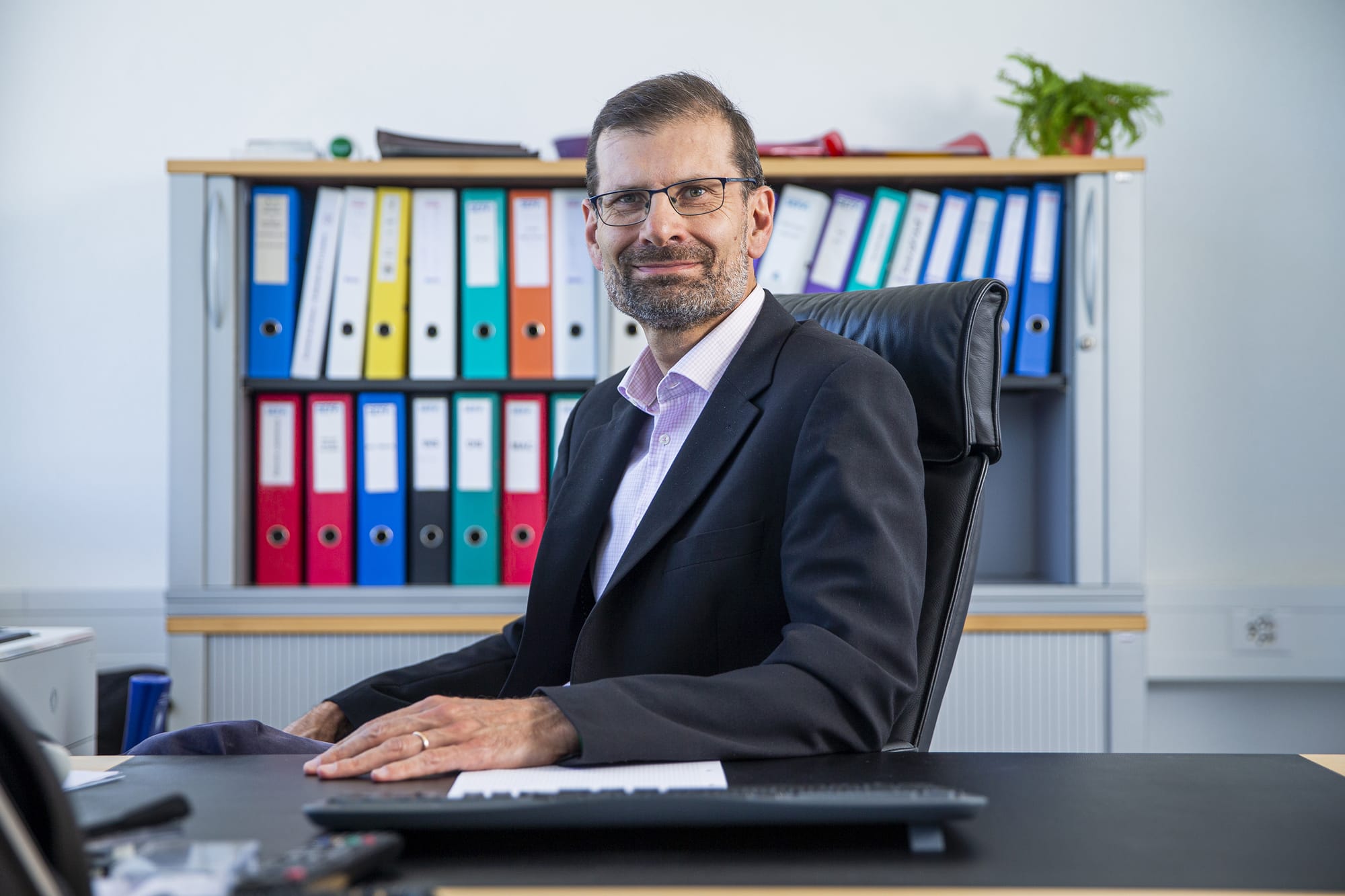
A prominent figure in Vaud political life, a member of the Grand Council, a Socialist deputy and former Director of Energy for the canton of Vaud, Laurent Balsiger is now at the head of the Société électrique des forces de l’Aubonne (SEFA). @SEFA
In 2026, the Société électrique des forces de l’Aubonne (SEFA) celebrates 130 years of existence serving its region. Founded in 1895 to harness the hydraulic power of the Aubonne — a river flowing in Switzerland in the canton of Vaud — the company has adapted with the times and met challenges in an increasingly complex market mainly linked to the rise of renewable energies.
Despite a modest size compared with other major players in the Swiss market, SEFA demonstrates remarkable solidity as well as a real ability to invest in the energy and climate transition. After a first part devoted to more political issues, we continue this interview with Laurent Balsiger by addressing the future of the Vaud DSO. Interview
Compared with the large DSOs such as Romande Energie, Groupe E or Primeo in Basel, how does a medium-sized player like SEFA manage to get by in the current landscape?
First of all, it is about defining a clear mission, vision and strategy. In other words, establishing why we exist. Our main mission is to provide essential services, notably in the fields of energy and telecommunications.
Our purpose is to meet the needs of businesses as well as residents, in order to strengthen the resilience of the region and enable it to face future challenges while remaining competitive. Whether it is the production of local pellets, geothermal energy, district heating networks, photovoltaics or wind power — notably with the Bière project — our role is to prepare the territory's energy future.
One might wonder what would happen without SEFA? In reality, many local projects would simply not come to fruition. We play the role of a local actor and facilitator. In collaboration with forest groups and certain municipalities, for example, we have contributed to the creation of a local pellet sector, adding value to logging residues and forest resources.
We also supported the establishment of a biogas installation in Saint-Georges, in partnership with an engaged farmer. Other projects, such as geothermal energy in Gland, have not yet been completed, but we hope to realize them elsewhere with the support of public partners.
These local and regional initiatives would generally not be taken on by large players, who focus on larger-scale projects. This is precisely where our added value lies: acting as a catalyst, explaining the issues, convincing local actors and bringing forward concrete projects that create jobs. Our action therefore also contributes to local economic dynamism.
Today, Switzerland still has nearly 600 DSOs. Should we keep so many or, on the contrary, consider a future concentration of the market?
Comparing tariffs clearly shows that the largest DSOs are not necessarily those offering the most advantageous conditions for Swiss consumers. Moreover, large structures often encounter greater difficulty adapting to local specificities and needs.
In my view, there is room both for large and for small DSOs. The essential thing is that shareholders and customers can determine whether their network operator effectively meets their expectations.
Swiss economic history also shows the advantages of a decentralized model. During the industrial revolution at the end of the 19th century, it enabled the country to build the necessary infrastructure in record time, often more efficiently than in highly centralized systems like that of France.
With each reduction in the remuneration of capital, the incentive to invest decreases, which is paradoxical in a period when ELCOM and the Federal Office of Energy should, on the contrary, encourage us to invest.
WACC price falling, imposed price for solar, balancing energy costs rising sharply... How does SEFA manage to stay in the black?
We are under pressure, like all sector players, despite results that we manage to keep positive. The fact that the WACC (weighted average cost of capital) price falls again in 2026 is certainly not good news, especially in a period when investments remain very important. With each reduction in the remuneration of capital, the incentive to invest decreases, which is paradoxical at a time when ELCOM and the Federal Office of Energy should, on the contrary, encourage us to invest.
At the same time, margins are shrinking, while the needs to adapt the network are rising sharply. Today, we are already doing twice as much work as five or ten years ago, and this trend will accelerate. The network must be adapted to integrate local production, accommodate new energy sources such as wind, and respond to changes in the energy system.
One solution for a DSO of our size is to strengthen partnerships and pool certain resources. With other similarly sized players, we have created joint structures to share certain services, rather than each developing them on our own.
We created SDEnergie for the management of metering data, as well as INERA to develop products intended for the energy market. This pooling makes it possible to control costs, especially administrative ones, and to reach the critical size required. It also offers greater flexibility: for example, a specialist can intervene for several entities, which allows better use of available skills while maintaining our local anchor.
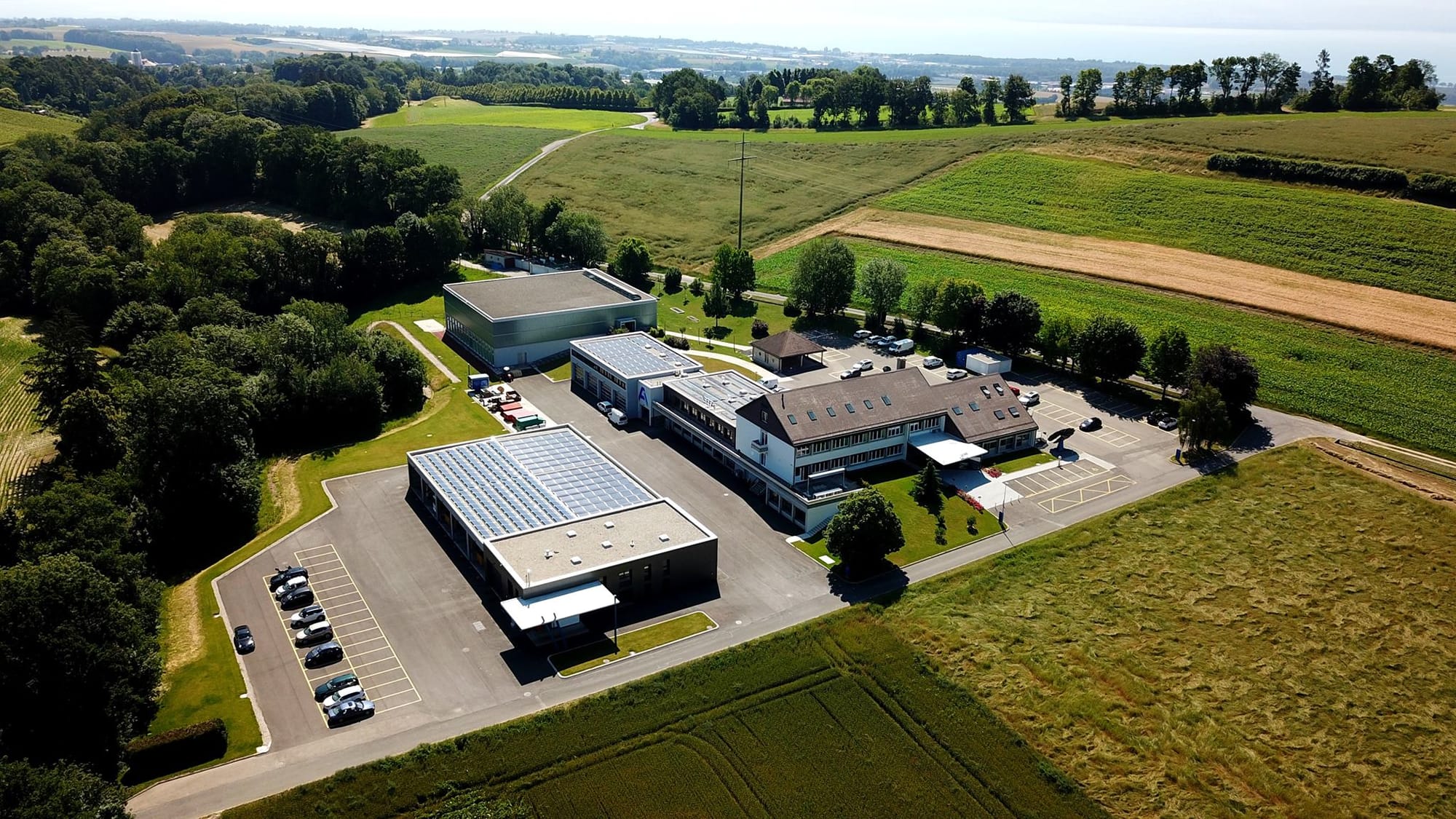
The new headquarters of the Société électrique des forces de l’Aubonne (SEFA). @SEFA
The large DSOs have financial capacities enabling them to invest abroad and, for some, to offset the margin losses suffered in Switzerland. Would such extra-territorial activities be conceivable for SEFA?
Within partnerships, this avenue would certainly be a possibility. However, whether it would truly be desirable deserves reflection. The primary mission of an actor like SEFA remains above all to meet the energy needs of its territory and its inhabitants. It is therefore necessary to evaluate such opportunities with caution, ensuring that they remain consistent with our role, our resources and the expectations of our partners and clients.
SEFA mentions an investment plan of around 35 million francs over the next five years. How can a company whose annual profits are around one million aim for such an objective?
This objective is achievable thanks to the sound management of SEFA carried out by my predecessors over the past decades. We also benefit from hydroelectric installations that are now partially amortized, which gives us additional borrowing capacity and allows us to consider these investments with some serenity.
Furthermore, our various service activities — whether multimedia, energy services or other offerings — generate supplementary cash flow. Even if their profitability remains relatively modest, they help strengthen our investment capacity and support the company’s future development.
The energy sector today faces challenges that, in many respects, resemble those of the agricultural world: producing locally and sustainably.
Some believe that an agreement with the European Union would mainly favor electricity producers rather than DSOs...
For large Swiss energy producers, access to the vast European market clearly represents a major strategic issue. Being able to sell and trade electricity within an integrated framework offers important opportunities in terms of outlets, stability and optimization of production capacities.
On the other hand, the conditions of access to this market will come with additional regulatory constraints, both for distributors and for DSOs. In the event of an agreement, we will therefore all face this complexity linked to market opening, the harmonization of rules and increased administrative requirements. This will represent a real challenge for SEFA in the years to come.
There is much talk about the “energy mix”, especially regarding renewable energies. What does it represent for a medium-sized DSO?
It is absolutely not necessary for a modestly sized DSO to produce all types of renewable energies. The essential thing is above all to valorize the energy resources available on its own territory and to develop the sectors that make sense locally, both technically and economically.
Thanks to the interconnected network we have in Switzerland, we can exchange energy between regions and between actors. In my view, it is therefore not necessary to aim for a form of complete energy self-sufficiency at the scale of a region like that covered by SEFA.
In the field of photovoltaics, what is your view on the future RCPv and local energy communities (LECs)?
Yes, these are clearly good solutions. They make it possible to better valorize locally produced energy and, above all, to maximize self-consumption near the place of production. This does indeed help reduce some of the pressure on networks, notably during hours of strong photovoltaic injection.
However, attention will need to be paid to the potentially unequal effects these mechanisms could generate. Part of the network costs could indeed be shifted onto consumers who do not have access to these solutions, notably some tenants or residents of buildings whose owners would not want to participate.
The challenge will therefore be to find a balance that encourages these new forms of consumption and energy sharing, while ensuring an equitable distribution of network costs for all users.
What will be the main challenges SEFA will have to face in the years to come?
The energy sector today faces challenges that, in many respects, resemble those of the agricultural world: producing locally, sustainably and reliably, while operating in a market and regulatory context that is increasingly complex and strained, with limited financial margins.
This situation does not always favor long-term investments, even though they are essential to modernize infrastructure, strengthen networks and develop renewable energies.
And when, as we are experiencing now, there is a threat of shortage and energy prices rise sharply, it is a double penalty. On one hand, vulnerable households must be supported so that they can continue to heat themselves and cope with the cost of living. On the other hand, investment must nonetheless continue, even though the costs of equipment, materials and projects are also rising sharply.
The real challenge will therefore be to reconcile security of supply, the energy transition, price accessibility and investment capacity. Unfortunately, history also shows that it is often when we are up against the wall that humans react by beginning to make the necessary decisions.
This article has been automatically translated using AI. If you notice any errors, please don't hesitate to contact us.
"Members of the 'Swiss Electricity Agreement Alliance' will closely monitor parliamentary debates and provide factual information about the agreement," summarizes Annalisa Job, communications manager for the Association of Swiss Electricity Companies (AES).
"By constantly looking at the surfaces that could still accommodate solar installations, we may be overlooking one possibility: roofs that are already equipped," points out Alban Bitz, director of SI-REN.
The ambition to continue the development of green, reliable and cost-effective energy sources gave rise to new and numerous discussions at the seventh edition of Building Bridges in Geneva.