What happens when insurance companies decide to withdraw and no longer cover the most at-risk areas? That is the theme at the heart of the new report by the environmental NGO, but also of "Sigma", that of the Swiss Re Institute. Analysis
"Flexibility solutions are now essential. However, they face a structural difficulty: their costs are decreasing faster than market rules evolve," explains Xavier Blot, associate professor at emlyon business school.
By naming their first edition "Wind farms are taking shape", the industry's players want to show a certain optimism despite a context that remains complicated for the sector. A look by Benoist Guillard, president of the Groupe romand pour l’énergie éolienne (GREE).
Local Energy's solar lease: a new lever to decarbonize real estate
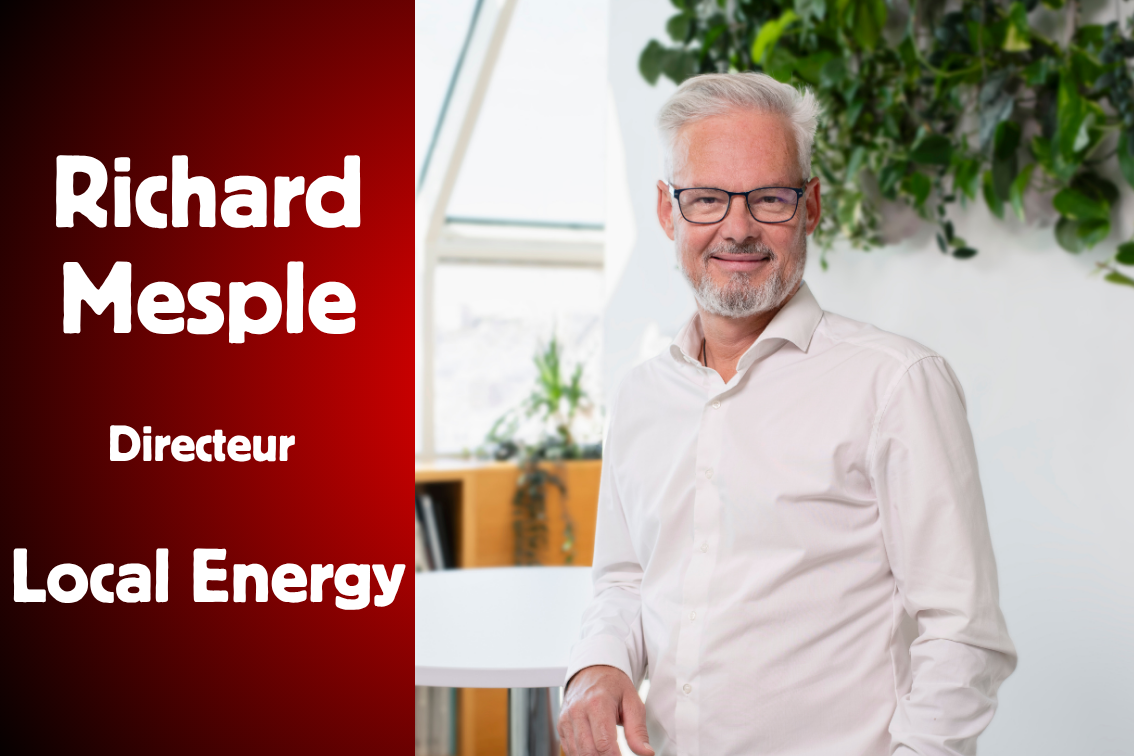
Analysis of surface areas, planning and supervision of works, monitoring, maintenance, billing of energy to tenants... the company Local Energy takes care of everything. "We like to define ourselves as a sort of energy utility," explains its director, Richard Mesple.
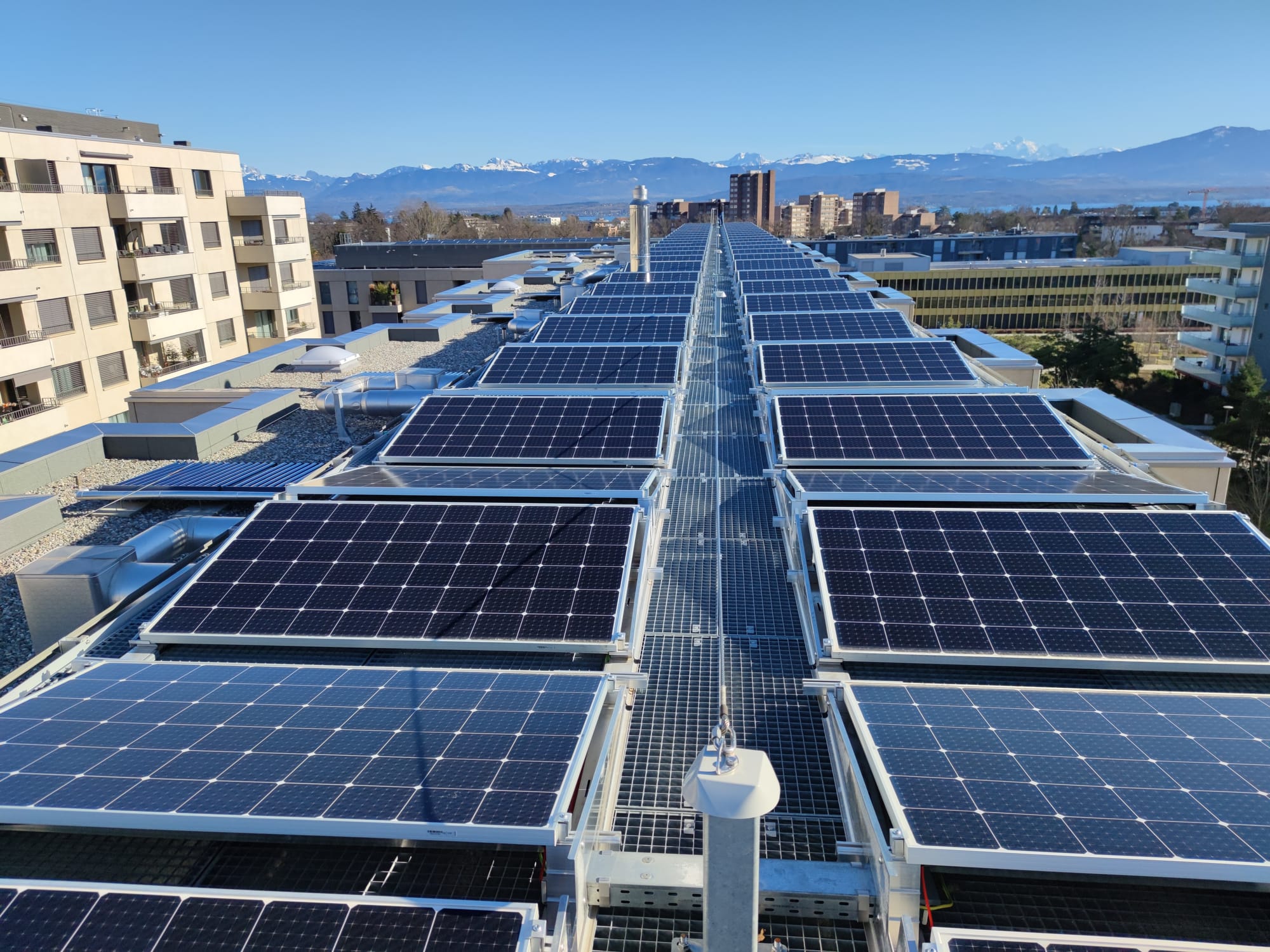
Analysis of surface areas, planning and supervision of works, monitoring, maintenance, billing of energy to tenants… Local Energy takes care of everything. @Local Energy
At the turn of the 20th century, Switzerland saw the emergence of its first property management companies as a structured professional activity. At the same time, in the country’s major cities such as Geneva, Zurich or Basel, the first electrical networks began to be deployed. Whether public or private, around one hundred companies were then created, tasked with developing and maintaining the national electrical infrastructures.
Even today — not including Swissgrid, which is responsible for transmission — the country counts more than 600 active distribution network operators (DNOs). “The big problem is that the whole network was designed and built to operate only in one direction: that of centralized production, from a single, large site, like a nuclear power plant or a dam, before being redistributed. However, with renewable energies, particularly solar energy, that logic no longer holds,” explains Richard Mesple, director of Local Energy, a company specialized in what it has dubbed “solar leasing.”
An energy utility
For several years, this company has been — in a way — playing on both sides. “The comparison with a DNO is not really appropriate. We prefer to define ourselves as a kind of energy utility. If traditional property managers have the task of managing apartments, and DNOs that of distributing electricity to them, we take charge of all energy-related matters within a single building,” explains its director, recognized for his solid experience in the field of renewable energies.
Before taking over the direction of Local Energy in 2020, Richard Mesple cut his teeth by founding MW-Line SA, the company behind “Sun21”, the first solar-powered motorboat to have crossed the Atlantic in 2007. For a decade, he also led SI-REN SA, an energy investment company owned by the City of Lausanne and active in solar, wind, biomass and deep geothermal energy.
For five years, with Local Energy, the Vaud-based entrepreneur has continued his path in the field of renewable energies, albeit with a slightly different mission: to find and develop energy solutions intended to contribute to the decarbonization of the Swiss building stock while simplifying the lives of owners. “We realized that energy-related topics were still very opaque and, particularly in the photovoltaic sector, a source of confusion for real estate experts,” he recounts.
Before taking over the direction of Local Energy in 2020, Richard Mesple cut his teeth by founding MW-Line SA, the company behind “Sun21”, the first solar-powered motorboat to have crossed the Atlantic in 2007. @Local Energy
The advantage of solar leasing
“You have a roof, we bring you a financial return.” It is with this slogan, both simple and deliberately provocative according to its director, that the company addresses owners who are interested — but hesitant — to invest in the installation of solar panels.
First characteristic of Local Energy’s model: the owner remains the holder of their photovoltaic installation, even if everything is taken care of by the young company. Analysis of surface areas, planning and management of works, monitoring, maintenance, billing of energy to tenants… it takes care of everything. In return, it becomes the owner and dependent on the energy produced by the panels in question.
“This solution allows us to avoid falling into a solar contracting relationship — that contractual model in which the owner cedes the use of their roof to a specialized company, which installs panels there to produce solar energy (with the risk of being exposed to frequent tariff fluctuations) and thus creates an easement. For the owner, solar leasing represents a guarantee of long-term security, as well as an additional source of return,” assures Richard Mesple.
“We realized that energy-related topics were still very opaque and, particularly in the photovoltaic sector, a source of confusion for real estate experts,” explains Richard Mesple, director of Local Energy
For the next three decades, Local Energy commits to paying roof and installation owners an annual interest between 4% and 8% of their initial investment (excluding subsidies). “We were inspired by agricultural leasing, that model where municipalities allow farmers to exploit land in exchange for a fixed remuneration,” explains its director.
This solar leasing compels the company to be particularly vigilant regarding the quality and execution of each step — from installation to operation of the panels — its revenues being directly linked to the energy produced. A task made all the more demanding because each building has its own history and it is difficult to standardize a model applicable to all.
It should be noted that the owner is not the only beneficiary of this model, since it would also offer tenants of the buildings concerned the guarantee of enjoying a solar kilowatt-hour cheaper than that of the grid. Within a few quarters, the company also plans to equip its installations with storage batteries in order to retain excess solar energy produced during the day, and thus achieve a better balance between electricity supply and demand.
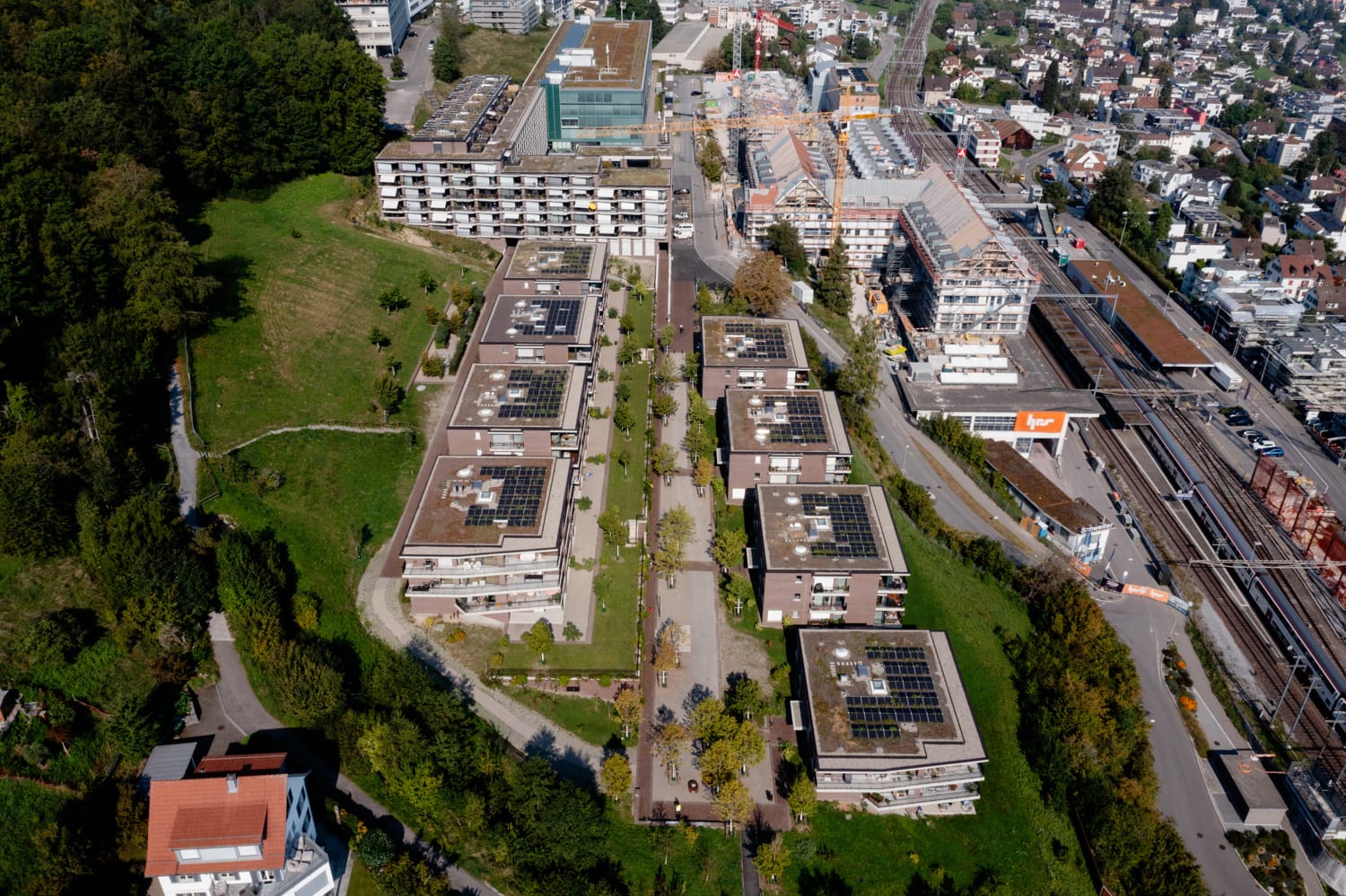
A subsidiary of Realstone Holding, the company is already present on the roofs of about fifty buildings across Switzerland (which represents about a hundred small photovoltaic plants under lease). @Local Energy
An increasingly local energy
As its name indicates, Local Energy already anticipates that an increasing share of our energy future will be consumed locally. Called Local Energy Communities (LECs) or Groupings for Virtual Clean Consumption (RCPs), these new structures should multiply in the coming years, notably following the growth of photovoltaic capacities in Switzerland.
Aiming to pool electricity production among several households or buildings, and to optimize the use of solar energy in the immediate vicinity of its place of production, these solar communities constitute a concrete solution to strengthen energy autonomy and accelerate the transition to renewable energies.
This transformation of the building and energy stock could favor the interests of the young company, its model requiring significant surfaces to be profitable (at least 400 m²). A subsidiary of Realstone Holding, the company is already present on the roofs of about fifty buildings across Switzerland (which represents about a hundred small photovoltaic plants under lease). According to its director, nearly one million buildings in the country could benefit from their solution and expertise. Enough to ensure a promising future for solar leasing.
This article has been automatically translated using AI. If you notice any errors, please don't hesitate to contact us.
What happens when insurance companies decide to withdraw and no longer cover the most at-risk areas? That is the theme at the heart of the new report by the environmental NGO, but also of "Sigma", that of the Swiss Re Institute. Analysis
"Flexibility solutions are now essential. However, they face a structural difficulty: their costs are decreasing faster than market rules evolve," explains Xavier Blot, associate professor at emlyon business school.
By naming their first edition "Wind farms are taking shape", the industry's players want to show a certain optimism despite a context that remains complicated for the sector. A look by Benoist Guillard, president of the Groupe romand pour l’énergie éolienne (GREE).
Since its founding in 2021, the young startup has made it its mission to find a good compromise between energy production and plant growth. The solution is called "spectral filtering".