What happens when insurance companies decide to withdraw and no longer cover the most at-risk areas? That is the theme at the heart of the new report by the environmental NGO, but also of "Sigma", that of the Swiss Re Institute. Analysis
"Flexibility solutions are now essential. However, they face a structural difficulty: their costs are decreasing faster than market rules evolve," explains Xavier Blot, associate professor at emlyon business school.
By naming their first edition "Wind farms are taking shape", the industry's players want to show a certain optimism despite a context that remains complicated for the sector. A look by Benoist Guillard, president of the Groupe romand pour l’énergie éolienne (GREE).
"Phasing out fossil fuels is essential, and that will not be possible without them. Their deployment must, however, be carried out sensibly," explains Pierre Cormon, journalist at the FER Geneva.
Don’t say it too loud, but… photovoltaics and wind power are not that clean. Certainly, they have many advantages. From a climate point of view, they are infinitely preferable to coal, oil, or gas.
Their local impact is also smaller: even though wind and solar farms take up a lot of space, they do not produce harmful emissions. One can always debate their visual impact, but that does not constitute an existential threat — unlike global warming.
Their ugly secret lies elsewhere. Their deployment requires a staggering amount of materials, notably metals – just like digitization and electric mobility. At equal power, the construction of a photovoltaic installation requires thirty times more material resources than that of a gas power plant, calculated interdisciplinary researcher Vaclav Smil.
The integration of intermittent energies into the electricity system also implies strengthening the grids and developing storage solutions, which also requires substantial quantities of materials. This energy shift consists of replacing fossil fuels with metal, concludes journalist Céline Izoard.
We must think not only in terms of energy and greenhouse gas emissions, but also in terms of material resources.
The cost in material resources
However, mining extraction has massive environmental impacts: deforestation, pollution, water consumption in sometimes arid regions… It also generates phenomenal quantities of waste, often toxic. Metals previously trapped in the ground are extracted and some end up in mining residues.
These residues often take the form of sludge stored in dams, which can occupy an entire valley. When these are full, the contents are dried and covered with a protective layer. This layer can erode over time, under the action of the wind, and spread metal-rich dust.
Our voracity for raw materials therefore leaves a heavy legacy to future generations — often far from our eyes, in Chile, Brazil, Indonesia, or the Democratic Republic of the Congo.
That does not mean we should give up photovoltaics or wind power. Getting out of fossil fuels is essential, and this will not be possible without them. Their deployment must, however, be done wisely. We must think not only in terms of energy and greenhouse gas emissions, but also in terms of material resources.
Rather than installing photovoltaic panels everywhere — as proposed by an initiative of Geneva’s Green Liberals — we should prioritize zones where the yield is above average, such as in the mountains or in sunny regions. And where the grid is able to absorb this additional electricity without having to be too reinforced – which argues in favor of a rather centralized production. This would thus minimize the environmental impact per kilowatt-hour produced, as well as the legacy left to future generations.
This article has been automatically translated using AI. If you notice any errors, please don't hesitate to contact us.
What happens when insurance companies decide to withdraw and no longer cover the most at-risk areas? That is the theme at the heart of the new report by the environmental NGO, but also of "Sigma", that of the Swiss Re Institute. Analysis
"Flexibility solutions are now essential. However, they face a structural difficulty: their costs are decreasing faster than market rules evolve," explains Xavier Blot, associate professor at emlyon business school.
By naming their first edition "Wind farms are taking shape", the industry's players want to show a certain optimism despite a context that remains complicated for the sector. A look by Benoist Guillard, president of the Groupe romand pour l’énergie éolienne (GREE).
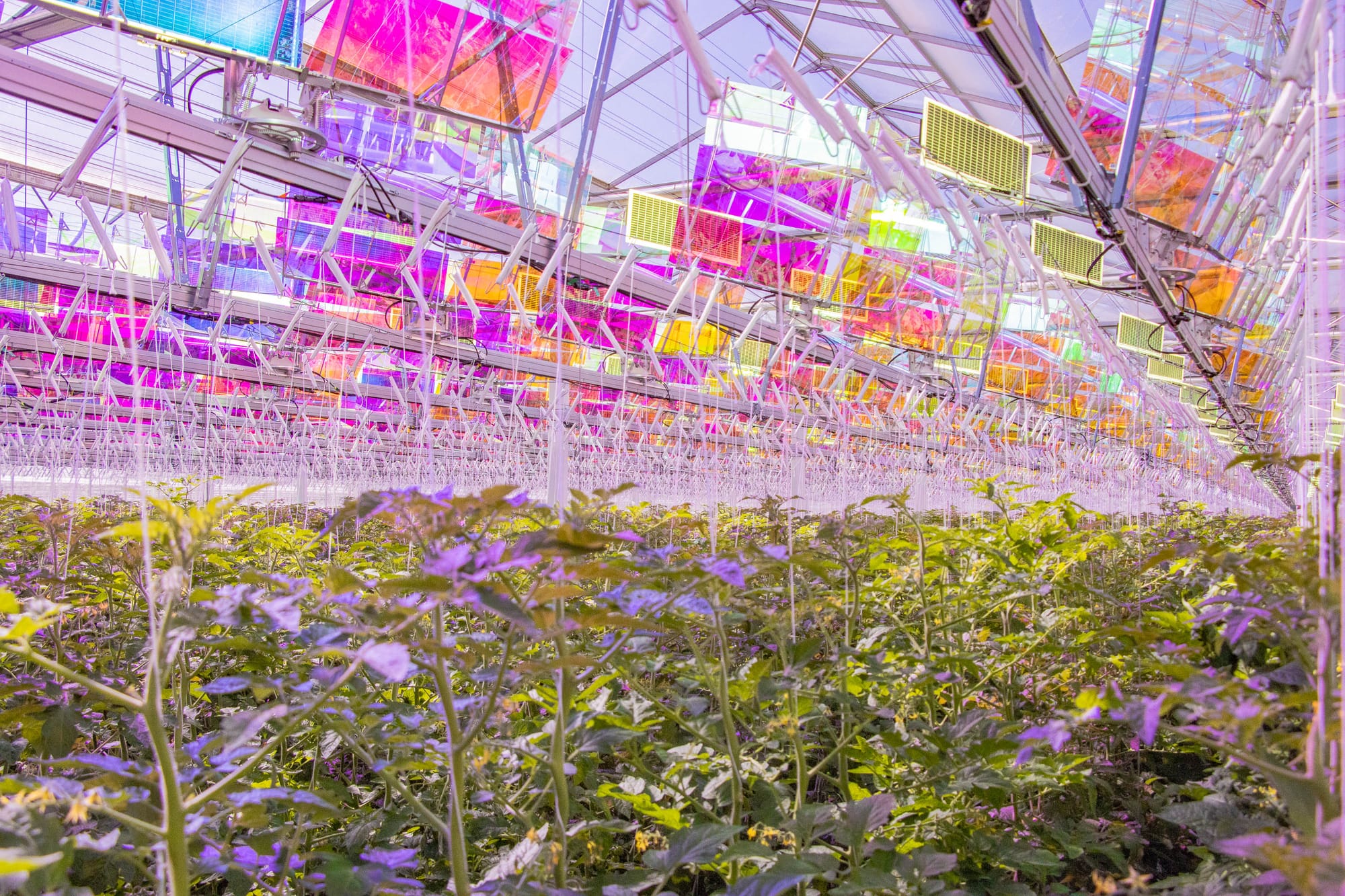
Since its founding in 2021, the young startup has made it its mission to find a good compromise between energy production and plant growth. The solution is called "spectral filtering".