"We no longer have any choice but to adapt to climate change"
Interview with Vincent Kaufmann, director of the Ethos Foundation.
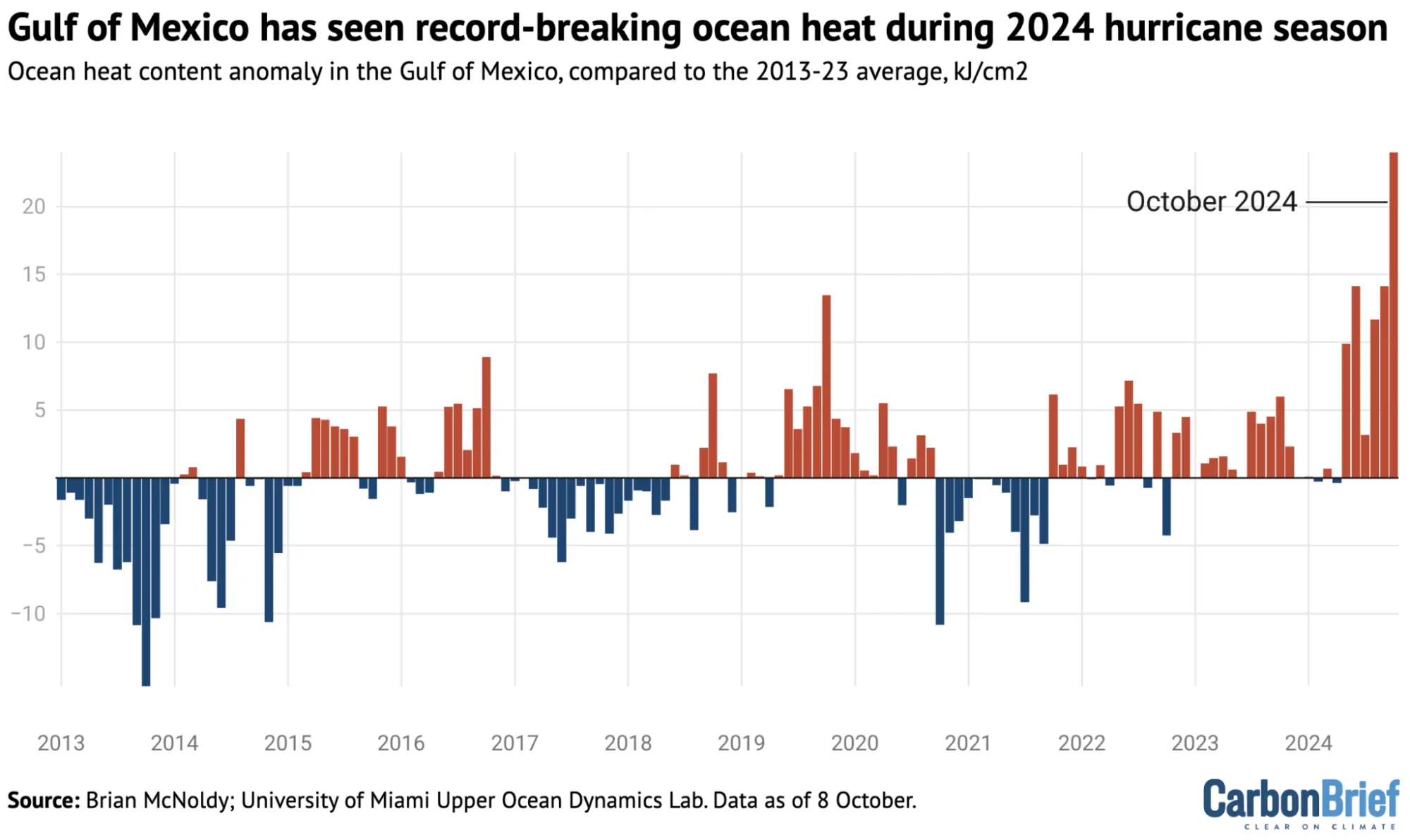
A very recent study takes stock of the state of the climate. The occurrence of hurricanes like Milton is, unfortunately, a very predictable anomaly.
Reading it literally chills your blood. The opening lines of this “Report on the State of the Climate in 2024” set the tone: “We are on the brink of an irreversible climate catastrophe. This is unquestionably a global emergency. Much of the very fabric of life on Earth is at risk. We are entering a new critical and unpredictable phase of the climate crisis.”
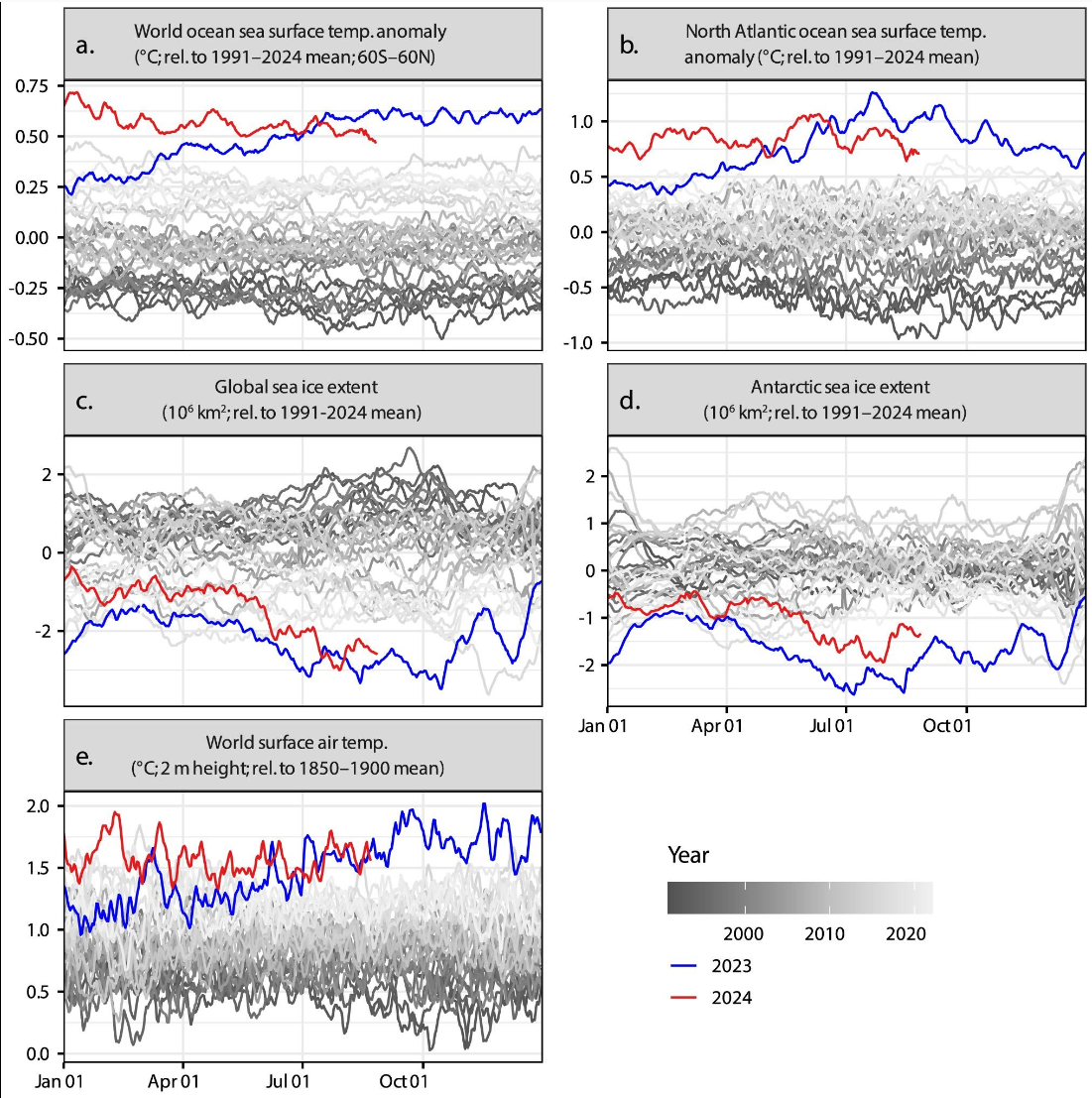
Variations in the temperatures of the climate system
Signed by leading climatologists and experts on the subject, this report does not fundamentally add new elements to the scientific understanding of the issues. But it is very valuable, because it constitutes a comprehensive synthesis of the state of science on the trends that temporarily or permanently affect the climate.
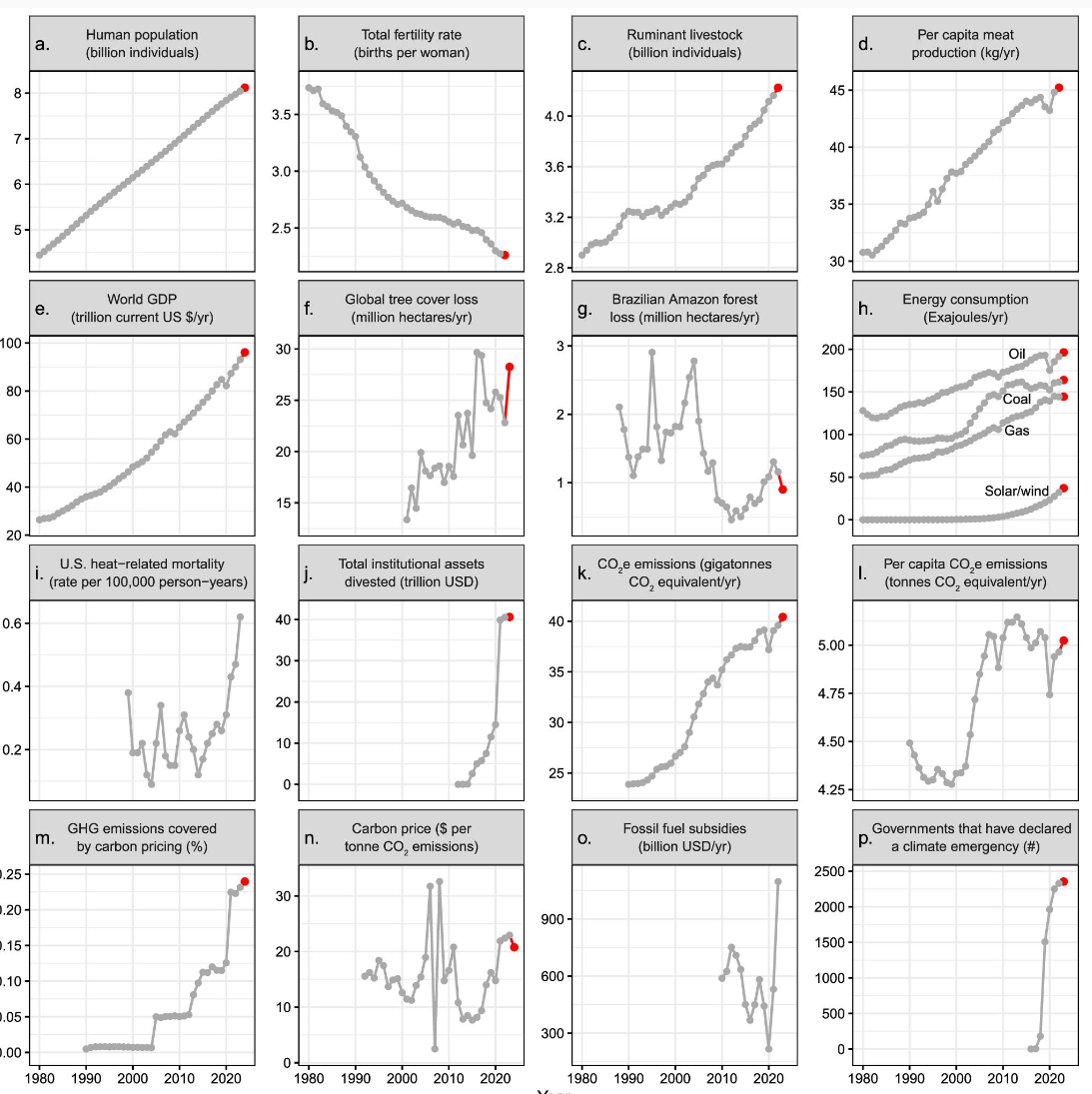
For all those who have to make decisions (political and economic spheres) or who communicate on the subject, it is a remarkable reference document, accompanied by a series of graphics that are vital signs for the planet’s future. And above all, it is published at a time when the United States is facing extreme climatic events whose links to global warming are increasingly evident.
Important graphics for understanding the climate trajectory
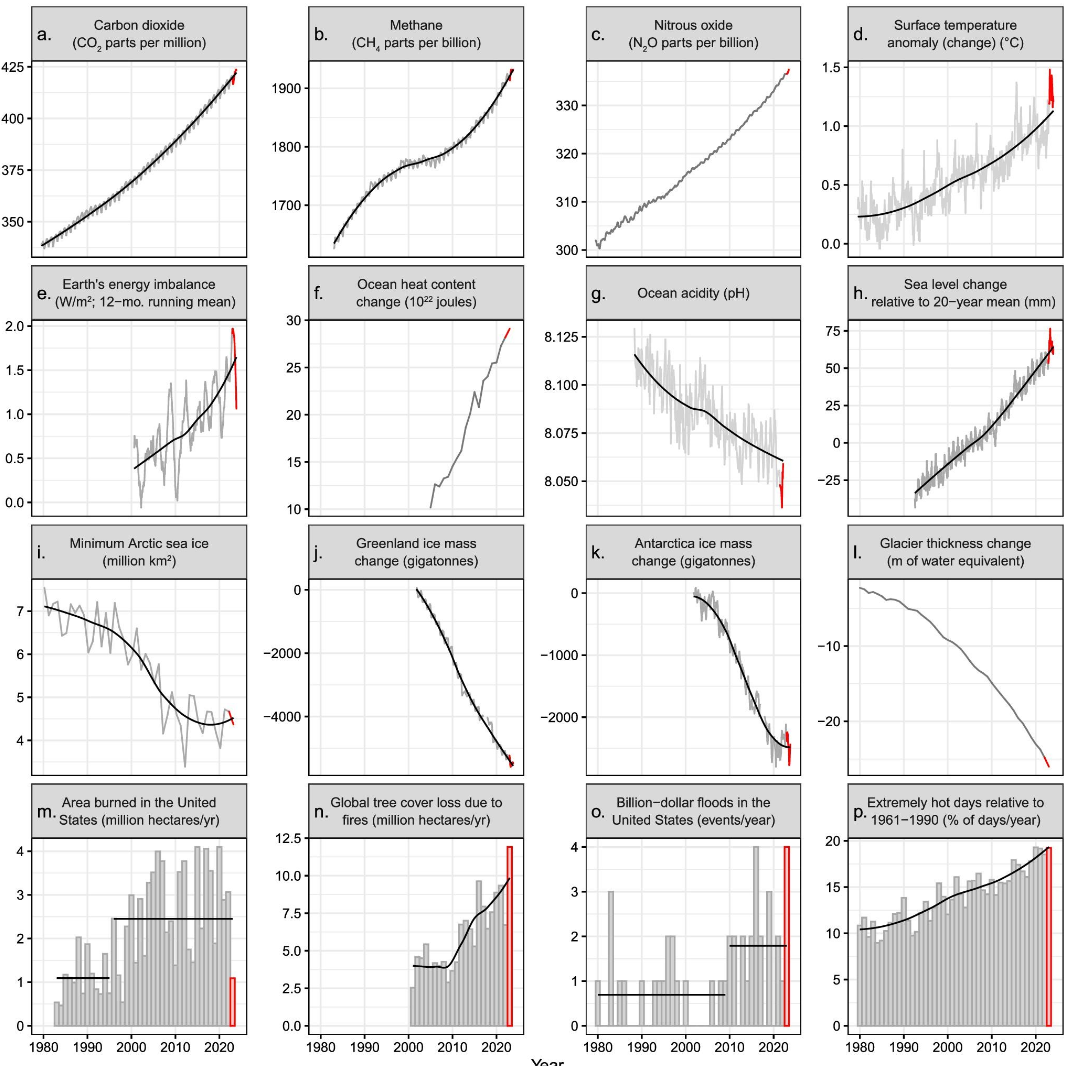
What to take away from this report, if you don't have time to read everything:
Researchers draw policymakers' attention to the systemic nature of the crisis we face (rising inequalities, poverty, depletion of the planet’s resources, risk of collapse of human societies, etc.).
“The multiplication of climate disasters each year shows that we are going through a major crisis and that the worst is yet to come if we continue as if nothing is happening”
Catastrophic or optimistic rhetoric does not provide real solutions for action, but it remains essential to take all measures that can slow and perhaps reverse current trends. “The multiplication of climate disasters each year shows that we are going through a major crisis and that the worst is yet to come if we continue as if nothing is happening.”
One conclusion is clear: “Rapid reduction in the use of fossil fuels should be an absolute priority. This could be achieved in part through a global carbon price high enough to limit emissions from wealthy countries while potentially providing funding for essential mitigation and adaptation programs for climate change.”
Reference: The 2024 state of the climate report: Perilous times on planet Earth
William J Ripple, Christopher Wolf, Jillian W Gregg, Johan Rockström, Michael E Mann, Naomi Oreskes, Timothy M Lenton, Stefan Rahmstorf, Thomas M Newsome, Chi Xu ... Show moreAuthor NotesBioScience, biae087, https://doi.org/10.1093/biosci/biae087
This article has been automatically translated using AI. If you notice any errors, please don't hesitate to contact us.

Interview with Vincent Kaufmann, director of the Ethos Foundation.

"The summer of 2026 showed what inaction costs; the courts, for their part, have begun to say who must be held responsible for it," emphasize François de Cambiaire and Lydia Méziani, lawyers at de Cambiaire & Méziani Associates.

Interview with Mélanie Beyeler, Global Head of Sustainable Investing at EFG.

By combining energy management systems, decentralized generation and storage solutions, facility managers have a strategic opportunity: to transform their buildings according to the "building as a grid" model, says Kamal Mehta, Product & Offer Manager EMEA at Eaton.
Already a member or subscriber? Simply enter your email address to receive instant access to the article. Enjoy!