What happens when insurance companies decide to withdraw and no longer cover the most at-risk areas? That is the theme at the heart of the new report by the environmental NGO, but also of "Sigma", that of the Swiss Re Institute. Analysis
"Flexibility solutions are now essential. However, they face a structural difficulty: their costs are decreasing faster than market rules evolve," explains Xavier Blot, associate professor at emlyon business school.
By naming their first edition "Wind farms are taking shape", the industry's players want to show a certain optimism despite a context that remains complicated for the sector. A look by Benoist Guillard, president of the Groupe romand pour l’énergie éolienne (GREE).
Reuse centers: the strategic links for sustainable construction
With the recent opening of the Ressourcerie Matériuum Lausanne, French-speaking Switzerland strengthens a key link in the reuse chain: that of storage, repurposing and awareness-raising around construction materials.
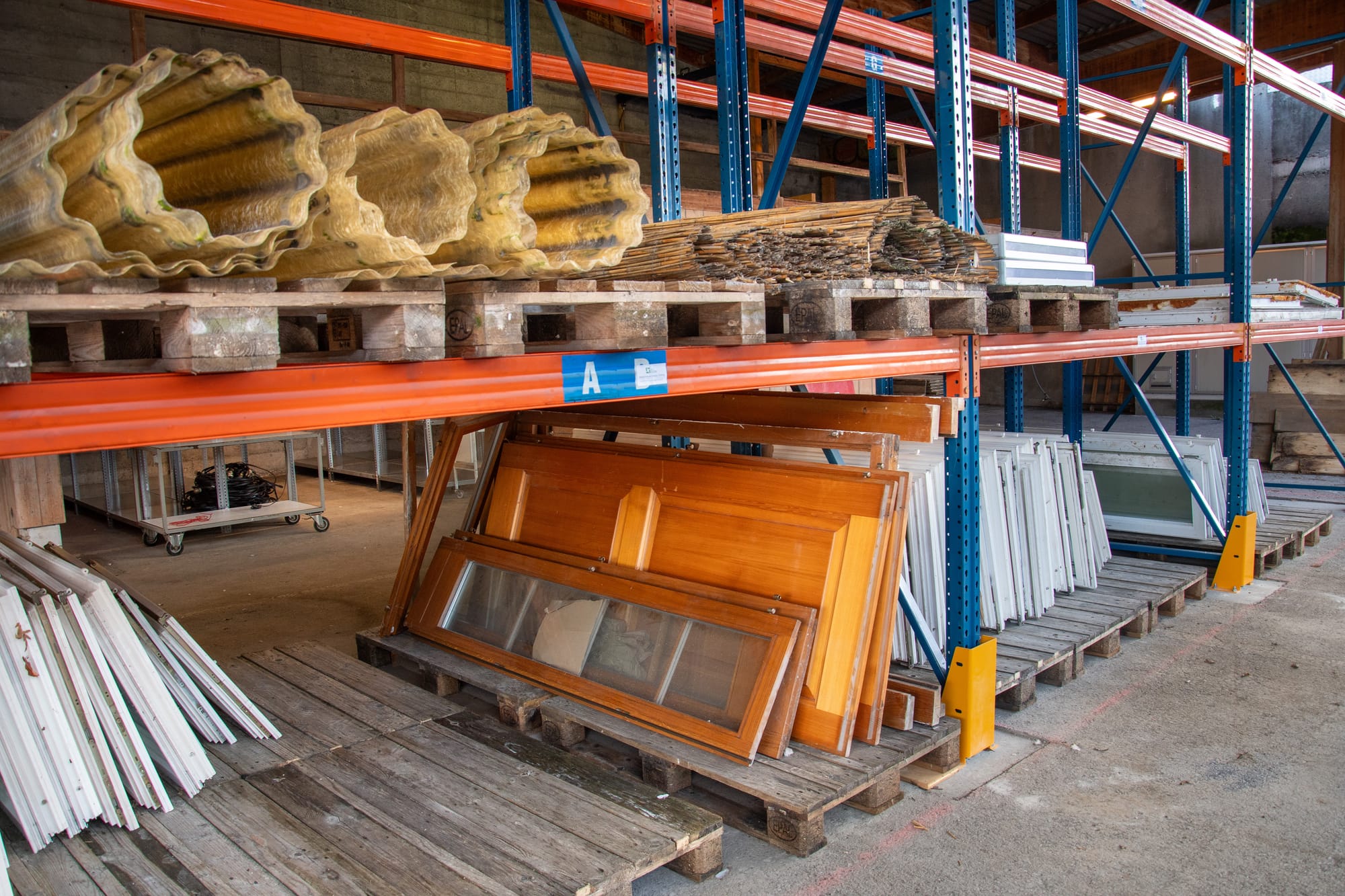
For the practice of reusing materials to become widespread and truly circular, it is necessary to be able to sort, inventory, store and add value to the recovered materials — a logistical challenge often underestimated, as shown here by the new Lausanne reuse center. @Mathilde Imesch - City of Lausanne
The reuse of construction materials is not limited to carefully removing elements from a "donor building" to reintegrate them into a "recipient building". For the practice to become widespread and truly circular, it is necessary to be able to sort, inventory, store and valorize the recovered materials — a logistical challenge that is often underestimated. This is precisely where material reuse centers make sense, offering a concrete and sustainable solution.
The Matériuum Lausanne Resource Center, inaugurated in October 2024, meets this need by providing a 700 m² space to collect, classify and return many construction materials to circulation: metal or wooden frames, façade elements, outdoor pavers, concrete slabs, etc. The project is based on a strong public-private partnership (City of Lausanne, Beaulieu SA, association Materiuum Lausanne) and is anchored in the objectives of the Lausanne Climate Plan and the Energy retrofit strategy for the built heritage of the city of Lausanne.
To coordinate this dynamic, a materials valorisation specialist was hired on 1 April 2025. His role? To identify and valorize reusable materials while facilitating their integration into new projects. This role is filled by Vincent Luetto, an architect specializing in geo- and bio-based materials and the manager of this "second-hand materials" space. Moreover, the placement of such a venue within IMPACT HUB Beaulieu, where various change actors meet, is far from accidental. Vincent Luetto welcomes this proximity. "It stimulates synergies, it's a true hive of ideas and partnerships. We are fortunate to be near these actors of change." He also adds, for those who still doubt, that reuse is "possible, current and it works! You must not be afraid. Diverting material opens the doors to creativity and spontaneity."
Key hubs for reuse
The reuse of construction materials still faces obstacles to becoming widespread, notably a lack of space to store deconstructed materials, or when construction schedules do not coincide and materials must be stored for weeks or even months before reuse. In the meantime, materials need to be identified, sorted, stored (properly to avoid losses), valorized and made available for new projects.
"Reuse is possible, current and it works! You must not be afraid. Diverting material opens the doors to creativity and spontaneity," explains Vincent Luetto, an architect specializing in geo- and bio-based materials and manager of the Matériuum Lausanne Resource Center.
It is precisely in this context that reuse centers prove their usefulness. Often run by construction professionals — project owners, architects, craftsmen — and committed volunteers, these structures constitute real hubs for reuse. They also offer advice, support and expertise to project owners in their deconstruction and material reuse processes.
In Fribourg, La Ressourcerie, which describes itself as a Competence Center for reuse, notably played a key role in the pilot project POLYNORM. That project demonstrated the feasibility of reusing metallic load-bearing structures from an old industrial hall. Additionally, during the renovation of the Sacré-Cœur school in Estavayer, a meticulous inventory of reusable elements was carried out, resulting in a public sale of materials and thus giving many building components a second life.
For its part, the Matériuum association has distinguished itself in several emblematic projects. For example, during the demolition of an old industrial building on Rue de Lyon in Geneva, Matériuum was commissioned to carry out an inventory of reusable materials and develop an action plan to valorize them.
Reuse centers play an important role in material economy and in the rise of circular construction. DR
Some addresses of reuse centers in French-speaking Switzerland
Matériuum Geneva : a pioneering and versatile associationIn Geneva, Matériuum Geneva has been a pioneer since its opening in 2018. Initially focused on reuse in the cultural sector — notably for theater sets and scenography elements — it later expanded its scope to the construction sector. Building on this experience, it now supports project owners in integrating reuse into their projects.La Ressourcerie Fribourg : a growing centerIn Fribourg, La Ressourcerie continues its development with a global approach: it combines a reuse materials shop, personalized project support, and awareness-raising activities for the public. Recently relocated to the Bluefactory site, it now benefits from better visibility and optimized space for its activities. This new setting allows it to intensify its action in favor of more sustainable construction.La Ressourcerie Matériuum Lausanne : a new Lausanne spaceThe place officially opened its doors in October 2024 and offers companies and individuals a 700 m² space for the collection and valorization of materials. With set opening hours and a dedicated team since 1 April 2025, it strengthens the local reuse offering by focusing on proximity and collaboration with other change actors, notably thanks to its position at the heart of IMPACT HUB Beaulieu.Archipel Sion : a social and sustainable cooperativeIn Sion, the Archipel reuse center, also inaugurated in April 2025, adds an additional dimension to the Romandy network. With its cooperative model, it combines reuse and social economy, promoting professional integration while giving materials a second life. By placing people and the local economy at the center of its approach, Archipel contributes both to circularity and to social cohesion.
A solution to achieve carbon neutrality
The development of reuse centers is part of a broader dynamic: that of achieving "net zero carbon" by 2050, a goal set by the Confederation as part of its energy strategy. This ambition is implemented at the cantonal level through various climate plans that encourage the reduction of greenhouse gas emissions. In this context, reusing materials helps reduce embodied energy as well as associated emissions, all of which are essential levers in a building sector that remains a major emitter.
Reuse centers play an important role in material economy and in the growth of circular construction. As real catalysts for change, they help evolve sector practices. However, it would be naïve to believe they alone can deeply transform the construction sector. These initiatives, as useful and relevant as they are, do not replace the structural reforms needed: evolution of building standards, training of professionals, adaptation of public procurement and, above all, a change in mindset towards accepting a mix of traditional techniques and innovations.
This article has been automatically translated using AI. If you notice any errors, please don't hesitate to contact us.
What happens when insurance companies decide to withdraw and no longer cover the most at-risk areas? That is the theme at the heart of the new report by the environmental NGO, but also of "Sigma", that of the Swiss Re Institute. Analysis
"Flexibility solutions are now essential. However, they face a structural difficulty: their costs are decreasing faster than market rules evolve," explains Xavier Blot, associate professor at emlyon business school.
By naming their first edition "Wind farms are taking shape", the industry's players want to show a certain optimism despite a context that remains complicated for the sector. A look by Benoist Guillard, president of the Groupe romand pour l’énergie éolienne (GREE).
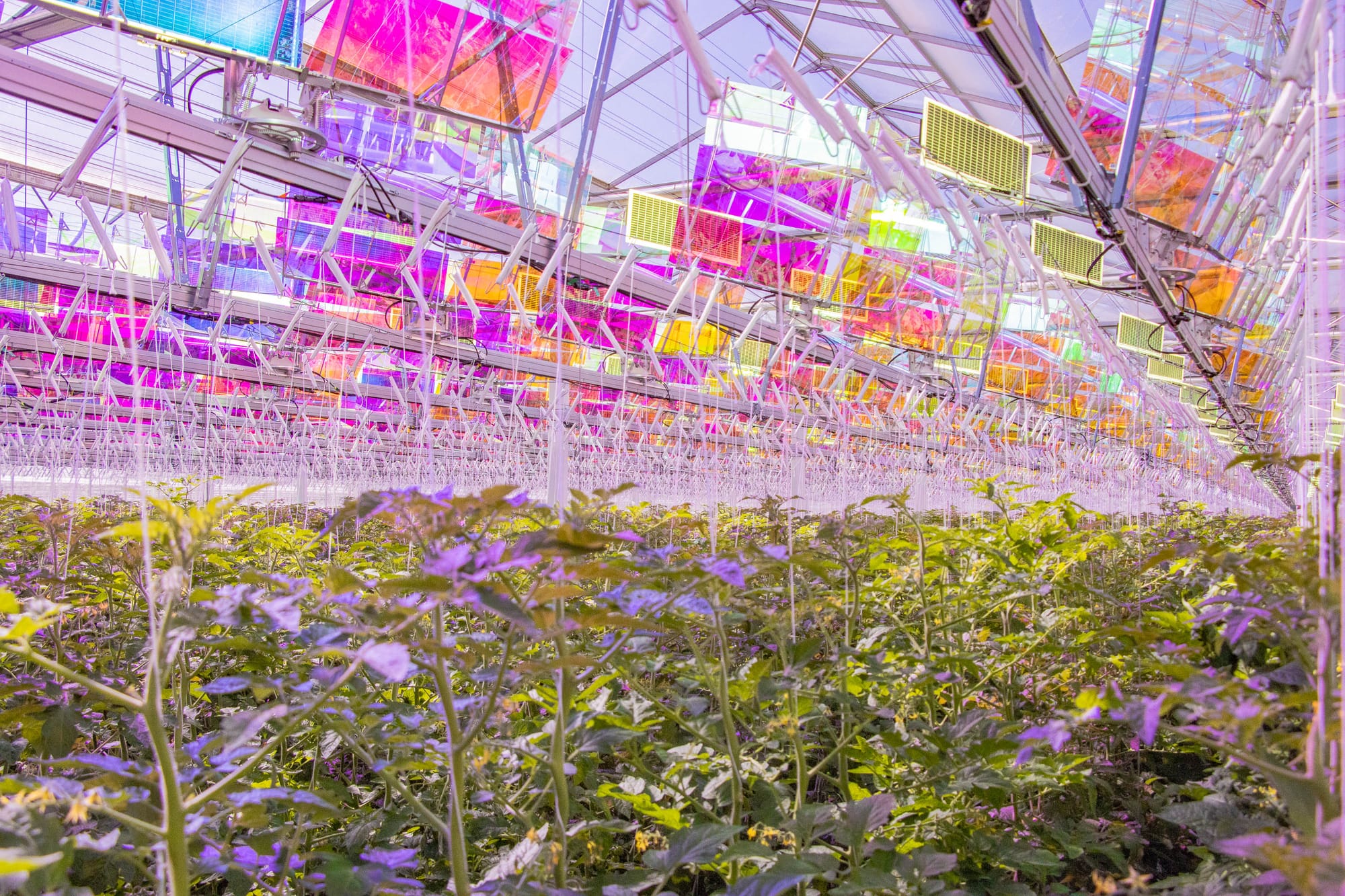
Since its founding in 2021, the young startup has made it its mission to find a good compromise between energy production and plant growth. The solution is called "spectral filtering".