"Succeeding in calculating the 'true costs' of food could serve as a compass and steer our decisions toward a more sustainable, healthier and more equitable diet," says Emilia Schmitt, scientific coordinator of the "True Cost of Food Switzerland" project.
What happens when insurance companies decide to withdraw and no longer cover the most at-risk areas? That is the theme at the heart of the new report by the environmental NGO, but also of "Sigma", that of the Swiss Re Institute. Analysis
"Flexibility solutions are now essential. However, they face a structural difficulty: their costs are decreasing faster than market rules evolve," explains Xavier Blot, associate professor at emlyon business school.
« We want to make visible these costs that are today invisible in our food system »
"Succeeding in calculating the 'true costs' of food could serve as a compass and steer our decisions toward a more sustainable, healthier and more equitable diet," says Emilia Schmitt, scientific coordinator of the "True Cost of Food Switzerland" project.
Assessing the real cost of food (TCA) by taking into account all of their impacts: that is the mission set by the “True Cost of Food Switzerland” project (TRUE-COST-CH). Led by a consortium of Swiss academic institutions and funded by the SNSF-SINERGIA program for the period 2024–2027, this initiative aims to analyze, in monetary terms, the environmental, health and social impacts of the food system, in order to guide decisions towards more sustainable, healthier and fairer food. Emilia Schmitt, the project’s scientific coordinator, reflects on the issues posed by our food systems. Interview.
Last year, a study by IPES-Food highlighted the dependence of our food systems on fossil fuels — representing 40% of petrochemicals and 15% of fossil fuels worldwide. Is the sustainability of our food system in Switzerland really feasible?
Indeed, fossil fuels play a key role in agriculture’s impact. They are used extensively at every level: the manufacture of synthetic inputs such as fertilizers, heating greenhouses, fuel for agricultural machinery, production of plastic packaging, processing and transport. That said, identifying a major problem does not mean that sustainability is impossible — quite the opposite. Thanks to these studies, we have numbers that help direct efforts and better target levers for action.
The challenge for the food system is to promote models capable of lasting over time and absorbing disruptions (economic, geopolitical, climatic), rather than models dependent on limited resources and vulnerable in the medium term. Once all these dependencies are properly identified, the sustainability of the Swiss food system will be both possible and desirable. However, it will probably not take the form of a single model. We are rather observing a transition towards a diversity of models anchored locally.
As an example of a sustainable case in Switzerland, one can cite the Terres Rouges farm. This farm grows organic wheat and has developed a processing area to produce bakery products, which are then sold in Lausanne. This case remains marginal, but it concretely illustrates one of the many possible approaches toward a more sustainable system.
Isn't a circular and local food system utopian when Europe, for example, has just signed agreements such as the EU-Mercosur Agreement?
We know that 100% relocalization and circularity are neither achievable nor necessarily desirable in the current system. That does not mean we should give up efforts where they make sense, whether for health, the environment or the local economy. What is difficult for food system actors is maintaining or recreating locally anchored systems that care for planetary and human health as well as local economic vitality, within an institutional context that primarily views food as an issue of international competitiveness.
In this context, the “true costs” approach to food can serve as a compass for decision-making: it consists of integrating all externalities — including health, environmental and social — when signing treaties such as the Mercosur agreement, and not only the economic aspects. Ultimately, we collectively pay for these invisible but very real externalities. It is therefore essential to take them into account upstream of decisions, before receiving the bill.
Culinary diversity is not incompatible with sustainability.
Does the globalization of our diet — which now allows us to eat dishes from very diverse origins — limit our ability to make it sustainable?
Yes and no. The globalization of a standardized, “Instagrammable” diet can limit this ability, because it generates spikes in demand for certain products, sometimes out of season and in disproportionate volumes. We saw this with the “Dubai chocolate” phenomenon last year, which increased pressure on pistachio production year-round. Avocados and other food trends can also be cited, sometimes ephemeral but sometimes lasting. These dynamics create tensions between demand and the real capacities for sustainable agricultural production.
Respecting natural cycles, agriculture cannot provide everything at all times, regardless of seasons and in standardized volumes. It is precisely the desire to have access to everything, all the time, that pushes agricultural regions to specialize and produce massively for export, often using inputs to increase yields. Furthermore, this frequently leads to monoculture systems, harmful effects on the environment and resource sustainability (notably soils), and ultimately reduces the ability of local populations to produce healthy and diverse food for their own consumption.
However, culinary diversity is not incompatible with sustainability. It is possible to adapt recipes to seasonally available local products, or to import certain products from sustainable agriculture. Transport represents only a relatively limited share of the total impact of food products (about 10%). Importing a reasonable quantity therefore does not undermine the overall sustainability of a virtuous food system.
In short, let us avoid adopting a dogmatic “100% local and organic” approach, in favor of seeking a balance that allows everyone to eat healthily and balanced, respecting agricultural cycles, in Switzerland as elsewhere.
Despite articles and warnings, we still find out-of-season products in supermarkets. Does your initiative aim to change mindsets? If so, how?
The “True Cost of Food Switzerland” project is above all a research project; its main objective is to produce new knowledge. In the first instance, we will seek to make the various externalities visible in order to better understand and share the impacts of the food system. This dissemination work can promote awareness of aspects that have so far been ignored or poorly understood.
We also aim to conduct this research in a participatory manner, notably through workshops and interviews involving all actors in the food system. The objective is to reach a consensus on how to implement the “truth of costs,” that is, to reduce negative impacts while strengthening the benefits related to food — always taking into account the environment, workers and health.
Additionally, we will carry out concrete experiments aimed at producing practical knowledge, whether on specific supply chains or on factors that influence changes in purchasing habits. This allows us to analyze decision-making mechanisms of different stakeholders, identify available levers for action and spot potential partners for concrete implementation on the ground.
We are therefore not directly seeking to change mindsets, but rather to understand and integrate the diversity of viewpoints, in order to identify synergies and build common strategies to improve the overall impact of a system to which we all belong.
We brought together experts from different fields to have a complete view of the food system, its impacts and the possible levers for action.
Is a multidisciplinary approach better able to illuminate, and possibly influence, our eating habits?
Yes, because food sits at the crossroads of several disciplines: health, agriculture, environment, social issues and economics. We therefore brought together experts from different fields to have a complete view of the food system, its impacts and the possible levers for action. This approach aims to avoid partial solutions that would merely shift problems rather than solve them.
Agrivoltaics, new irrigation techniques, biotechnologies, robotization, GMOs… Can technology help make our food systems more virtuous?
It is part of the solutions. The central question, however, lies in the objective pursued and in the suitability of the technologies used to that objective, without creating other major problems.
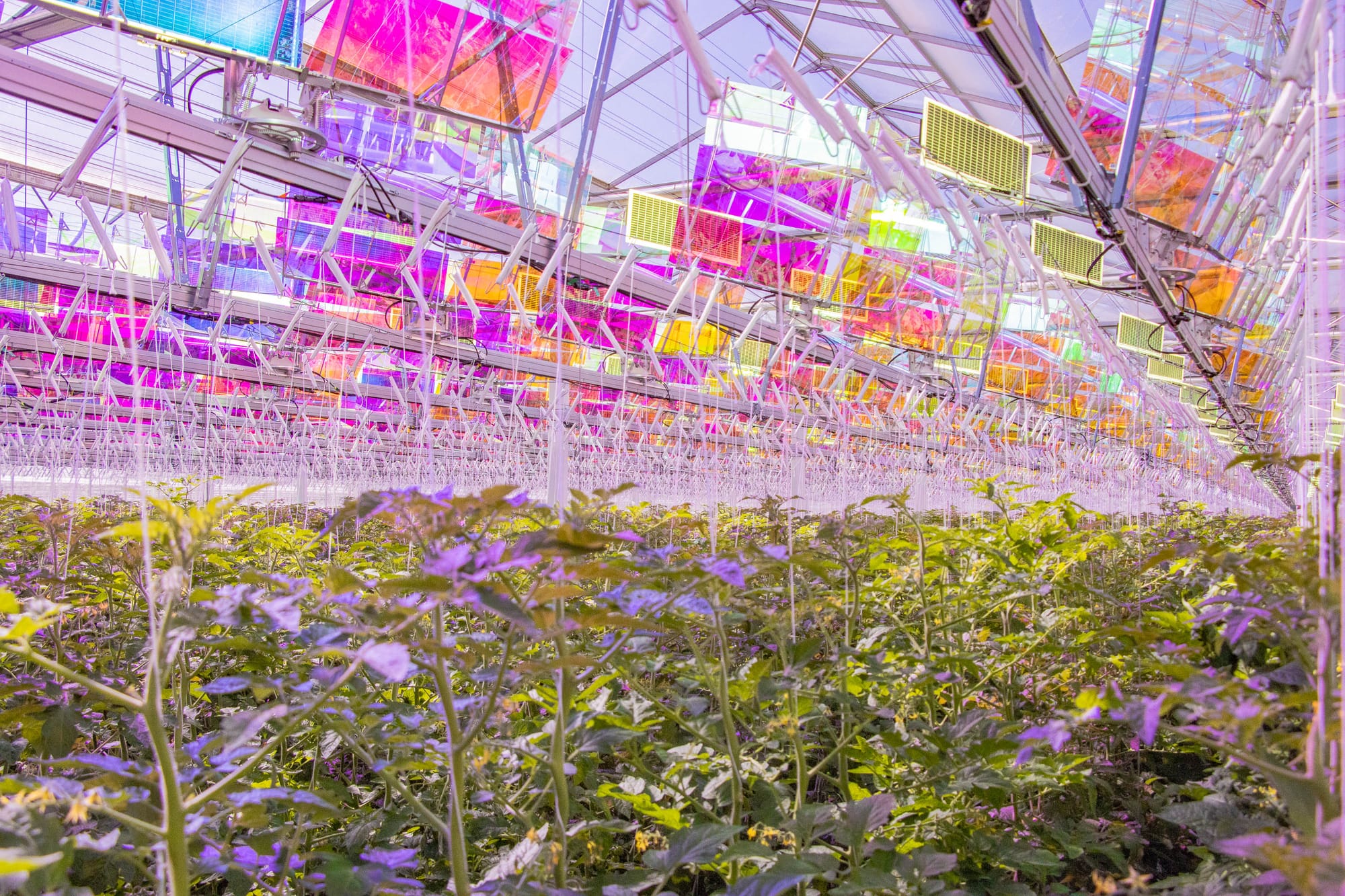
Regarding decarbonization technologies, such as agrivoltaics, they can help reduce dependence on fossil fuels. Nevertheless, their deployment must be thought through according to several parameters: land use, exposure, landscape integration and economic viability for producers. Conversely, some forms of robotization, when associated with monoculture systems on fields devoid of hedges and biodiversity, can lead to optimizing a model that is not necessarily sustainable in the long term.
The challenge, beyond the technology itself, lies in the system it supports. It is important to remember that technology is a tool serving an objective, not an end in itself. Within our project, we seek to propose frameworks for reading externalities — so far little visible — in order to inform decision-making and avoid siloed approaches.
Microplastics, mercury, lead, PFAS — these “forever pollutants” — and other chemicals: can we still hope to eat healthily?
It is true that our diet has become a source of concern for many people, who wonder whether they put their health — and that of their family — at risk with every bite. Within our project, we integrate certain impacts (climate, biodiversity, water), but not yet microplastics or PFAS, for lack of statistical links between dietary patterns, exposure levels to these contaminants and the prevalence of certain diseases.
Nevertheless, other research, notably based on laboratory analyses, has shown that these substances are present in almost all foods and in the human body, including in Switzerland. Due to their spread and bioaccumulation capacity, PFAS are found mainly in aquatic environments and products of animal origin.
One first course of action is to limit the increase of these contaminations, which involves regulation. Switzerland is making efforts in this regard, in line with the European Union: some PFAS are already banned and limit values have been defined. However, significant challenges remain, notably related to the bioaccumulation of these substances and their combined effects — often referred to as the “cocktail effect” — whose toxicity remains poorly understood. It is therefore crucial that independent research continues to be funded to update these risks, and that public policies strengthen the application of the precautionary principle.
Moreover, our preliminary results on health impacts — for which it is possible to establish statistical links between certain dietary habits and the risk of non-communicable diseases — indicate that the main health costs are linked to under-consumption of whole grains, overconsumption of red and processed meat, and excess sugar, notably via sugary drinks. Deficiencies in vitamins and omega-3s also have a significant impact.
By promoting good nutrition — notably by increasing the consumption of whole grains (ideally from organic agriculture) and reducing consumption of processed meats and sugary products — Swiss people can act on two levels: strengthen their health and reduce their exposure to some of these substances.
Integrating “true costs” does not necessarily mean increasing the prices paid by consumers.
Your initiative aims in particular to give food a fair price… but isn’t society moving in the opposite logic, where the consumer seeks to pay as little as possible for their food?
It is important to distinguish several notions: production costs, “true costs” (as we analyze them in our project), the price paid by the consumer and the fair price — that is, the one that allows all actors to live and feed themselves properly.
To calculate these “true costs,” we analyze externalities (impacts) as well as the distribution of public support, in order to understand which products, which actors and which practices are indirectly encouraged by public policies. The “True Cost of Food Switzerland” project aims precisely to make these costs visible — today invisible, but collectively borne by society.
However, integrating “true costs” does not necessarily mean increasing the prices paid by consumers. Depending on products and modes of production, it is possible to highlight savings at the societal level, notably in health. From this perspective, one could consider making higher-quality products accessible to all, including people with budgetary constraints (a fair price), while encouraging more sustainable practices.
Furthermore, the price paid in the store is not the only lever for action. It is not the final consumer’s responsibility to bear the entirety of real costs, especially since a large portion of these hidden costs is already assumed by taxpayers, for example through healthcare spending or costs related to treating polluted water. Our objective is therefore to propose a decision-making compass, allowing for a reorientation of public supports and a better distribution of costs among the various actors throughout the value chain.
Concretely, how is the “true price” of a food calculated?
One must analyze the entire life cycle of the food product: from production to processing, to consumption — also including waste — as well as health impacts. At each stage, we take into account different indicators, such as CO₂ emissions, effects on biodiversity, pollution, human health and working conditions. These impacts are then monetized, that is translated into costs for society: depollution, healthcare costs, loss of ecosystem services, etc.
Finally, we aggregate these results to obtain the “true cost” of products. We deliberately speak of “cost” rather than “price,” in order to highlight the weight of externalities, often made invisible. The objective is not so much to set a price as to provide a more complete and informed vision to guide agricultural and food decisions.
A budget of 3.2 million over four years may seem limited given the challenges posed by food… Do you plan to mobilize other funding to amplify your work and research?
We are already very grateful for this support. It has allowed us to structure a consortium and obtain initial results, in a context where research faces budgetary constraints at all levels and where projects of this scale — and often of too short a duration — are increasingly difficult to start. We hope these initial results will help demonstrate the importance of the topic and convince other actors, particularly public ones, to support a next phase.
Transforming food systems is a long-term process and a major challenge, both because it is at the heart of current issues — climate change, biodiversity loss, disruptions to value chains — and because it directly affects our well-being as individuals and as a society. That is why we are already integrating reflection on the operational implementation of results, working closely with actors likely to adopt and disseminate tools related to the “true costs” of food in the long term.
For the coming months, what are the plans of this initiative?
We still have two years to go. Our priorities are as follows: refine the methodology and indicators, strengthen concrete use cases in collaboration with field actors, co-create a consensus on implementation modalities, and finally continue to translate the results into operational levers for action.
This article has been automatically translated using AI. If you notice any errors, please don't hesitate to contact us.
What happens when insurance companies decide to withdraw and no longer cover the most at-risk areas? That is the theme at the heart of the new report by the environmental NGO, but also of "Sigma", that of the Swiss Re Institute. Analysis
"Flexibility solutions are now essential. However, they face a structural difficulty: their costs are decreasing faster than market rules evolve," explains Xavier Blot, associate professor at emlyon business school.
By naming their first edition "Wind farms are taking shape", the industry's players want to show a certain optimism despite a context that remains complicated for the sector. A look by Benoist Guillard, president of the Groupe romand pour l’énergie éolienne (GREE).
Since its founding in 2021, the young startup has made it its mission to find a good compromise between energy production and plant growth. The solution is called "spectral filtering".