"We no longer have any choice but to adapt to climate change"
Interview with Vincent Kaufmann, director of the Ethos Foundation.

Faced with soaring gas prices, several countries — including China and India — have substituted coal for gas to produce their electricity, as highlighted by the latest semiannual report of the International Energy Agency (IEA).

"Instead of converging, the ecological, economic and social dimensions have each remained in its respective silo," laments René Longet. The author of "Planète Etat d'urgence : Les réponses de la durabilité" calls for urgently activating this social dimension of sustainability.

Interview with Caroline Schweighofer, Senior Segment & Product Manager at Romande Energie.

"Succeeding in calculating the 'true costs' of food could serve as a compass and steer our decisions toward a more sustainable, healthier and more equitable diet," says Emilia Schmitt, scientific coordinator of the "True Cost of Food Switzerland" project.

Raphaël Ménard recounts in his book "Vers la légèreté" how available resources determine the forms of architecture and planning. Interview.

Despite the emergence of counter-movements, the success of this great celebration of overconsumption remains undiminished. On the contrary, it has definitively established itself in Switzerland as in the rest of Europe.

Relying on an innovative methodological framework for modeling energy transitions, the study published in 2023 in the journal "Frontiers" presents a vision of the national energy system.

"Our country should have the political courage to reduce a larger share of its emissions at the source. It is an essential principle of our waste management: to avoid producing them as much as possible before looking for a way to treat them," Adèle Thorens Goumaz reminds.
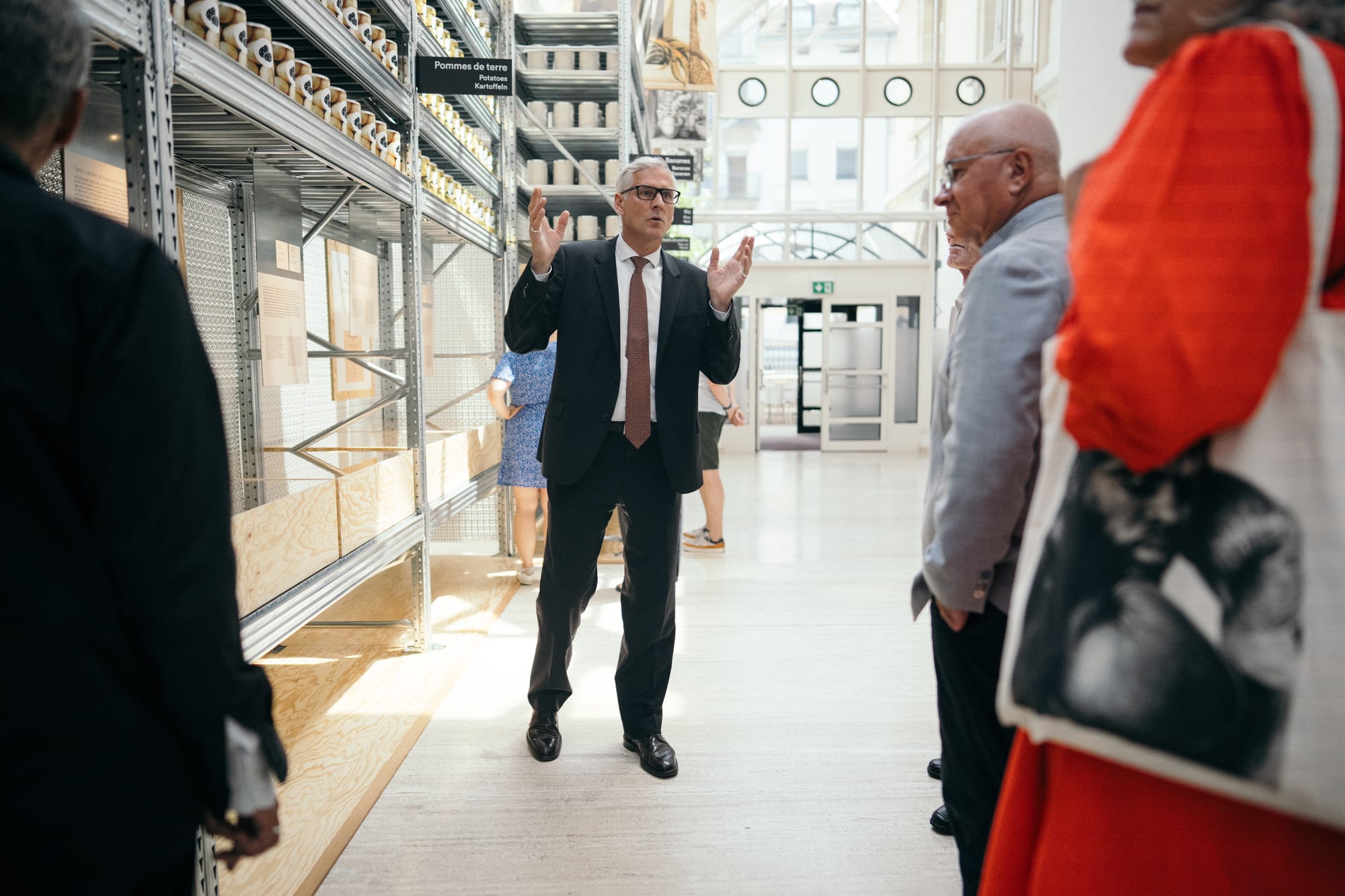
For its new exhibition, the Alimentarium in Vevey poses a crucial question for the future: how to feed a planet of 10 billion people healthily and sustainably, without depleting its resources or worsening climate disruption? We discuss it with its director: Boris Wastiau.

"Following the blackout in Spain, several press articles confused this event with the measures put in place to deal with an energy shortage," laments Xavier Company, director of the SIL and municipal councillor.

"The finding is sobering: the more the indicators signaling the environment's growing inability to sustain our activities turn red, the less we want to know about it," laments René Longet, sustainable development expert and author of 'Planète Etat d’urgence: les réponses de la durabilité'.

Intermittent and non-dispatchable, renewable energy sources can cause sudden and significant variations in production, creating imbalances between supply and demand on the electrical grid.
Already a member or subscriber? Simply enter your email address to receive instant access to the article. Enjoy!