"One should not expect the energy transition to progress in a linear way"
Interview with Mélanie Beyeler, Global Head of Sustainable Investing at EFG.
Interview with Caroline Schweighofer, Senior Segment & Product Manager at Romande Energie.

The recent evolution of the Swiss regulatory framework aims to strengthen the local valorization of renewable electricity by promoting direct exchanges between producers and consumers. After the introduction of groupings under virtual self-consumption schemes (RCPv) in 2025, local electricity communities (CEL), which came into force in 2026, now allow locally produced electricity to be shared at the scale of a neighborhood or even a municipality, using the public grid.
These new mechanisms offer interesting prospects to accelerate photovoltaic deployment, improve self-consumption and create more value for local producers and consumers. However, they raise several challenges related to their governance, the management of energy flows and metering data, as well as the allocation of network costs, the financing of which remains a central issue to ensure a balanced development of these new energy communities.
The scale of the issues raised by these future solar communities justifies an initial series of interviews with reference players in the sector. We open it with the expertise of Caroline Schweighofer, Senior Segment & Product Manager at Romande Energie.
What are the first feedbacks on CEL? Are they more successful than the RCPv, legalized a year earlier in Switzerland?
With regard to Romande Energie's experience, demand is indeed present. Since the beginning of the year, we have received more than 120 activation requests, representing about 1,000 members in total. This number of CELs is higher than we had anticipated. However, most of these communities are small, with fewer than ten members.
Demand for CELs is clearly greater than that observed for RCPv, a model that has not particularly taken off on our grid. We also offer extended self-consumption communities (CA), a non-mandatory practical model based on the same topological rules as the RCPv. However, the combined volume of requests for these two models remains, each month, lower than that of the CELs.
Between urban and rural areas, in what contexts are these communities most suitable?
Among the first actors to take an interest in CELs are municipalities, which see real value in forming communities between their municipal buildings. For them, this model is administratively simpler than a CEL grouping multiple members: there is only one contractual member and little, if any, need for internal billing.
The interest for municipalities is similar whether one is in an urban or rural context. On the private side, photovoltaic producers with significant production surpluses, often located in rural areas, also show a marked interest in this model. It indeed allows them to valorize their electricity at a more advantageous rate than the feed-in price offered by the distribution system operator (DSO). It should be noted that we are also seeing the emergence of associative or family initiatives.
What are the main constraints you face at Romande Energie with these new solutions?
They are mainly technical in nature. They notably concern the development of new digital tools as well as the adaptation of our existing systems. We also face operational constraints, such as the installation of smart meters outside the usual deployment program, processing customer requests or responding to the many questions raised by these new models. These mechanisms are not so easy to understand, even for professionals.
From the grid manager's point of view, CELs do not solve the challenges we face.
Is this autarkic and decentralized vision of solar energy the best solution for the future of photovoltaics?
These models constitute a solution to support the development of photovoltaic installations, giving them a new appeal thanks to the possibilities of local electricity sharing. However, from the grid manager's point of view, they do not solve the challenges we face. In practice, it is not possible to route electricity to specific points on the network because electrons go where they want. These models therefore belong more to the realm of economic and financial mechanisms than to technical solutions capable of addressing the structural challenges of the electrical system.
What consequences will these solar communities have on the activities and the balance sheet of a distribution system operator (DSO) like Romande Energie?
They will mainly result in a redistribution of revenues and costs, without fundamentally changing the overall result of a DSO. Indeed, we are subject to a very strict regulatory framework, both concerning the amounts that can be charged to consumers via the network usage tariff and the prices of electricity or the mechanisms for remunerating production.
Thus, network-related costs will now be distributed differently between people participating in a CEL and those who are not. However, the total amount collected will continue to cover the DSO's costs in an equivalent manner, costs that have, however, been impacted by the implementation of these solutions.
What could be the consequences of CEL and RCPv on the price of electricity?
It is still difficult to answer this question at this stage. CELs could reduce the quantity of photovoltaic electricity available on the market outside these communities. This development could have a favorable effect for producers, thanks to potentially higher feed-in prices, but unfavorable for consumers who are not part of them. That said, the volumes concerned still represent only a minuscule share of the total electricity traded in Switzerland. The impact on market prices should therefore remain marginal, at least for some time.
For members of a CEL, the effects will, in any case, be favorable. Producers will be able to sell their electricity to their members at a price higher than the usual feed-in tariff, while consumers will still enjoy part of their electricity at a lower cost. However, this advantage should be put into perspective: for a standard household, the financial gain will amount to only a few dozen francs per year on the electricity bill.
This article has been automatically translated using AI. If you notice any errors, please don't hesitate to contact us.

Interview with Mélanie Beyeler, Global Head of Sustainable Investing at EFG.

By combining energy management systems, decentralized generation and storage solutions, facility managers have a strategic opportunity: to transform their buildings according to the "building as a grid" model, says Kamal Mehta, Product & Offer Manager EMEA at Eaton.
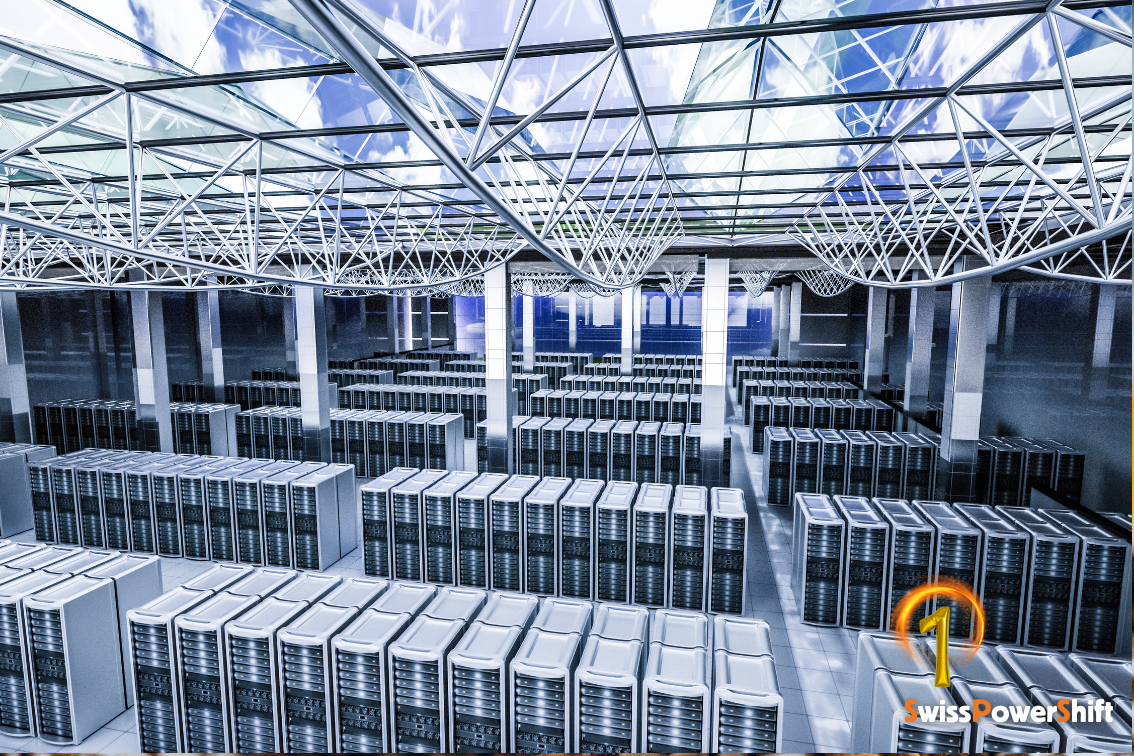
A recent Harvard study highlights close links between the rise of data centers and clean energy. Behind the algorithms lies a purely material reality: a demand for electricity that is skyrocketing and disrupting grids and the energy transition.

"While nuclear power is necessarily part of the long term, photovoltaics and batteries fall into a different timescale: that of the needs we must meet today," says Richard Mesple, CEO of Local Energy.
Already a member or subscriber? Simply enter your email address to receive instant access to the article. Enjoy!