"One should not expect the energy transition to progress in a linear way"
Interview with Mélanie Beyeler, Global Head of Sustainable Investing at EFG.
"Instead of converging, the ecological, economic and social dimensions have each remained in its respective silo," laments René Longet. The author of "Planète Etat d'urgence : Les réponses de la durabilité" calls for urgently activating this social dimension of sustainability.

The ecological transition is struggling, climate skepticism is gaining ground, so difficult is it both to imagine the future and to live sustainably amid catastrophism. Deluding oneself has always been a widespread trait, and, faced with an uncertain future, the fable of the cicada and the ant sums things up well… Contributing for one’s old age already represents a considerable effort while thinking about tomorrow remains difficult. All the more so when faith in progress gives way to deep disenchantment.
During the Thirty Glorious Years, it was accepted that market and regulation went hand in hand; a strong social state and an assertive economic policy were essential pillars. For our consumer society is unequal by nature; it is even its engine: everyone is supposed to desire what their colleague, their neighbor, their best friend or a family member already possesses.
Then, from the late 1980s, the State’s regulatory mission and its role in improving the living conditions of the weakest were progressively marginalized and reduced. Living within planetary boundaries and within a hierarchy of needs, as the Club of Rome once recommended, then seemed irrelevant, since the virtues of a market left to itself were supposed to solve the bulk of our problems.
This postwar model allowed large segments of the population to escape precariousness. But for about thirty years it has no longer worked and crises have piled up: employment crisis, energy crisis, ecological crisis, social crisis, crisis of meaning… Not only has this model exhausted itself, it traps us in a diabolical dilemma: if material growth slows, we enter social crisis; if it surges, the crisis becomes ecological.
Entrusting our destiny to the self-regulation of the economy subjects us to a play of forces beyond our control. It was therefore necessary to seek another path, and that is precisely the perspective opened by this question of sustainability: an alternative to blind faith in markets, not by abolishing them, but by framing them.
Most political and economic leaders nevertheless remain attached to this theory of “trickle-down”: the more wealthy people there are, the fewer poor people there are. A fabulous cushion of laziness that should excuse all failures — and which reality contradicts every day: inequalities, both global and local, continue to widen.
While the ecological transition represents a tremendous source of lasting, local jobs, decision-makers, who should be overflowing with enthusiasm at the idea of accelerating the movement and seizing the opportunity, are misled by short-term lobbies and do not make the right choices. Public opinion thus perceives contradictory signals and a weak will to change course.
Among many other abandonments and procrastinations, two examples are particularly striking: in France, despite the formal promises that had been made, the fate reserved for the conclusions of the Citizens’ Convention for the Climate; and, within the European Union, the abrupt halt to the “greening” of the Common Agricultural Policy (CAP). In the name of international competitiveness, the Green Deal was largely unraveled, whereas it could — and should — have been a major axis.
The resonance of the pejorative expression “punitive ecology”, even when it concerns the foundations of our existence on Earth, is essentially due to the rise in inequalities.
The commitment to a “just transition”, however enshrined in the preamble of the Paris Agreement on climate, has not been implemented, nor has the “action taken to limit the increase in temperature to 1.5 °C above pre-industrial levels” (article 3, paragraph 1, letter a). Taxing fossil fuels so that their price integrates their negative externalities, and so that the unfair competition between different energy sources ends, has only been achieved in a very marginal way. This situation is explained both by the precarization of significant segments of the population and by the absence of sufficiently accessible alternatives for these groups.
The echo in public opinion of the pejorative expression “punitive ecology”, even when the matter is the basis of our existence on Earth, is essentially due to the rise in inequalities and the feeling that efforts are unevenly distributed. The same causes — in particular the stubborn refusal to regulate markets — hinder both the ecological transition and policies to reduce inequalities.
The notion of sustainability precisely requires acting together on economic, ecological and social parameters. The economy must integrate ecological imperatives, knowing that ecology is first a science before being a political option. It must also fit within a hierarchy of needs while ensuring reasonable profitability; all these changes require the establishment of the necessary framework conditions.
That is what has been called the triple benefit. However, instead of converging, the ecological, economic and social dimensions have each remained in their respective silos. Sustainability has too often been reduced to the purely ecological aspect, whereas the other two are just as essential to obtain the desired results.
Fortunately it is never too late to do well and to highlight the social requirements of sustainability. Factual analyses of inequalities, both between countries and within them, provide the foundation. The annual report on global inequalities, published since 2018 by the World Inequality Lab, gathers all the information needed to undertake resolute action.
Human beings cannot live serenely in a world where their own destiny eludes them. The feeling of being tossed about, of having no say and of being aware that one can lose a lot, even everything, in very little time, undermines trust in economic and political leaders.
The idea of setting a socially acceptable minimum and maximum income in a responsible and humanist society is gaining ground.
Nothing can justify that a large part of the population struggles to make ends meet, suffers from rising prices and inflation without being able to react, while the ultra-rich display without shame a lifestyle inaccessible to 99% of the population. In this context, the idea of setting a socially acceptable minimum and maximum income in a responsible and humanist society is gaining ground.
To activate the social dimension of sustainability, various proposals are on the table. A tax on financial transactions is one of the best known. A heavy taxation of inheritance is another. As for the universal basic income, conditional or not, it is regularly put forward as a line of reflection.
The most effective means would certainly be a tax system targeting great fortunes and high incomes, as proposed by economist Gabriel Zucman. Moreover, some millionaires have themselves asked to be taxed more; others devote part of their fortune, in the form of a voluntary tax, to foundations and philanthropic actions.
In this spirit, the co-director of the World Inequality Lab, economist Thomas Piketty, recently co-signed a proposal in favor of global justice: the “Global Justice Project.” The objective is, thanks to taxation on wealth and incomes relying on various international texts, to ensure that each inhabitant of the planet ultimately has a monthly income of 5,000 euros.
This objective would complement a triple transformation: that of energy systems, consumption patterns and the global economic and financial order. It would help make this transition socially acceptable. Thus the indispensable link would be established between the “end of the month” for the planet and that of individuals and businesses.
But whatever path is chosen, the key always remains the same: political will.
At a time when large sections of the electorate turn to the deceitful promises of political forces that accelerate the race toward ecological and social abyss, such a project, if properly communicated and disseminated, could restore hope in humanity’s ability to agree on a future worthy of its ambitions.
It would also be a way to feed the debate on the need for international bodies such as the UN or the EU, bodies that would offer an appropriate framework at the scale of technical and economic challenges. This project would also make it possible to address the question of commitments that will succeed Agenda 2030, adopted in 2015. The orientations of the “Global Justice Project” would finally be much easier to communicate than Agenda 2030, with its 169 targets and 231 indicators, while condensing its spirit in a more striking manner.
But whatever path is chosen, the key always remains the same: political will. As Thomas Piketty recently declared in the newspaper Le Monde on June 5, 2026: “The technonationalist project shows an energy that is missing in the internationalist and egalitarian camp: in the cultural battle underway, we must propose a desirable and desirable future.” Is this the last-chance utopia before the generalization of political, economic and social chaos? Could hope once again be on the agenda? In any case, this project has the potential to bring together positive energies.
This article has been automatically translated using AI. If you notice any errors, please don't hesitate to contact us.

Interview with Mélanie Beyeler, Global Head of Sustainable Investing at EFG.
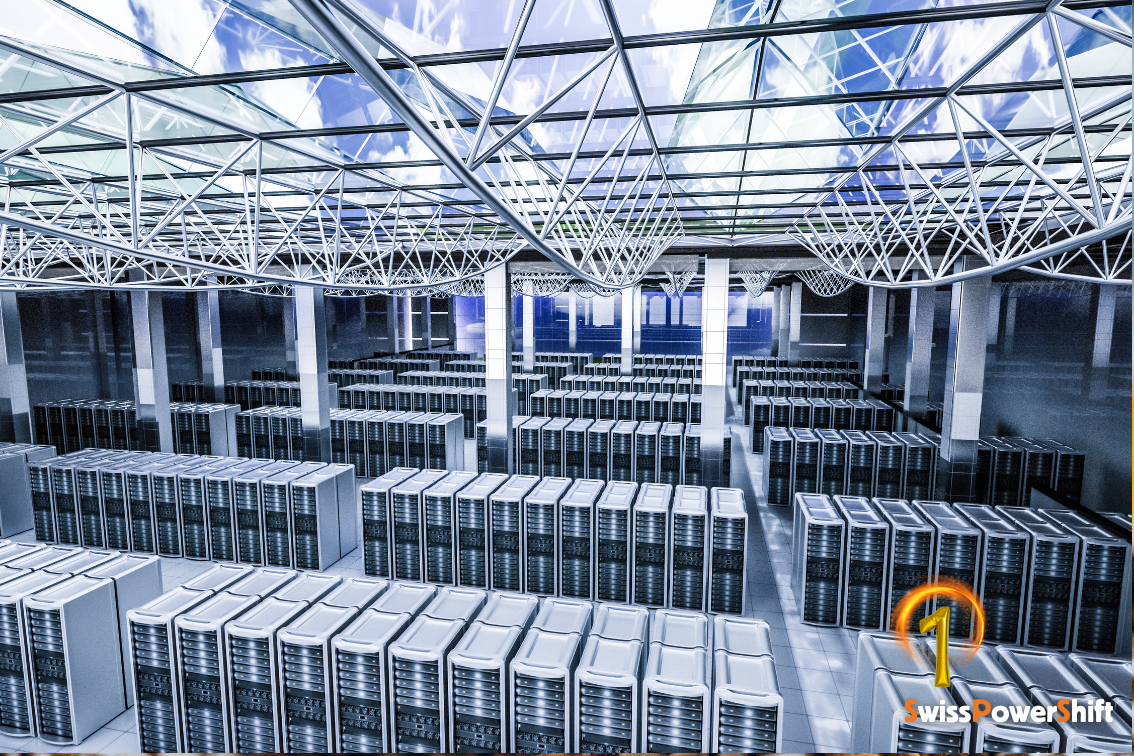
A recent Harvard study highlights close links between the rise of data centers and clean energy. Behind the algorithms lies a purely material reality: a demand for electricity that is skyrocketing and disrupting grids and the energy transition.

"While nuclear power is necessarily part of the long term, photovoltaics and batteries fall into a different timescale: that of the needs we must meet today," says Richard Mesple, CEO of Local Energy.

Interview with Marie-Laure Chapatte, CSR Manager at the Neuchâtel Cantonal Bank (BCN).
Already a member or subscriber? Simply enter your email address to receive instant access to the article. Enjoy!