What happens when insurance companies decide to withdraw and no longer cover the most at-risk areas? That is the theme at the heart of the new report by the environmental NGO, but also of "Sigma", that of the Swiss Re Institute. Analysis
"Flexibility solutions are now essential. However, they face a structural difficulty: their costs are decreasing faster than market rules evolve," explains Xavier Blot, associate professor at emlyon business school.
By naming their first edition "Wind farms are taking shape", the industry's players want to show a certain optimism despite a context that remains complicated for the sector. A look by Benoist Guillard, president of the Groupe romand pour l’énergie éolienne (GREE).
"If we wait, the bill left to future entrepreneurs will be unsustainable"
"For SMEs and micro-enterprises, which make up a large majority of the Swiss economic fabric, the transition is no longer a mere environmental option, but a strategic necessity to ensure our prosperity," says Christophe Barman, national co-president of the FSE.
“The climate fund would create a mountain of debt and sooner or later lead to massive tax increases,” according to the economiesuisse website. Like the Federation of Swiss Enterprises, a large part of the Swiss economic world is clearly opposed to the initiative for a Climate Fund. “A fund overflowing with several billion francs would hardly encourage efficiency, but would rather pose a risk of waste, even abuse,” declared for example Pierre-Gabriel Bieri, political officer at the Centre Patronal, on that same platform.
Although a clear majority is emerging within economic circles, it is not unanimous. Going against the current, the Swiss Federation of Enterprises (FSE) is among those that have adopted a favorable position on the popular initiative. “89% of our members support the initiative for a Climate Fund. This result is not just an environmental signal, it is a pragmatic choice,” reads its site. We discuss it with Christophe Barman, national co-president of the FSE. Interview.
Why does the FSE support this initiative when other economic circles oppose it?
Our support is based on a pragmatic choice, validated by 89% of our members. For SMEs and very small businesses, which make up a large majority of the Swiss economic fabric, the transition is no longer a mere environmental option but a strategic necessity to guarantee our prosperity. We defend a modern vision of Swiss sovereignty in which the economy and ecology strengthen each other.
Switzerland also needs to remain competitive vis-à-vis European Union countries, which are already investing massively in their energy transition. We cannot afford to remain idle while our neighbors transform their industrial base.
What arguments lead you to go against the tide?
We rely on three fundamental pillars:
Energy sovereignty: depending on imported fossil fuels exposes us to unpredictable price volatility. The Climate Fund will help finance our independence by investing in local energies, thereby contributing to stabilizing companies’ fixed costs.
A growth engine: allocating between 0.5% and 1% of GDP each year to the transition is a direct investment in the real economy — thermal renovation, technological innovation and infrastructure.
Predictability: an entrepreneur needs visibility to invest. The current wait-and-see approach fosters a paralysing uncertainty. The Fund defines a clear trajectory, allowing leaders to anticipate and plan their transformations calmly in order to remain on par with European competition.
Aren’t you afraid that this Climate Fund would force Switzerland to go into debt in violation of the debt brake?
We consider that inaction carries a hidden cost far greater than the current investment required. If we wait, the climate and economic bill we will leave to future entrepreneurs will be simply unsustainable. The Climate Fund is an act of defense in favor of our economic resilience, intended to prevent a much more costly future crisis.
Beyond the climate objective, what we fear above all is an economic decoupling. Without this fund, the transition risks being disorderly and leaving SMEs behind.
Your position appears as an “outcry” against a lack of political will...
It is above all a call to end a wait-and-see attitude that paralyzes business leaders. Without massive support for infrastructure — heat networks, charging stations — the transition risks becoming “punitive” for SMEs, while very large companies have the means to adapt on their own.
Our goal is to ensure that the middle class and the self-employed can participate in this transformation without compromising their financial health, all the more so as the European Union is rapidly increasing its support for its own companies.
How can we ensure that the funds raised are used intelligently?
The initiative targets the real economy precisely: the thermal renovation of buildings in Switzerland, as well as support for storage and energy efficiency technologies developed by our engineers.
The proposed mechanism is based on an annual allocation of a share of GDP, to guarantee that resources are injected directly into the local economy. By defining a clear and predictable trajectory, we enable companies to plan concrete investments, thus avoiding waste linked to uncertainty or last-minute emergency measures.
What will we do with additional billions without workers to renovate our building stock?
The Climate Fund precisely creates the visibility needed by the construction sector by guaranteeing a substantial and sustainable order book over the long term. It is this clarity that will give companies the confidence to invest in training, recruitment and technological development. Experience shows that the workforce follows the projects when they are planned and set on a stable trajectory.
If the initiative is rejected, are you afraid that Switzerland will not meet its climate ambitions?
Beyond the climate objective, what we fear above all is an economic decoupling. Without this fund, the transition risks being disorderly and leaving SMEs behind. We would then pass on an unsustainable climate and economic bill to the next generations of business leaders. Again, in a context where the European Union is committing massive investments, the rejection of this initiative would durably weaken the competitiveness and sovereignty of the Swiss economy.
This article has been automatically translated using AI. If you notice any errors, please don't hesitate to contact us.
What happens when insurance companies decide to withdraw and no longer cover the most at-risk areas? That is the theme at the heart of the new report by the environmental NGO, but also of "Sigma", that of the Swiss Re Institute. Analysis
"Flexibility solutions are now essential. However, they face a structural difficulty: their costs are decreasing faster than market rules evolve," explains Xavier Blot, associate professor at emlyon business school.
By naming their first edition "Wind farms are taking shape", the industry's players want to show a certain optimism despite a context that remains complicated for the sector. A look by Benoist Guillard, president of the Groupe romand pour l’énergie éolienne (GREE).
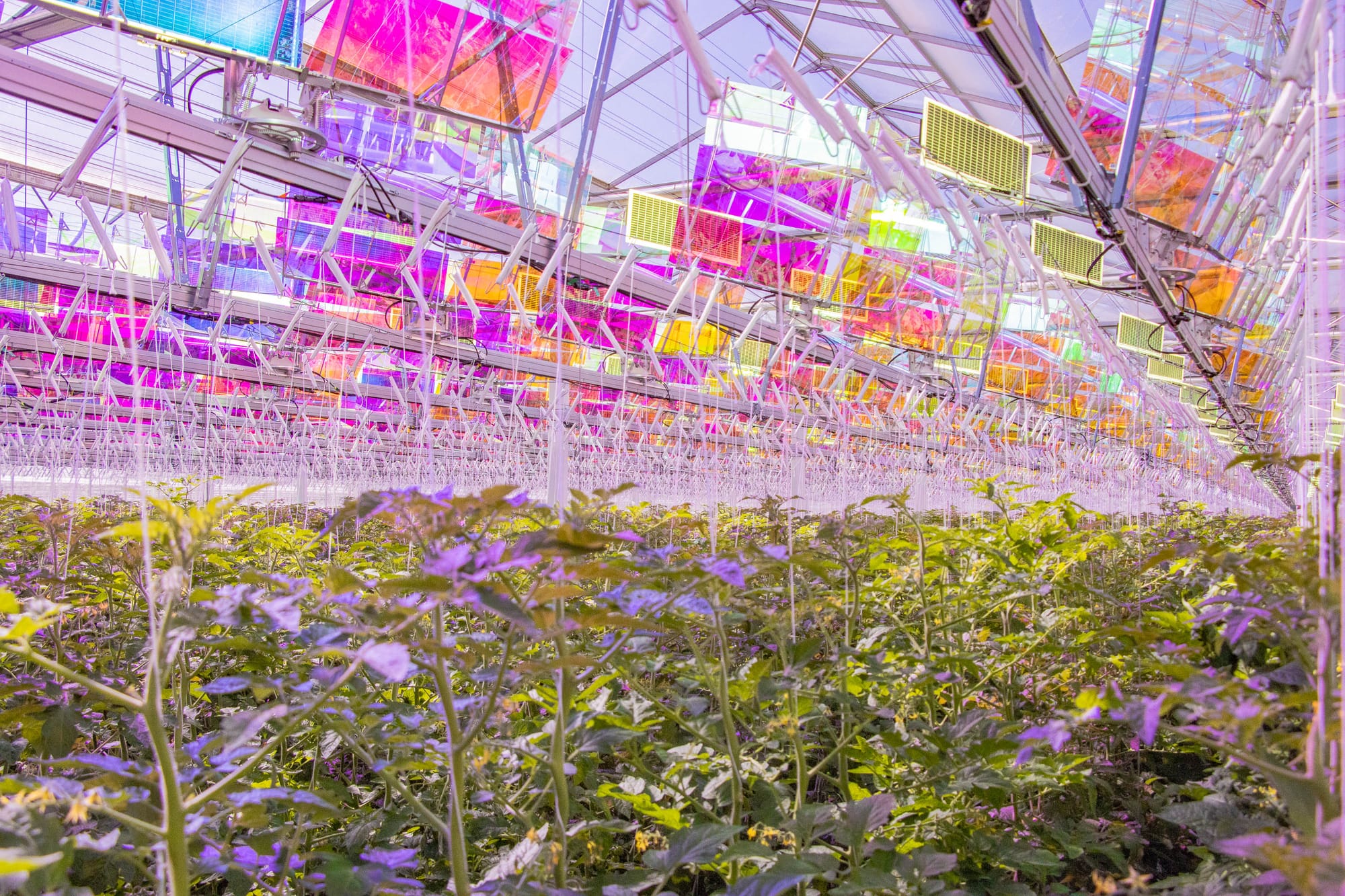
Since its founding in 2021, the young startup has made it its mission to find a good compromise between energy production and plant growth. The solution is called "spectral filtering".