"We no longer have any choice but to adapt to climate change"
Interview with Vincent Kaufmann, director of the Ethos Foundation.

Raphaël Ménard recounts in his book "Vers la légèreté" how available resources determine the forms of architecture and planning. Interview.

"Since our share of global greenhouse gas emissions is only one thousandth, our efforts would be doomed to remain insignificant. This argument expresses not a logical reasoning, but an attitude of defiance and denial," regrets René Longet, an expert in sustainable development.
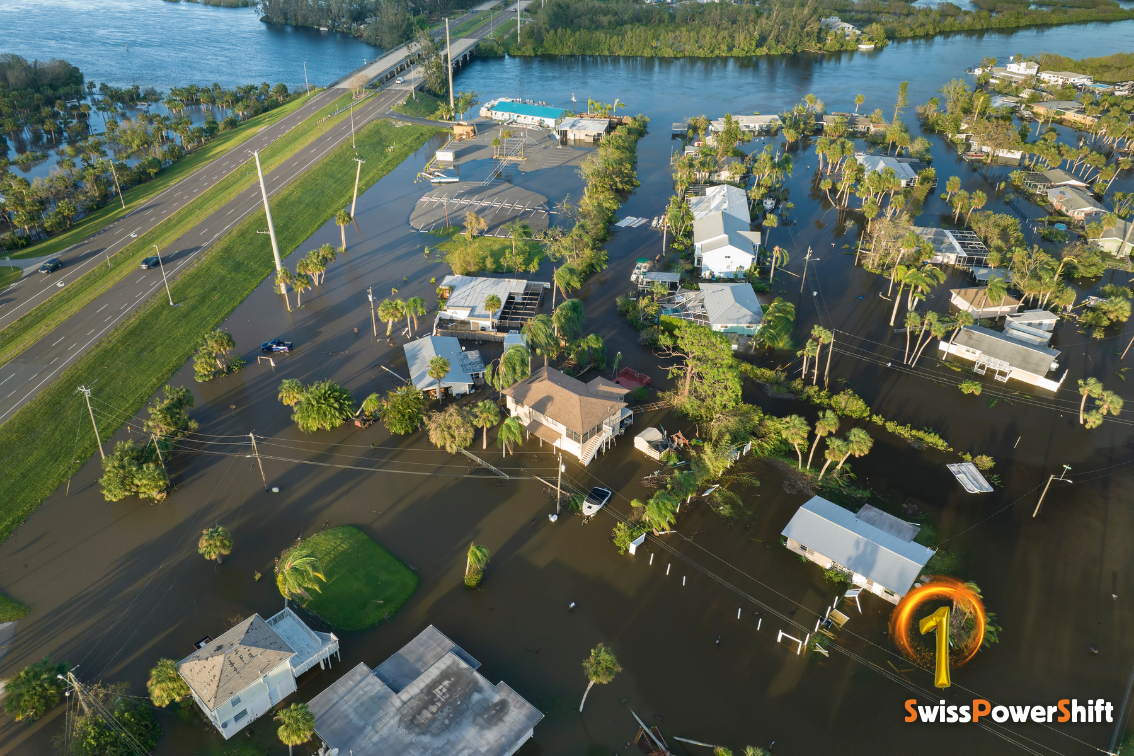
A worrying phenomenon has been growing for several years: the gradual withdrawal of insurance companies from the most at-risk areas.

As this Thursday marks the official creation of a Swiss entity of the World Sufficiency Lab, we revisit the question of sufficiency with its cofounder and director, Yamina Saheb.

Let's be at least minimally honest with ourselves. Moving thousands of athletes and spectators to one or more regions of the world will never result in a 100% virtuous and eco-friendly outcome.

"Refusing to act today is accepting much higher costs tomorrow — whether it be climate damage, energy dependence, or a loss of prosperity," warns Pierrette Rey, spokesperson for WWF Switzerland.

"For SMEs and micro-enterprises, which make up a large majority of the Swiss economic fabric, the transition is no longer a mere environmental option, but a strategic necessity to ensure our prosperity," says Christophe Barman, national co-president of the FSE.

Co-founder and honorary director of the E4S center, Jean-Pierre Danthine deplores Switzerland's lack of ambition in climate policy and its tendency to be short-sighted about its future. Interview

In "Une Constitution pour la transition écologique," Marcel Hänggi proposes rethinking the Constitution in depth in order to better protect both the environment and democratic institutions in the face of upcoming ecological crises.

The scientists of the GlaMBIE project estimate that between the beginning of the 21st century and today, glaciers have lost between 2% and 39% of their ice mass at the regional scale, and about 5% at the global scale.

"Beyond the widely discussed diplomatic deadlocks, COP30 revealed that the transition will no longer be played out in final communiqués, but in the ability of economies to measure, finance and deploy real transformations," explains Sarah Perreard, co-director of Earth Action.

The disappointing conclusions of the latest COP raise questions about the very model of these large international meetings. A discussion with Delia Berner, an international climate policy analyst, and another member of the Swiss delegation, a representative of civil society.
Already a member or subscriber? Simply enter your email address to receive instant access to the article. Enjoy!