"Members of the 'Swiss Electricity Agreement Alliance' will closely monitor parliamentary debates and provide factual information about the agreement," summarizes Annalisa Job, communications manager for the Association of Swiss Electricity Companies (AES).
"By constantly looking at the surfaces that could still accommodate solar installations, we may be overlooking one possibility: roofs that are already equipped," points out Alban Bitz, director of SI-REN.
The ambition to continue the development of green, reliable and cost-effective energy sources gave rise to new and numerous discussions at the seventh edition of Building Bridges in Geneva.
The energy transition is not a cost, but an economic opportunity
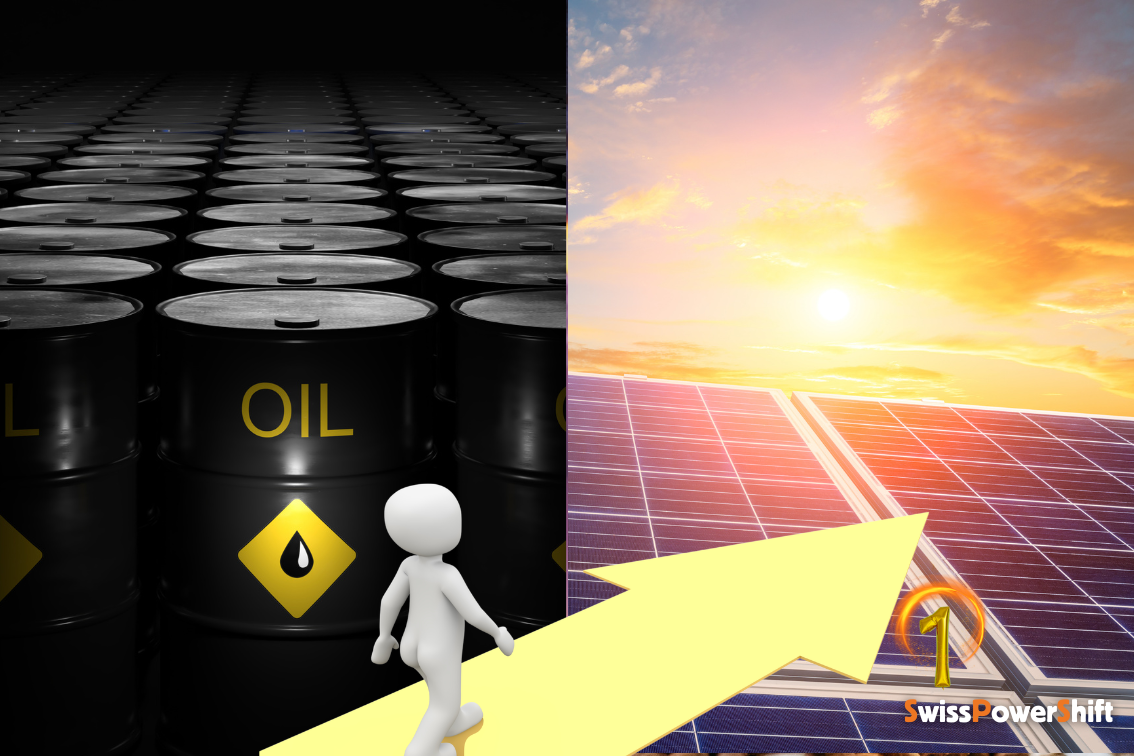
"The rise of renewable energy and the reduction of our consumption of oil and gas have allowed Switzerland to avoid 31 billion francs in fossil fuel imports over the past fifteen years," says Pierrette Rey, spokesperson for WWF Switzerland.
All of Switzerland has just experienced a summer marked by record heatwaves. Suddenly, the climate crisis is being taken seriously. Parties and organizations are engaging in an escalation of demands. Air conditioning, greening, or emergency aid for agriculture are being discussed. Without denying the importance of these concerns, one subject remains too little taken into account: the phase-out of fossil fuels. To limit the effects of the climate crisis, the transition to renewable energies is indeed indispensable. Yet in recent years, opponents of this transition have repeatedly asked the same question: how much will it cost Switzerland?
The question seems legitimate. Installing solar panels, replacing an oil boiler with a heat pump, or buying an electric car is indeed an investment. Yet this way of framing the debate obscures an essential reality: remaining dependent on fossil fuels also has a cost. And it is substantial, since each year we spend about 8 billion francs to import fuels and combustibles. This amount represents nearly 1,000 francs per resident per year, even though the prices paid by Swiss consumers are twice as high.
The calculations carried out by WWF Switzerland make this clear. Compared with a scenario without an energy transition, improvements in energy efficiency, the rise of renewable energies and the reduction of our oil and gas consumption have enabled Switzerland to avoid 31 billion francs in fossil fuel imports over the past fifteen years. Nearly half of that amount, or 14.7 billion francs, concerns the years 2022 to 2024 alone.
The energy transition thus makes it possible to reinject billions of francs into the national economy.
To give an order of magnitude, this sum of 31 billion francs exceeds many of the Confederation's major expenditures. It is neither a promise for tomorrow nor a theoretical scenario. This money has already been invested in local energy production or simply saved.
Support for the Swiss economy
This reality deserves attention. When a household installs a heat pump or improves the insulation of its home, it permanently reduces its consumption of fossil fuels. When a company optimizes its processes or someone chooses public transport or an electric vehicle, the amount of oil or gas to import decreases. At the national level, the cumulative effect becomes considerable.
Because Switzerland has a characteristic that is sometimes forgotten: it does not extract fossil fuels from its soil and refines only a small share of the oil it consumes. Economic activity related to fossil fuels therefore focuses mainly on storage and distribution, and the value created on the territory remains limited. In contrast, investments in renewable energies create more value in Switzerland.
A photovoltaic installation, a heat pump or a charging station must be designed, installed, maintained and operated. They mobilize local companies, skilled tradespeople, engineers, and new know-how. In addition, a heat pump or an electric car can be powered by electricity produced by its own photovoltaic installation, that of the neighbors, or a power plant, almost always located in our country.
Money therefore stays more in the national economy, instead of feeding the profits of multinational oil companies. The energy transition thus makes it possible to reinject billions of francs into the national economy. It also helps to strengthen our energy independence and make us less vulnerable to geopolitical crises, wars and global market fluctuations. The explosion in prices after Russia's invasion of Ukraine painfully reminded many families and businesses of this reality.
The energy transition is not the economic problem that some still describe, but rather part of the solution.
Reducing our impact on the climate
The energy transition does not only bring benefits in economic and security terms. It also reduces air pollution and helps limit the effects of climate disruption. The heatwave episodes, droughts or floods we are seeing today are no longer distant risks. They already cause very real human and financial consequences.
This does not mean the transition is complete. Fossil fuels still represent 58% of Switzerland's energy mix. Our dependence therefore remains significant. But the idea that the transition is essentially an economic burden no longer stands up to the facts.
At heart, the real choice is not between paying or not paying, but about where we want our money to go. Do we want to continue sending billions abroad each year to buy the oil and gas on which our prosperity still depends? Or do we prefer to invest in solutions that strengthen our energy autonomy, create value in Switzerland and protect the climate on which our future and that of future generations depends?
The 31 billion francs already saved provide a first answer. The energy transition is not the economic problem that some still describe. Part of the solution is already before our eyes. Let us continue on this path.
This article has been automatically translated using AI. If you notice any errors, please don't hesitate to contact us.
"Members of the 'Swiss Electricity Agreement Alliance' will closely monitor parliamentary debates and provide factual information about the agreement," summarizes Annalisa Job, communications manager for the Association of Swiss Electricity Companies (AES).
"By constantly looking at the surfaces that could still accommodate solar installations, we may be overlooking one possibility: roofs that are already equipped," points out Alban Bitz, director of SI-REN.
The ambition to continue the development of green, reliable and cost-effective energy sources gave rise to new and numerous discussions at the seventh edition of Building Bridges in Geneva.