"Initiatives like Swiss Impact & Prosperity show that, beyond growth, an economy's ability to create sustainable value and to preserve its resources is also becoming a performance indicator," explains Simone Pedrazzini, CEO of Earth Action.
"Members of the 'Swiss Electricity Agreement Alliance' will closely monitor parliamentary debates and provide factual information about the agreement," summarizes Annalisa Job, communications manager for the Association of Swiss Electricity Companies (AES).
"By constantly looking at the surfaces that could still accommodate solar installations, we may be overlooking one possibility: roofs that are already equipped," points out Alban Bitz, director of SI-REN.
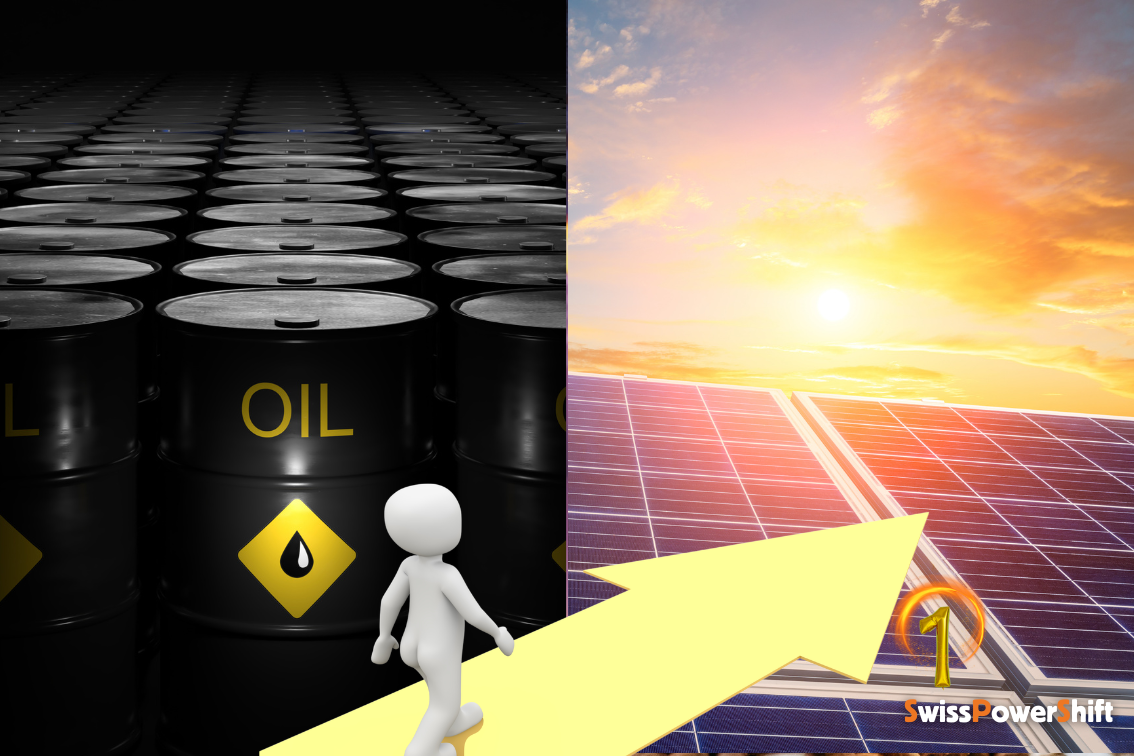
In its April report, the International Energy Agency warns that we are likely facing "the largest disruption to oil supplies in our history." In a few weeks of conflict between the United States — allied with Israel — and Iran, against the backdrop of a blockade of the Strait of Hormuz, the conclusion is clear: gasoline prices are soaring across the world.
The rise is particularly severe in Western countries. In the United States, prices quickly climbed, averaging over $4 per gallon, with even higher levels in some states, such as California. In Europe, the increase is widespread, with prices rapidly approaching €2 per litre in France, or 2 francs for unleaded petrol in Switzerland.
The bill is somewhat less steep in Southern Europe and more specifically in Spain and Portugal, two countries that are ahead in the deployment of renewable energies. Compared with their neighbors, according to assessments by the Barcelona daily El Periódico de Catalunya, the price of electricity per megawatt-hour was barely €50 in March, while in Germany it had already exceeded €100.
A 'cocktail of factors' behind the giant blackout
"No single culprit," but rather "a cocktail of factors that contributed to the blackout"... Chairman of the Board of ENTSO-E, Damian Cortinas, preferred to avoid naming a specific responsible party when presenting the findings of a highly anticipated report, the final chapter of a crisis that shook the whole of southern Europe in spring 2025. After a year of work, the authors of this large-scale investigation ultimately exercised caution by avoiding directly assigning responsibility for the blackout and listing no fewer than 17 factors that, they say, played a role in the outage.
While confirming the geographic origin of the giant outage — in southern Spain — the experts mention "very localized circumstances" as well as "a conjunction of unforeseen factors" that led to cascading overvoltages affecting the entire network in southern Europe. "Ineffective voltage control within the Spanish electrical system" is said to be the determining factor behind this major outage. This would be linked in particular to an insufficient local regulatory framework to manage an increasingly complex electrical system, given the rise of renewable energies.
"This document highlights a central issue related to voltage management in the electrical system, identifying several causes. Among them are the continued manual operation of certain control devices, the sometimes too 'rigid' contribution of renewable energies to voltage maintenance, as well as inadequate protection settings on certain plants. Added to this are the imperfect participation of some generation units in grid balancing and voltage management margins considered too narrow, which limits the capacity to adapt in case of unexpected events," explains Nicolas Charton, CEO at E-CUBE Strategy Consultants.
According to this expert, the report clearly states that these difficulties are not an intrinsic problem of renewable energies. "However, the growing development of decentralized generation implies a transformation of network management methods in order to prevent, in the future, uncontrolled events from weakening the entire system through a domino effect." O.W.
The sun of Spain and Portugal
The choice made by these two countries to invest heavily in solar, wind and other renewable energy sources is now paying off. It is the result of a bet made several years ago.
In Spain, the growth of renewable energies has been particularly rapid. It is mainly based on two pillars: wind energy, which has a long-standing presence, and especially photovoltaics, whose capacity has experienced spectacular expansion since 2018. Spain has thus become one of the main producers of solar electricity in Europe, surpassing the symbolic milestone of 50% of electricity produced from renewable sources during the Covid period. By 2030, given its very ambitious policy, the country aims for about 81% green electricity.
In Portugal, although smaller in size, the country shows a remarkable lead in terms of proportion. In 2023, it could boast that 61% of its electricity production already came from renewable energy sources. The Portuguese model has historically relied on hydropower, supplemented by significant development of wind power and, more recently, photovoltaics. Like its neighbor, the country has ambitious targets, with 85% renewable electricity by 2030 and carbon neutrality by 2045.
"Thanks to advantageous costs in renewable energies, Spain and Portugal can reindustrialize more quickly," says Gosia Pajkowska, spokesperson for the McKinsey firm.
Economic repercussions
For the two states in southern Europe, this strategy no longer only produces effects in terms of reducing their carbon emissions: it also offers an increasingly tangible competitive advantage economically and industrially. Last year, Spain posted growth of 2.9%, and Portugal 2%, while that of the eurozone reached barely 1.4%. In the current context, marked by the surge in fossil fuel prices, Madrid recently stated it was the best-equipped country in Europe to absorb the shock.
In its latest issue, "Swissquote Magazine" revisited this winning bet on renewable energies and the "brazen economic health" of these two countries based in the south of the Old Continent. "Thanks to their natural resources, which translate into advantageous costs in the field of renewable energies (–20%), and to their solid foundations in the green fuels sector, Spain and Portugal can reindustrialize more quickly," Gosia Pajkowska, spokesperson for McKinsey, told the financial magazine.
It should be noted, however, that such a trajectory would not have been possible without the support of the European Union, notably through its REPowerEU plan, launched following the energy crisis caused by the invasion of Ukraine in 2022. Several billion euros have thus been allocated to Spain and Portugal to develop their transmission, distribution and storage networks. Some recent incidents, including the blackout that occurred in spring 2025, have shown that this transition remains unfinished and continues to pose colossal challenges.
This article has been automatically translated using AI. If you notice any errors, please don't hesitate to contact us.
"Initiatives like Swiss Impact & Prosperity show that, beyond growth, an economy's ability to create sustainable value and to preserve its resources is also becoming a performance indicator," explains Simone Pedrazzini, CEO of Earth Action.
"Members of the 'Swiss Electricity Agreement Alliance' will closely monitor parliamentary debates and provide factual information about the agreement," summarizes Annalisa Job, communications manager for the Association of Swiss Electricity Companies (AES).
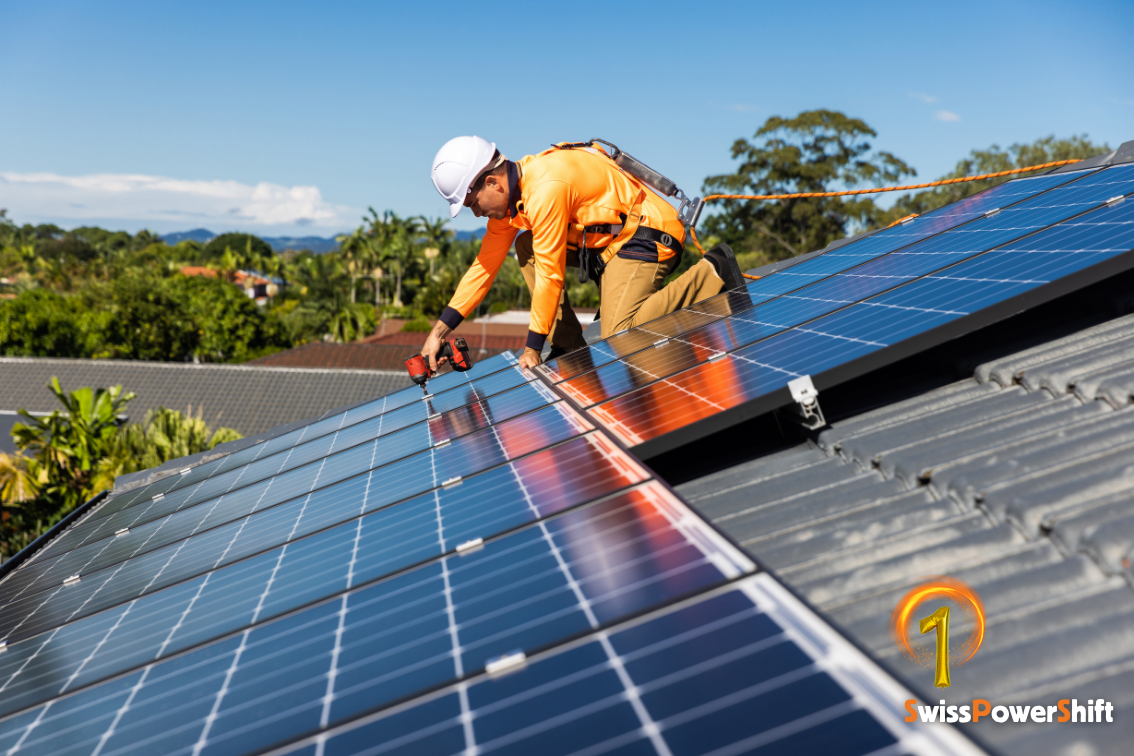
"By constantly looking at the surfaces that could still accommodate solar installations, we may be overlooking one possibility: roofs that are already equipped," points out Alban Bitz, director of SI-REN.
The ambition to continue the development of green, reliable and cost-effective energy sources gave rise to new and numerous discussions at the seventh edition of Building Bridges in Geneva.