What happens when insurance companies decide to withdraw and no longer cover the most at-risk areas? That is the theme at the heart of the new report by the environmental NGO, but also of "Sigma", that of the Swiss Re Institute. Analysis
"Flexibility solutions are now essential. However, they face a structural difficulty: their costs are decreasing faster than market rules evolve," explains Xavier Blot, associate professor at emlyon business school.
By naming their first edition "Wind farms are taking shape", the industry's players want to show a certain optimism despite a context that remains complicated for the sector. A look by Benoist Guillard, president of the Groupe romand pour l’énergie éolienne (GREE).
Marie Perrin, this young chemist who is revolutionizing the recycling of rare earths
A 28-year-old French-American, the EPFZ researcher has been rewarded for her method that allows europium — a critical metal used in fluorescent lamps and screens — to be recovered in a cleaner, simpler and more sustainable way. Profile.
Nowadays, 99% of rare earths are not recycled. While these resources are at the heart of growing geopolitical tensions and we move toward a world that aims to be more sustainable, how can the trend be reversed? These are precisely the questions that fueled the research of young Marie Perrin, the big winner of the "World Builders" prize, a prestigious award given by the European Patent Office (EPO) at the Young Inventors Prize 2025 ceremony, which took place in Iceland in mid-June.
"During my Master's internship, I worked a lot on the synthesis of plastics using metals. At the same time, I have always been interested in environmental issues, and very early on I questioned the meaning of my scientific approach and the alignment of my research topics with my personal values. It was in this context that I decided to reorient myself toward other themes, notably the use of metals in a bio-inspired approach, thanks to the work of Professor Mougel," she says.
A 28-year-old Franco-American, Marie Perrin was born in Texas but grew up in Toulouse in a family of scientists. Her father, an engineer and test pilot, and her mother, a chemist, instilled in her an early taste for science, particularly chemistry. So it was only natural that she chose a scientific baccalaureate, followed by a preparatory class in physics and chemistry, before entering the prestigious Paris-Saclay University.
Graduated with a master's degree in chemistry, she carried out research internships at MIT and at ETH Zurich (EPFZ), where she specialized in inorganic chemistry, notably in the study of metal behavior. She then continued her path with a doctorate at the Inorganic Chemistry Laboratory of ETH Zurich, under the supervision of Professor Victor Mougel.
The issue of rare earths
Guided by her environmental convictions, Marie Perrin decided to orient her doctoral thesis toward a category of strategic metals: rare earths. "My mother, a chemist, had given me the book 'The Rare Metals War' written by Guillaume Pitron before I devoted my thesis to the subject. So I already had a strong awareness of the stakes and the prominent role of these very particular resources."
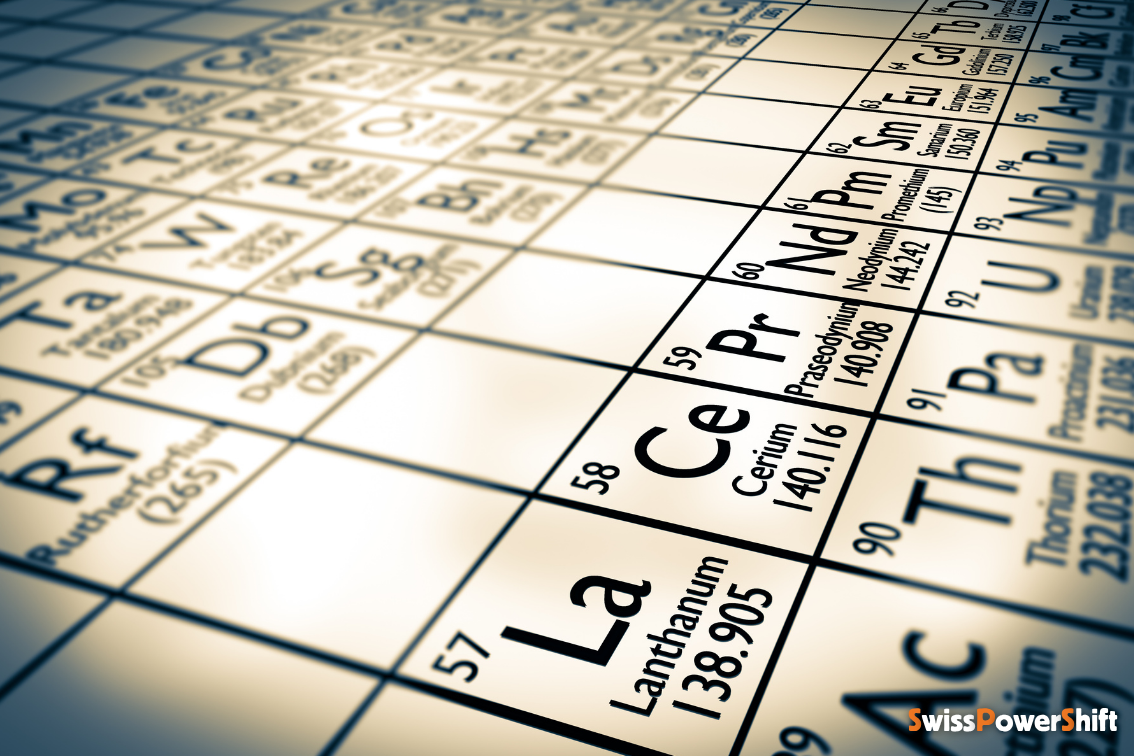
These elements, seventeen in number, are today indispensable to many industrial processes, particularly to the energy transition. They are found, among other things, in mobile phones, computer screens, but also in cars, electric bikes, wind turbine blades, and in the defense industry.
I have always been interested in environmental issues, and very early on I questioned the meaning of my scientific approach and the alignment of my research topics with my personal values.
And contrary to what their name suggests, rare earths are neither earth (they are metals) nor particularly rare. However, they have very similar physico-chemical properties among themselves, which makes their extraction and separation extremely complex and very resource-intensive, both in terms of energy and chemicals.
This mining industry is all the more polluting because the deposits with the richest ore grades have, for the most part, already been exploited. Today, extracting a ton of ore is much more difficult than in the past, due to the gradual decline in metal concentrations — a phenomenon even more pronounced for rare earths.
The seventeen rare earths are today indispensable to a whole range of industrial processes and notably to the energy transition. DR
Metals with geopolitical implications
If one considers rare earth stocks and their concentration in the environment, Marie Perrin points out that the data are highly strategic and often subject to geopolitical issues. Indeed, so-called critical metals are at the heart of such stakes that geological data concerning them are frequently considered sensitive and are not as reliable as one might think.
Overall, the problem is not so much related to the available stocks as to the real accessibility of the resource. Some countries, like Brazil, have large quantities of rare earths in their subsoil but do not (yet) have the political will or the necessary technologies to exploit and isolate these metals.
China, for its part, holds crucial know-how in refining and purification, which considerably strengthens its strategic position. Futuristic and sometimes extravagant projects are not lacking in attempts to secure access to these critical metals: from deep-sea mining to potential asteroid exploitation.
Faced with this relentless race, control of the entire value chain and the development of recycling for these metals have become major issues. It is precisely for this reason that the European Union adopted, on 23 May 2024, the "Critical Raw Materials Act" (CRMA), a text that sets goals to be achieved by 2030. Among them: recycling at least 25% of the critical raw materials consumed each year by the EU. This is enough to stimulate the recycling market and offer real growth prospects for innovative solutions, such as the one developed by Marie Perrin's team.
In our laboratory, we developed bio-inspired systems, that is, inspired by nature, based on metal-sulfur molecules, to recover europium.
A technological breakthrough?
The EPFZ scientist says that the rare earth economy remains linear today, meaning that it generally follows a cycle going from extraction to landfill, with a recycling rate of less than 1%.
"In our laboratory, we developed bio-inspired systems, that is, inspired by nature, based on metal-sulfur molecules, to recover europium, a rare earth that is found notably in neon tubes. These molecules have the ability to separate rare earths into distinct groups, thus paving the way for a circular management of this critical resource," she explains.
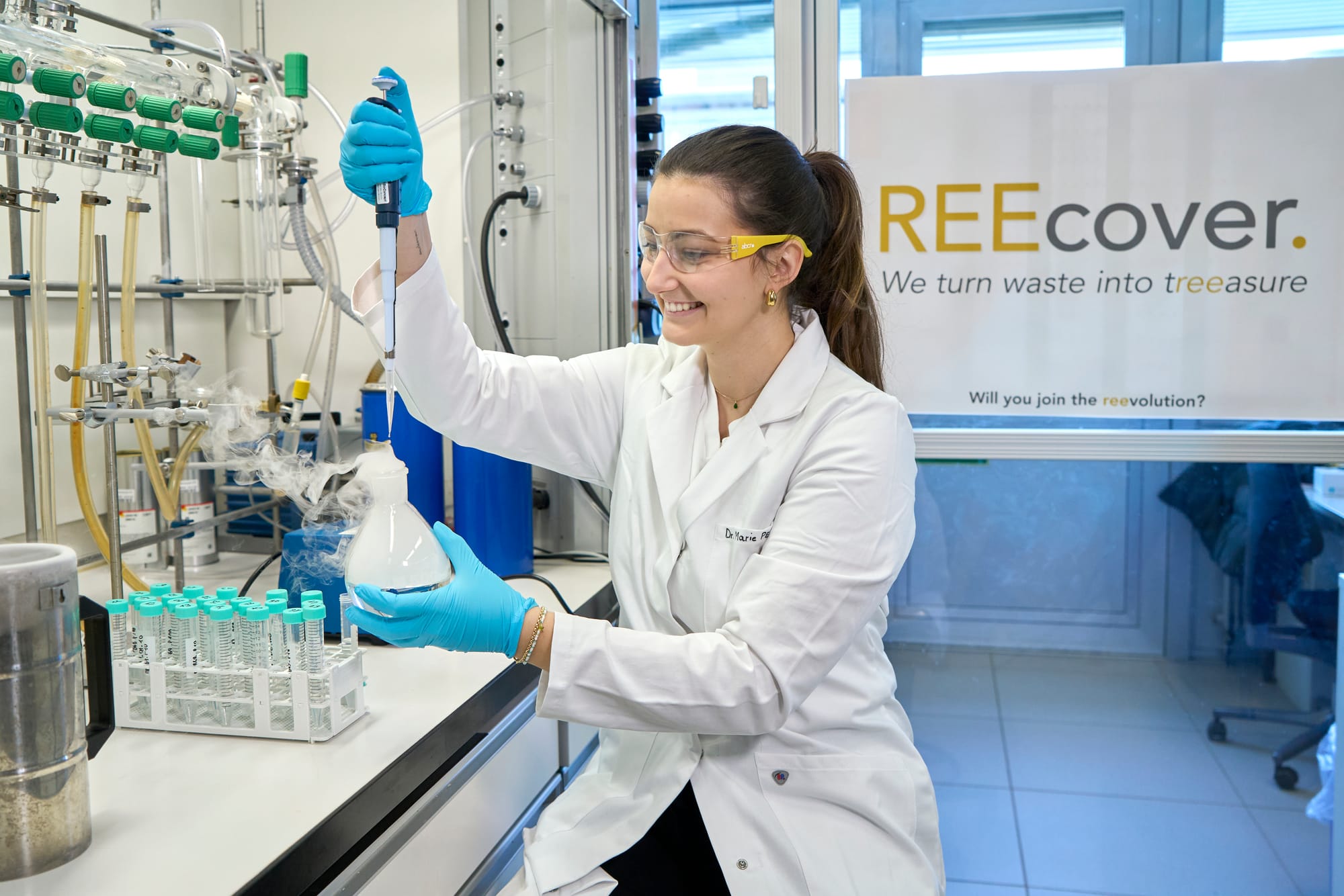
Although separation processes already exist in the mining sector, they are neither adapted nor truly efficient for waste recycling. With her doctoral supervisor, Victor Mougel, the researcher therefore developed solutions that are faster, cleaner and more sustainable than current methods. "The first results obtained in the laboratory have far exceeded all our expectations," she assures.
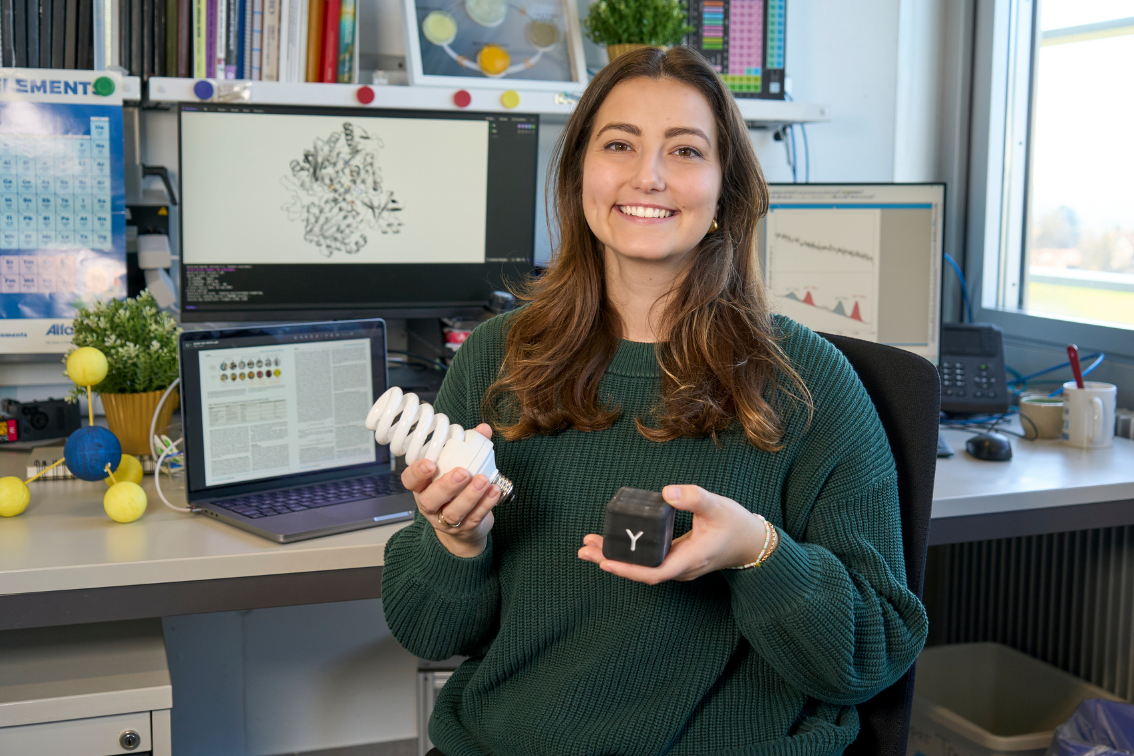
Increasingly convinced of the potential of their model, the team then tested it on real waste and carried out a first proof of concept on the recycling of europium, a rare earth found notably in low-energy light bulbs, such as neon tubes.
"This resource presents, on the one hand, very high selectivity factors and, on the other hand, it is one of the rare earths that is least concentrated in the environment, which makes it an ideal candidate for recycling, both economically and environmentally. Furthermore, the production and import of neon tubes were recently banned by the European Union in order to reduce greenhouse gas emissions by 50% by 2030. There is therefore a significant stock to be valorized," the researcher confides.
If we want to separate the metals and rare earths from our everyday objects, it is essential that the collection rate is high. In Switzerland, this rate is already significant for electronic waste, and it is even higher for light bulbs and neon tubes. In addition, it is important that the physical dismantling of objects is optimized and well controlled, which is also the case for these bulbs.
It is the development of her method for recovering europium that earned Marie Perrin the recognition of her peers at the "Young Inventors Prize 2025" ceremony.
Once the glass and aluminum of the bulbs are recovered, the recycler is left with a powder composed of phosphorus and mercury, which is currently buried in landfill as highly toxic waste. It is precisely this substance that contains high concentrations of rare earths and which serves as the raw material for Marie Perrin to recover europium.
"For mobile phones, however, the situation is more complex, because they contain around fifty elements and precious metals, and their mechanical dismantling is unfortunately not optimized. Moreover — and this is quite surprising — their collection rate remains relatively low, because many people keep their old phones at home. An astronomical quantity of these devices therefore sleeps in our drawers," laments the scientist.
This recognition has real meaning for me, because it brings our work to the attention of the general public and demonstrates that one can have a concrete and positive impact through scientific research.
A startup and a first prize
Marie Perrin and Victor Mougel decided to patent their method with the help of ETH Zurich's technology transfer service, "ETH transfer", and to create the company REEcover, with the aim of industrializing this technology in the future. REEcover is currently collaborating with industrial partners to deploy its solution at scale and expand its applications, notably in the recycling of rare-earth magnets used in electric vehicles and wind turbines.
It is the development of this technology that earned Marie Perrin the recognition of her peers at the "Young Inventors Prize 2025" ceremony. Awarded by the European Patent Office and endowed with 20,000 euros, this prize distinguishes young people under 30 who develop concrete innovations in the service of the United Nations' Sustainable Development Goals (SDGs). It highlights the transformative potential carried by new generations and underlines the importance of their contribution to building a more sustainable future.
"This recognition has real meaning for me, because it brings our work to the attention of the general public and demonstrates that one can have a concrete and positive impact through scientific research. It also highlights the place of women in technical professions. Women, although progressing in the sciences, remain far too underrepresented. If I can show the way to young passionate women who hesitate to get started, then that is a victory for me! I have always been eager to share and communicate my work, and this prize is a wonderful opportunity, both for the cause and for the growth prospects of our solution."
The young scientist perfectly embodies this new generation enthusiastic and determined to find solutions to the colossal challenge of the ecological transition and access to critical resources. Her technology could well mark a turning point toward a circular economy for rare earths and help build the world of tomorrow.
This article has been automatically translated using AI. If you notice any errors, please don't hesitate to contact us.
What happens when insurance companies decide to withdraw and no longer cover the most at-risk areas? That is the theme at the heart of the new report by the environmental NGO, but also of "Sigma", that of the Swiss Re Institute. Analysis
"Flexibility solutions are now essential. However, they face a structural difficulty: their costs are decreasing faster than market rules evolve," explains Xavier Blot, associate professor at emlyon business school.
By naming their first edition "Wind farms are taking shape", the industry's players want to show a certain optimism despite a context that remains complicated for the sector. A look by Benoist Guillard, president of the Groupe romand pour l’énergie éolienne (GREE).
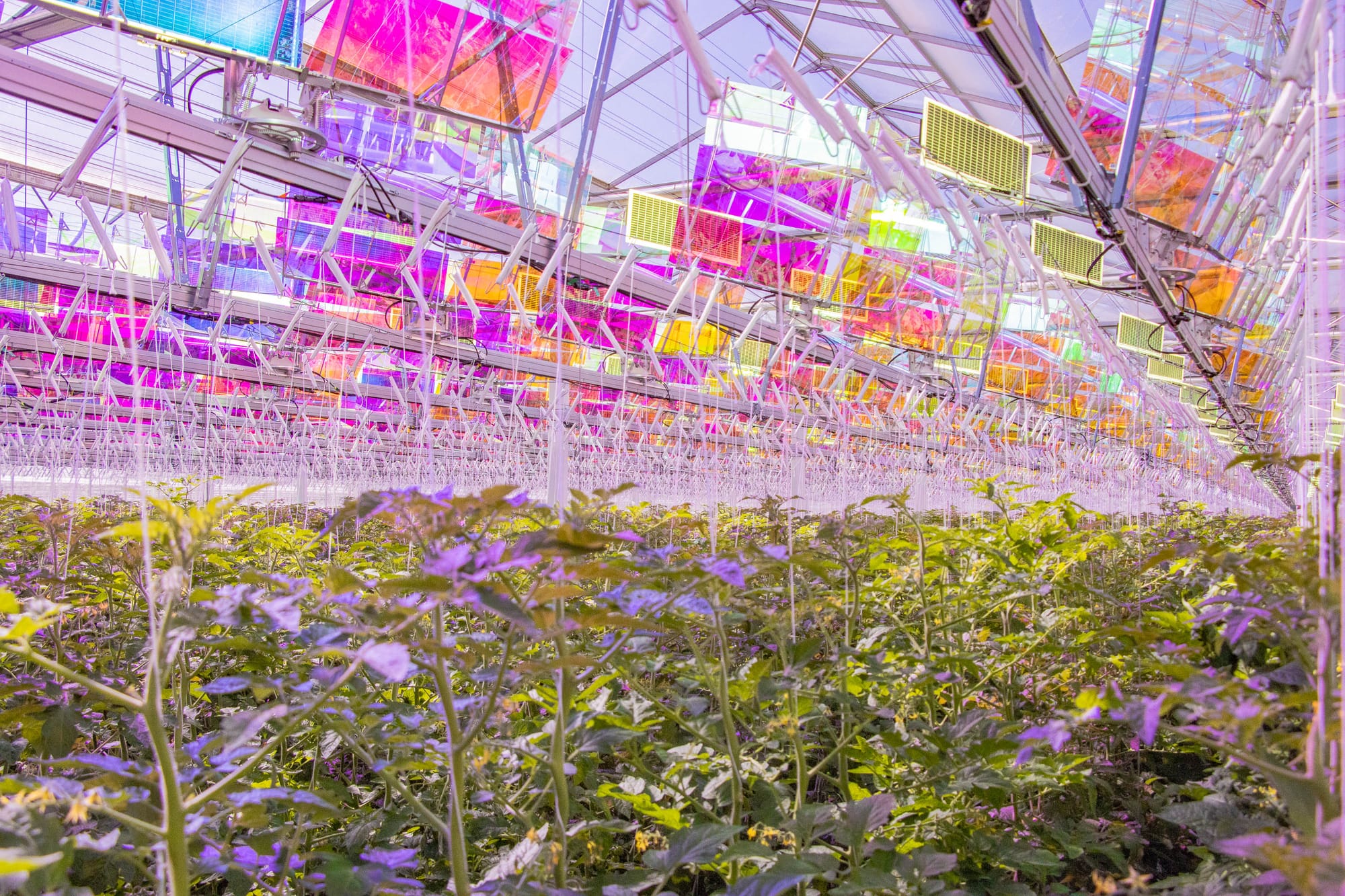
Since its founding in 2021, the young startup has made it its mission to find a good compromise between energy production and plant growth. The solution is called "spectral filtering".