"We no longer have any choice but to adapt to climate change"
Interview with Vincent Kaufmann, director of the Ethos Foundation.
According to Laurent Balsiger, "the closer a politician is to the ground, the better able he is to grasp the problems and challenges posed by climate change." Member of the Grand Council, he was one of the actors behind the new Vaud energy law. Interview
The new Vaud energy law has generated a lot of ink in recent weeks. Aiming to accelerate the energy transition by encouraging renewable energies and progressively eliminating fossil heating, it has sparked strong controversy within the different political parties.
Deemed unfinished by the Greens, the Green Liberals and the Socialist Party, the law would at least "have the merit of existing" for the left. On the right, discontent remains palpable and, despite the concessions made to enable the adoption of the text, the Vaud section of the UDC ended up launching a referendum shortly after its adoption by the Grand Council. The party remains adamant, denouncing a text "too interventionist" and "economically unrealistic", arguing that it penalizes property owners and the middle class.
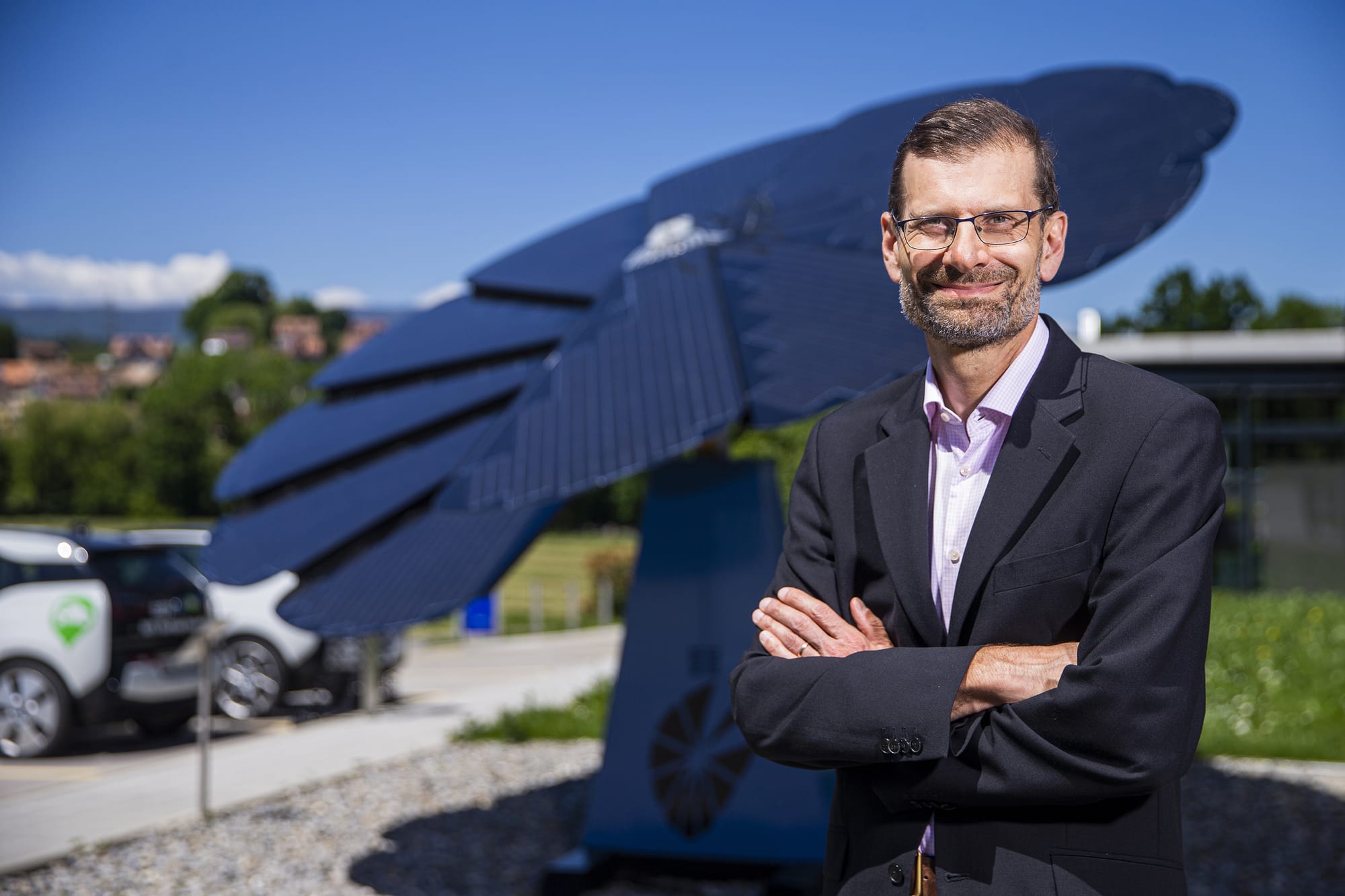
This political news was the ideal opportunity to meet Laurent Balsiger. A prominent figure in Vaud political life, member of the Grand Council, socialist deputy and former director of energy for the canton of Vaud, he is today at the head of the Société électrique des forces de l’Aubonne (SEFA). A long interview that we offer in two parts, with this first part devoted to the political stakes related to energy.
A law simply described as "having the merit of existing", satisfying neither the left nor the right… can it really be considered a good law?
I would tend to answer yes, because in the Swiss system, when nobody is fully satisfied, it is often a sign of a relatively balanced compromise. On the left, we are not completely satisfied, but we nevertheless acknowledge that it is progress compared to the 2012 law.
It is essential to distinguish the issues: this law is beneficial from the point of view of CO₂ emissions, even if it raises challenges in terms of winter electricity supply. Solutions do exist, however: the development of hydroelectric projects, the expansion of wind power — which produces a large part of its energy in winter — or the deployment of solar on façades and at altitude. However, these solutions take time to implement. From an overall perspective, this law remains positive and goes in the right direction.
In what way has this text been weakened and what strengths does it retain?
Among the important advances, one can cite the prohibition, from the law’s entry into force, of replacing one fossil heating system with another. This gradual phase-out of fossil energies over about twenty years is a very positive evolution, and even a first at the Swiss level.
One can also welcome the obligation to renovate the least insulated buildings over 750 m², as well as the obligation to install photovoltaic panels when renovating roofs. Admittedly, we would have liked greater ambition and more binding deadlines, but this remains a positive advance. It is also worth noting the introduction of an article on the circular economy, which takes into account the embodied energy related to construction, which will also have a beneficial impact.
On the other hand, some points are more questionable. Buildings under 750 m² are not subject to any renovation obligation. This could send a bad signal, notably from the real estate sector, by implying that no action is necessary in terms of energy renovation.
This situation poses a particular problem regarding winter electricity consumption, which is already critical in Switzerland. Indeed, replacing an oil heating system with a heat pump leads to an increase in electricity consumption. Admittedly, these systems are more efficient from an overall energy perspective, but they consume more electricity than fossil installations. According to some estimates — to be considered with caution — this increase could reach nearly 10% of winter consumption by 2030–2040 if owners do not renovate their buildings in parallel.
Current director of the Société électrique des forces de l’Aubonne (SEFA), Laurent Balsiger is known for having managed, for more than five years, the energy destiny of the canton of Vaud (2013–2018). Since 2022, he has sat as a deputy in the Grand Council, a commitment linked to his desire to contribute concretely to public life.
"I have always been driven by the desire to get involved, concretely, in society. My environmental engineering studies, oriented towards international cooperation, aimed to support the most vulnerable populations, notably in the fields of water and sanitation (for example with the renovation of pumping stations in Mariupol, Ukraine, ed.)," he says.
His desire to take part in his canton’s destiny was not, however, obvious. "While I have a lot of respect for young people who engage very early in this field, that was not my case. I am not someone who fell into the political cauldron as a child." It was only around the age of forty that Laurent Balsiger told himself that instead of criticizing what does not work, it was better to get involved directly and try to influence decisions in the direction he deems right. O.W.
Described as a first in French-speaking Switzerland, does this law have the necessary assets to serve as a source of inspiration for other cantons?
It could be by its targeted approach to the most problematic buildings — that is to say the large poorly insulated buildings — where one obtains the most impact at the lowest cost. This logic appears relevant.
The progressive ban on fossil heating could also serve as inspiration. With its goal of carbon neutrality by 2050, this law clearly goes in the right direction, notably because it ends fossil heating in buildings, thus strongly reducing direct CO₂ emissions.
While in Bern the period now seems conducive to a certain passivity regarding our commitments to carbon neutrality, what about the cantons? Are they really more active and engaged in this transition?
In my view, the closer you are to the ground, the more you are confronted with the problems posed by climate change. When you are in direct contact, you can see the damage caused by floods in affected municipalities, talk with our farmers facing drought. These experiences make the issues of climate change tangible and immediate. In this logic, municipalities are increasingly aware of these challenges and, whatever their political sensitivities, they act. I perceive, at the municipal level, a real awareness as well as a willingness to act concretely.
This dynamic is unfortunately less perceptible at the cantonal level, and even more so at the federal level. In the Vaud case, recent reports show that we are not on the right trajectory, notably in the mobility sector. The current dynamic is not yet up to what is sometimes claimed.
The higher you rise in the political ranks, a form of distance sets in. Under the Bernese dome, political leaders then tend to reason more in terms of abstract grand principles or from a financial angle, sometimes to the detriment of concrete reality. And if we widen the perspective even more, at the international level, this phenomenon is even more marked and further removed from ground concerns.
How do you explain the current lack of interest in these issues on the part of our representatives in Bern?
At the federal level — but sometimes also at the cantonal level — the same discourse comes back: we should reduce spending because we would be facing an issue of expenses rather than revenues. This idea strikes me all the more since our public finances remain overall very healthy.
Our political leaders should remember the choice made by our ancestors, more than 130 years ago, to invest in the construction of our transport and energy infrastructures. These expenditures were heavy at first: energy and transport were expensive. But once amortized, these infrastructures allowed the economic development of the whole region as we know it today.
The same was true after the Second World War, with massive investments — up to 5% of GDP — devoted to the construction of dams and other large infrastructures. We still benefit from these choices today. My feeling is that from the 1990s, we began to live off this legacy, without fully measuring its importance nor seizing the opportunities to invest in turn for future generations.
Investments in our decarbonized energy infrastructures are amortized over many years and generate returns in the medium and long term.
Since you have been sitting on the Grand Council, does your role as director of SEFA help you make the challenges and issues related to energy understood?
I am organizing a thematic group on energy. Taking place during the lunch break, it will aim to present a study by the AES. I also hope to invite representatives from ELCom and the FOEN so that they can present their analyses and give an overview of the situation to Vaud deputies.
I do indeed think that not all my colleagues have yet fully grasped these issues. It is therefore essential that they can benefit from clear explanations. If I cannot say precisely what all the deputies of the canton think, I nevertheless note that we run up against a recurring discourse: the one that aims to reduce spending at all costs, without always knowing precisely why and sometimes to the detriment of the energy transition.
Furthermore, I would like to insist on one point: investments in our decarbonized energy infrastructures are capital expenditures, amortized over many years and generating returns in the medium and long term. They are not mere expenses from an annual budget.
What would it take to regain the dynamic born after the Paris agreements and put Switzerland back on the right track?
A catastrophe! I obviously do not wish for one, but my feeling is that humanity often moves forward best when confronted with crises. As was the case with nuclear power after Fukushima, sometimes a major event is needed for mentalities to change and for even very convinced people to reconsider their position.
It is often extreme situations — natural disasters, shortages or crises — that lead to real awareness. We are going through a period of geopolitical instability today, and it is likely that this instability will persist. Relying on more than 80% of fossil energies imported from abroad, often from countries that are themselves unstable, is an obvious risk.
Failing that, we must continue to inform, explain and raise awareness. Because these are not small transformations: these transitions are profound and necessary, and they also represent an opportunity. They are beneficial for the economy, for the resilience of the territory and will, in the long run, be a real asset for the region.
Is the problem not linked to a lack of skills or understanding within public authorities?
No, the problem is not at that level, and I will illustrate my point with a very concrete example: the energy law we discussed at the start of the interview.
During its examination in committee, we held more than twenty sessions, i.e. more than ten days of work in total. We examined the text point by point, heard many specialists and consulted all the people whose expertise we considered relevant. By taking the time to deepen the subject and listen to the experts, we reached a unanimous compromise, across all parties, which was even more ambitious than the project finally adopted.
What does this show? That political leaders, whatever their sides, are neither more nor less competent than others, but that they are perfectly capable of understanding complex issues provided they are given the necessary explanations and solid elements.
I find it excessive to call certain political leaders into question. The experience of revising the energy law mainly allowed me to measure the power of the lobbies.
The problem occurred afterwards, once our work was presented to the public debate. At that point, I was able to see how quickly certain circles can mobilize. In our canton, two interest groups proved quickly influential on two aspects: real estate and mobility. They defended short-term interests — or at least what they perceive as such — even though in the long term they might lose out. It is precisely this logic that helped destabilize the initial project.
For my part, I find it excessive to call certain political leaders into question. The experience of revising the energy law mainly allowed me to measure the power of the lobbies: I saw how it is possible to build a solid consensus in committee, and how this work can then be weakened or even called into question under the effect of external pressures.
In the field of renewable energies, the Chinese example is now often presented as a reference. Is a democratic system really the best model to meet the climate challenges by 2050?
It is a complex question. These debates circulate and deserve to be taken seriously. Take the rivalry between the two great powers of the beginning of this century. On one side, the United States, whose influence seems to be eroding, whether we like it or not. On the other, China, which is experiencing rapid growth and is challenging American hegemony established for nearly a century.
We can see that some American leaders have become aware of this shift and seek to slow it down, notably by relying on traditional resources like oil in order to maintain their economic power. Conversely, China, which has fewer fossil resources, has made the strategic choice to invest massively in future technologies and in the transformation of its economy.
It seems important to understand this dynamic: trying to preserve an old model is not enough to prevent the emergence of a new one. It can slow its advent, but not stop it. In this context, China seems to have taken a lead in certain key sectors of the world of tomorrow.
Europe, for its part, is in an intermediate position, with assets but also delays. This is evident notably in the automotive industry, where Chinese industrial policies have made it possible to catch up with — or even surpass — some historical actors. This state of affairs raises an important question for us Swiss citizens: the longer we delay transforming our economy, the more we risk losing competitiveness. These delays could cost us dearly in the future.
To avoid such drift, several studies — notably conducted at Harvard and other universities — suggest that one of the least imperfect tools could be a form of democracy based on sortition.
What do you mean by a democracy based on sortition?
In short, instead of electing representatives, as is currently the case for the Vaud Parliament, its members would be appointed by lot, like juries in courts. Citizens would thus be called to sit for a determined period or to deal with a specific issue. In such a system, there would theoretically no longer be political parties, but only citizens engaged temporarily in decision-making.
One of the main advantages of this model would be to reduce the careerist logic of politics. People chosen by lot would not have to seek re-election, which would profoundly change their way of acting. They could thus focus more on the substance of decisions, without being influenced by electoral considerations.
This article has been automatically translated using AI. If you notice any errors, please don't hesitate to contact us.

Interview with Vincent Kaufmann, director of the Ethos Foundation.

"The summer of 2026 showed what inaction costs; the courts, for their part, have begun to say who must be held responsible for it," emphasize François de Cambiaire and Lydia Méziani, lawyers at de Cambiaire & Méziani Associates.

Interview with Mélanie Beyeler, Global Head of Sustainable Investing at EFG.

By combining energy management systems, decentralized generation and storage solutions, facility managers have a strategic opportunity: to transform their buildings according to the "building as a grid" model, says Kamal Mehta, Product & Offer Manager EMEA at Eaton.
Already a member or subscriber? Simply enter your email address to receive instant access to the article. Enjoy!